


Heads of mental health centers within the nationwide RETURNING (Ukr. «ПОВЕРНЕННЯ») network, founded by Victor and Olena Pinchuk, took part in a week-long study visit to the United Kingdom. Representatives of 11 centers in the network learned about the work of leading British medical, academic and professional institutions in the mental health field, with the aim of drawing on international best practices and adapting them to the needs of Ukrainian service members, veterans and their families.
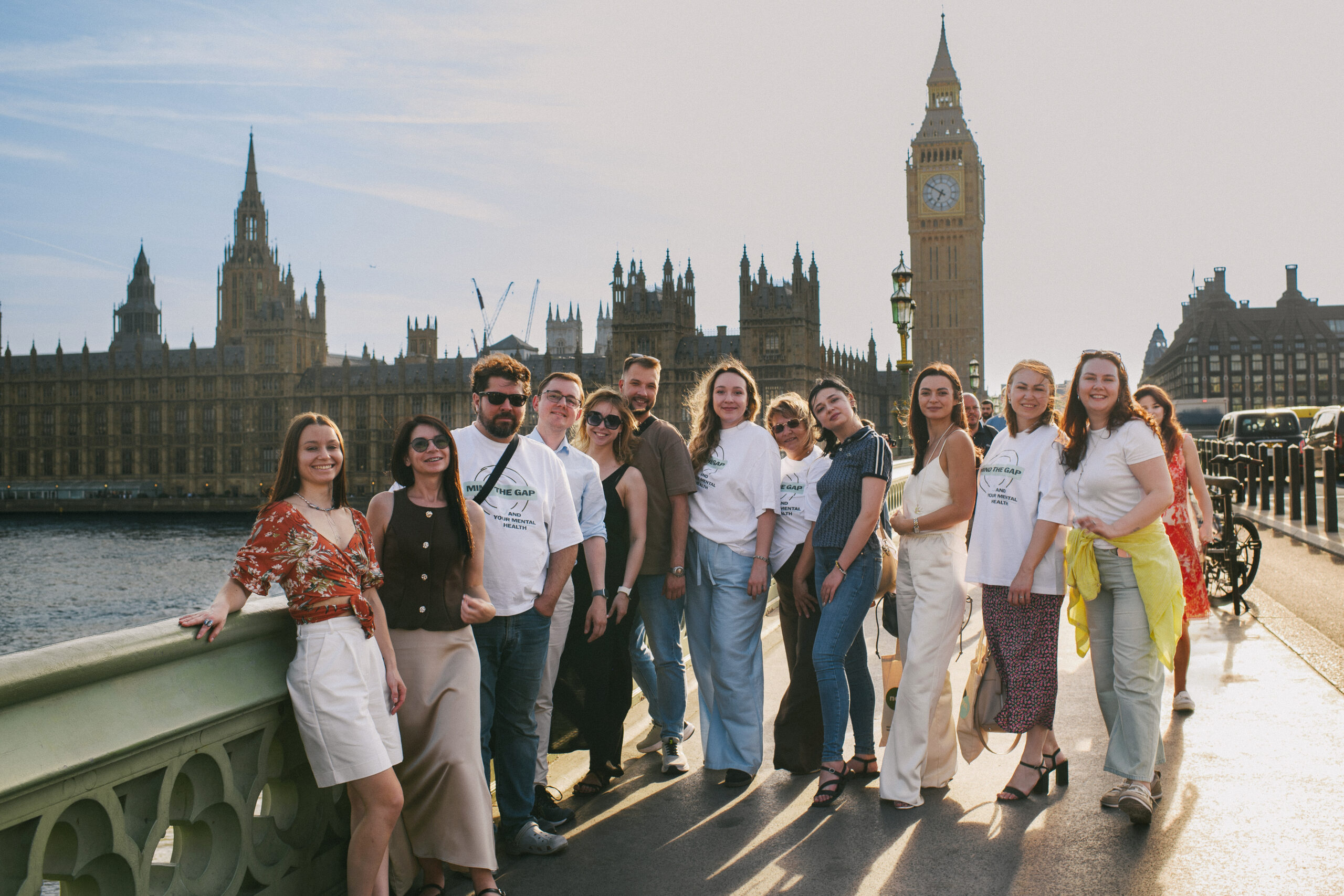
The study visit was part of RETURNING’s education program. Alongside developing the network of mental health centers, the project focuses on training professionals and introducing modern, evidence-based approaches to psychological and psychiatric care in Ukraine.
The United Kingdom was selected because of its highly developed mental health care model, which combines decentralized care, clearly defined patient pathways, community-based services and comprehensive outpatient support. The system also has a dedicated focus on service members and veterans, building on decades of experience in addressing the consequences of combat and coordinating medical, social and government services.
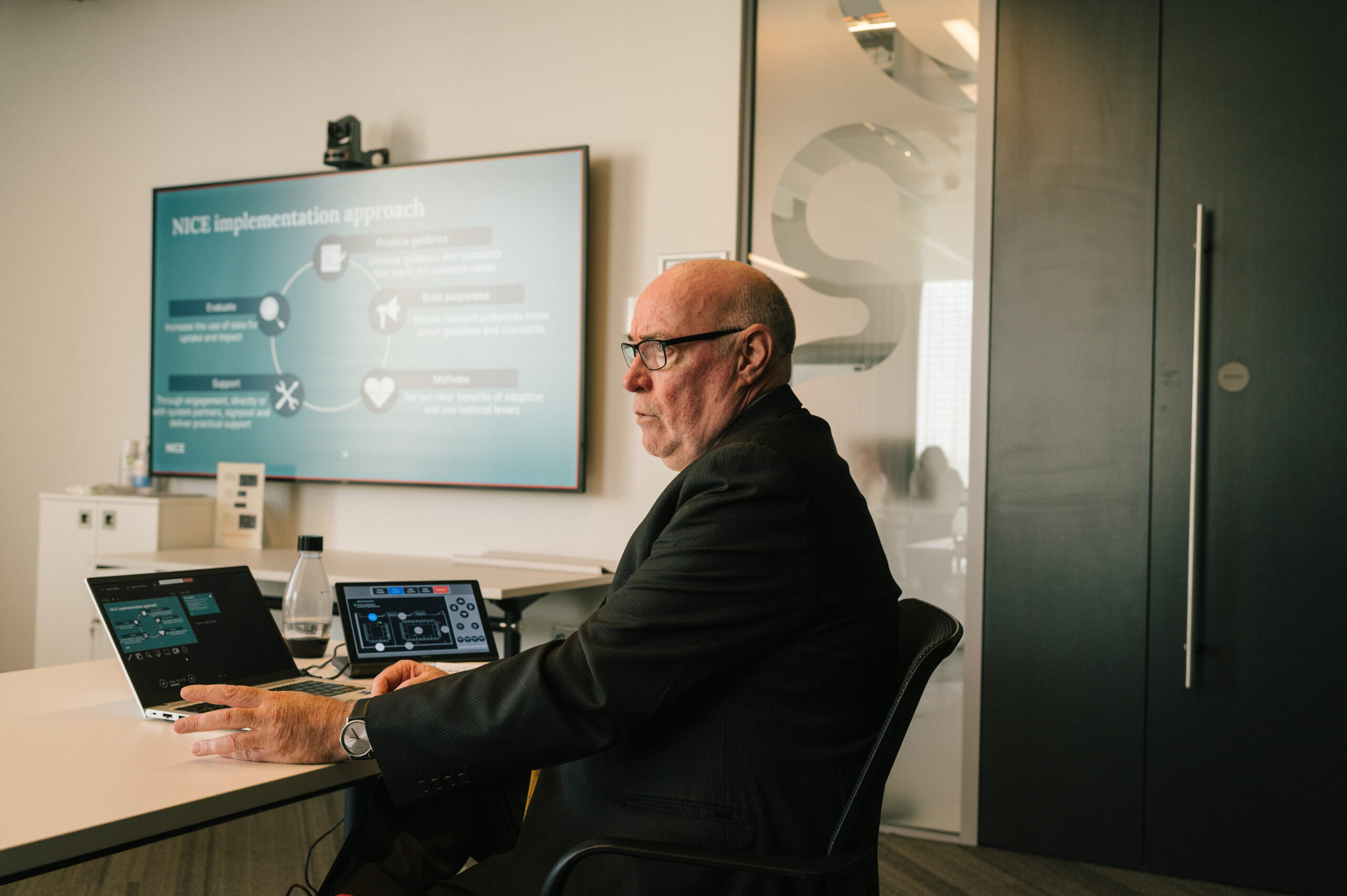
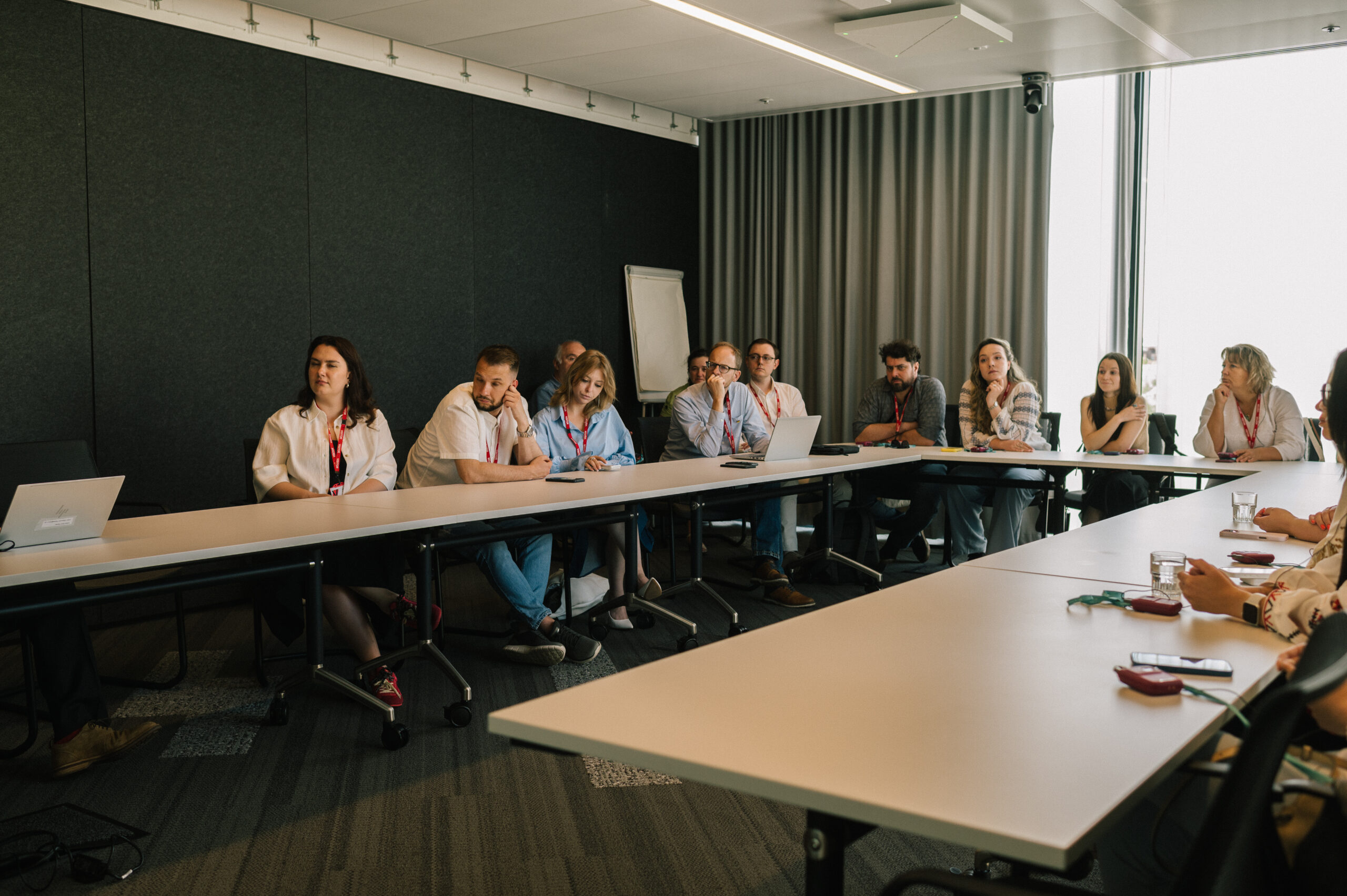
Throughout the week, the Ukrainian delegation met with representatives of leading British medical, academic, professional and government institutions. At the Royal College of Psychiatrists, participants explored professional standards and principles for developing psychiatric care. At King’s College London, they examined the long-term mental health consequences of war and current research-based approaches to supporting service members and veterans. During their visit to Maudsley Hospital, they studied the organization of clinical care, patient pathways and the work of multidisciplinary teams.
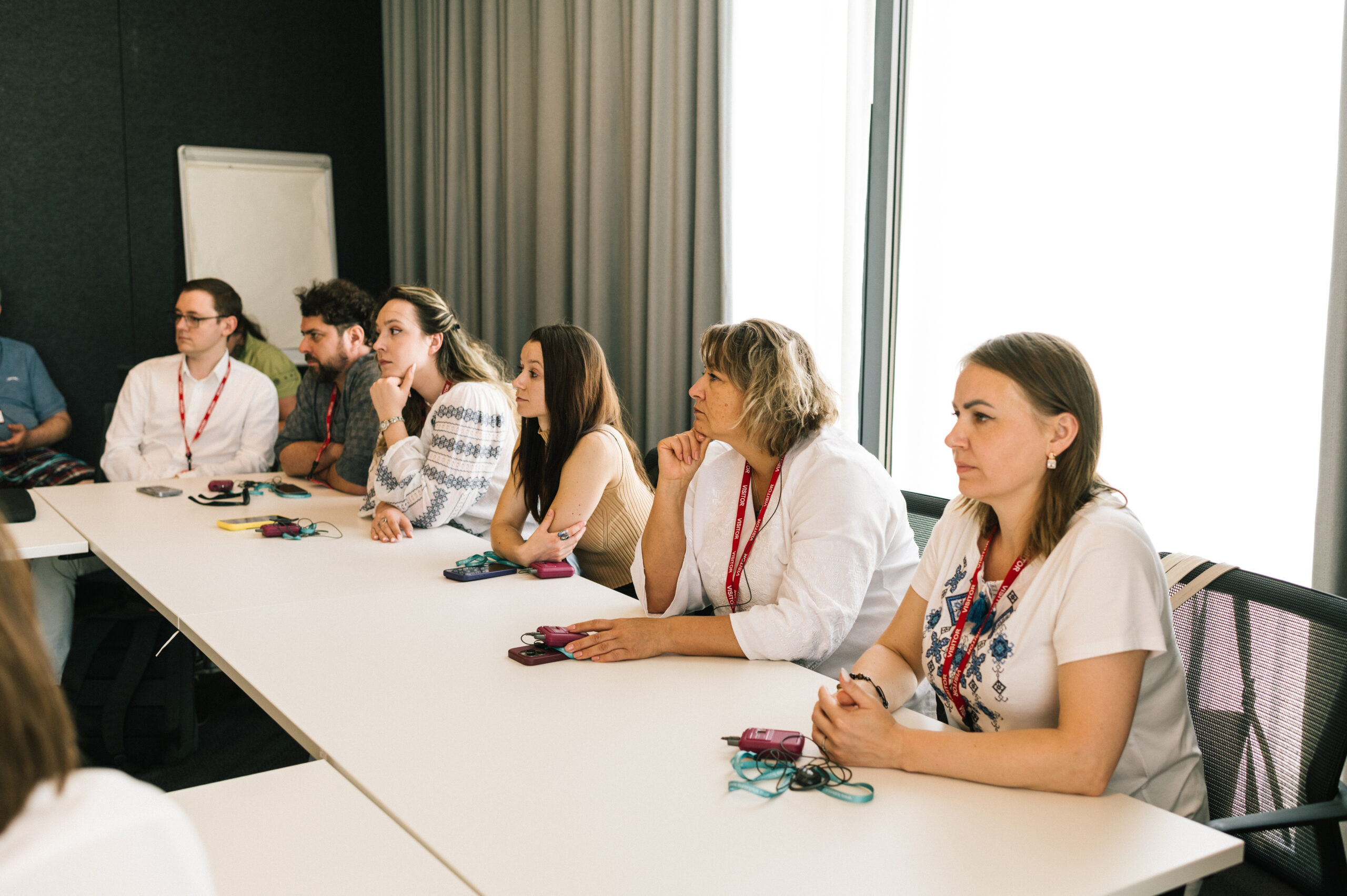
Together with representatives of the charity Combat Stress, the participants discussed models of psychiatric and psychological support for veterans and their families. During meetings with representatives of the National Health Service (NHS), the UK Ministry of Defence, the Department of Health and Social Care, and the Foreign, Commonwealth & Development Office (FCDO), the delegation learned about government approaches to developing the mental health system, interagency cooperation, workforce planning and suicide prevention.
In Birmingham, the team also visited Collective Voice and the BAC O’Connor Centre, where they examined current models of addiction treatment, rehabilitation and long-term recovery.
One of the key principles of the British veteran support system is providing comprehensive assistance throughout a person’s transition back to civilian life. This approach was particularly highlighted by Yaroslava Anna Stoika, head of the forthcoming RETURNING center in Vinnytsia:
“One of the most valuable principles of the British system is its understanding that a veteran is not simply a ‘patient with trauma’ who needs treatment, but a person who needs support through a structured transition to civilian life. That is why a multidisciplinary team accompanies them throughout this journey. “We are introducing the same approach at our RETURNING centers, where professionals from different fields work together to support service members, veterans and their families, helping them reintegrate into civilian life as successfully and smoothly as possible,” says Yaroslava Anna Stoika.

The visit was not only an opportunity to learn from the British experience but also a platform for professional exchange. The Ukrainian specialists shared their own expertise, developed amid the full-scale war and through their daily work with service members, veterans and their families.
Professor Sir Simon Wessely of King’s College London emphasized the importance of this two-way exchange:
“You should invite us to Ukraine so that we can learn from your experience and from what really works. Our experience is not directly relevant to the challenges Ukraine is facing today. When the war ends, Ukraine will face the challenges of peace, which, in my view, will be no less traumatic and perhaps even more difficult. That is why we should be coming to you, not the other way around,” said Professor Sir Simon Wessely.
The goal of RETURNING is not only to support psychological recovery but also to systematically strengthen Ukraine’s mental health sector. That is why, in cooperation with Ukrainian and international experts, the project delivers modern training programs for professionals, including hands-on training sessions, workshops and supervision, equipping specialists with effective tools for addressing war-related trauma.
The education program is based on evidence-based methods, including EMDR, cognitive behavioral therapy and trauma-focused therapy. The programs draw on the latest research and validated protocols, while the training includes webinars, hands-on sessions and supervision.
Since RETURNING was launched in 2025, more than 120 training events have been held, involving over 1,500 professionals from both within and outside the RETURNING network. The study visit to the United Kingdom continued this systematic work and marked another step toward introducing modern, accessible and comprehensive mental health care in Ukraine.
Victor and Olena Pinchuk continue to expand the nationwide RETURNING (Ukr. «ПОВЕРНЕННЯ») network of mental health centers. The new RETURNING center, established jointly with the Ministry of Internal Affairs of Ukraine and the National Guard of Ukraine at one of the National Guard’s medical facilities, is the 17th center in the network.
The RETURNING mental health center will provide professional psychiatric and psychological care to service members experiencing the psychological consequences of war. Particular attention will be given to those admitted to the center immediately after being released from captivity. At this stage, it is essential to provide a safe environment, a professional assessment of their condition and timely support following the traumatic experiences they have endured.
Each year, nearly 500 service members will be able to receive inpatient care at the center, which will also provide more than 3,000 consultations.
The center was made possible through cooperation between RETURNING, the Ministry of Internal Affairs of Ukraine and the National Guard of Ukraine. It represents another systematic contribution by Victor and Olena Pinchuk to supporting service members, veterans and their families who need professional care after their wartime experiences.
“Cooperation with the National Guard of Ukraine and the Ministry of Internal Affairs allows us to bring support closer to those undergoing recovery and reintegration after captivity. At this center, we sought to create world-class conditions: a barrier-free, state-of-the-art space where service members can receive professional care that respects their experiences and is free from stigma. “We continue to expand our cooperation with the Ministry of Internal Affairs so that these opportunities become available to even more of Ukraine’s defenders and their families,” said Svitlana Grytsenko, Head of the RETURNING project
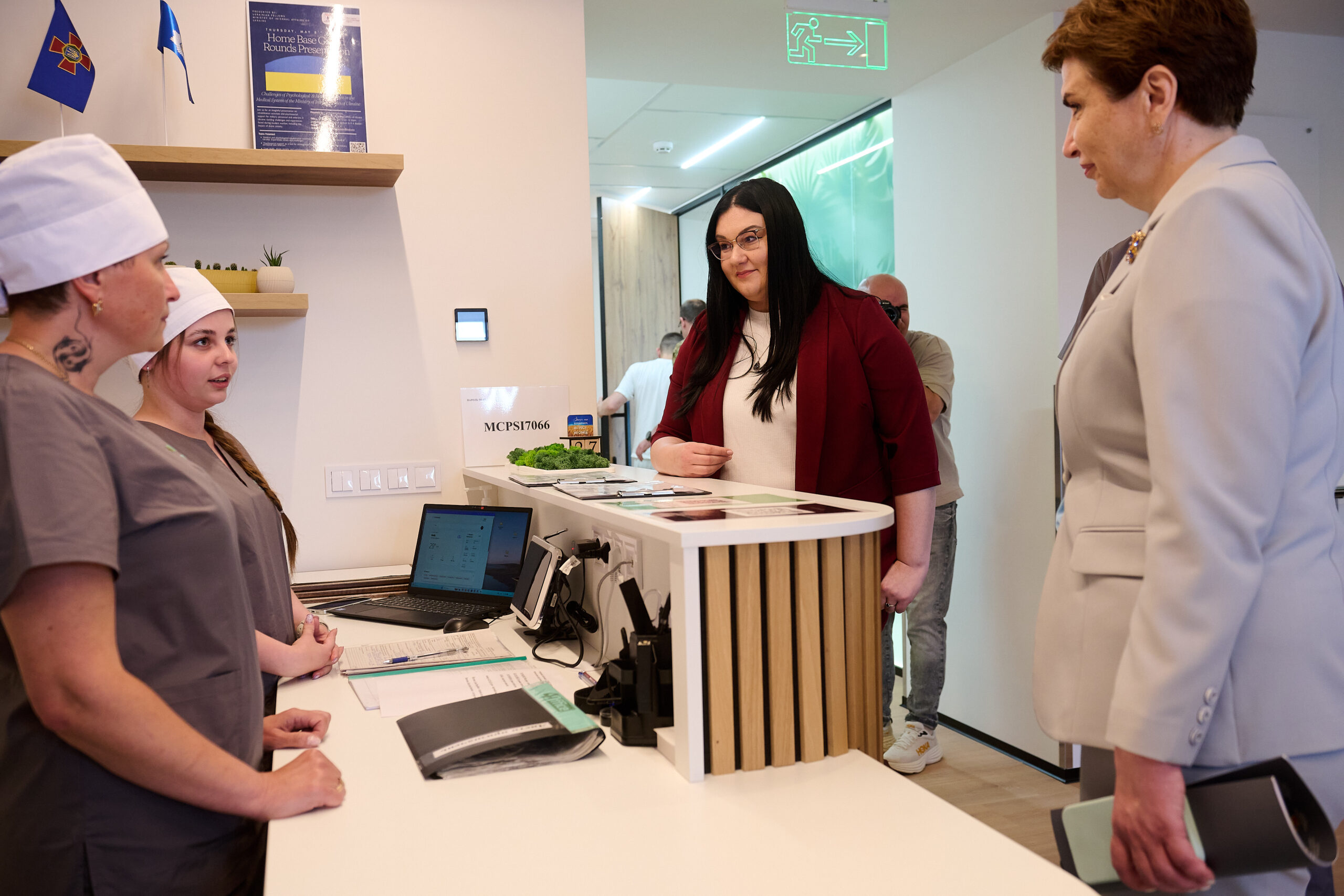
The RETURNING mental health center is a modern and inclusive space for support and recovery, created for service members who require specialized psychiatric and psychological care.
With funding from RETURNING, the premises underwent a major renovation and were transformed into a modern mental health center. The center includes rooms for individual, group, art and biosuggestive therapy; a reception area; a 24-hour nurses’ station; a visitor waiting area; inpatient rooms with accessible bathrooms; and staff facilities.
Inna Yashchuk, State Secretary of the Ministry of Internal Affairs of Ukraine, emphasized that the center was made possible through effective cooperation between the state and socially responsible businesses.
“The mental health center’s professionals work with everyone undergoing rehabilitation, and that is immensely valuable. The Ministry of Internal Affairs places considerable emphasis on providing comprehensive support to Ukraine’s defenders—all those serving across the Ministry’s agencies who protect the country every day and help maintain peace and security.”
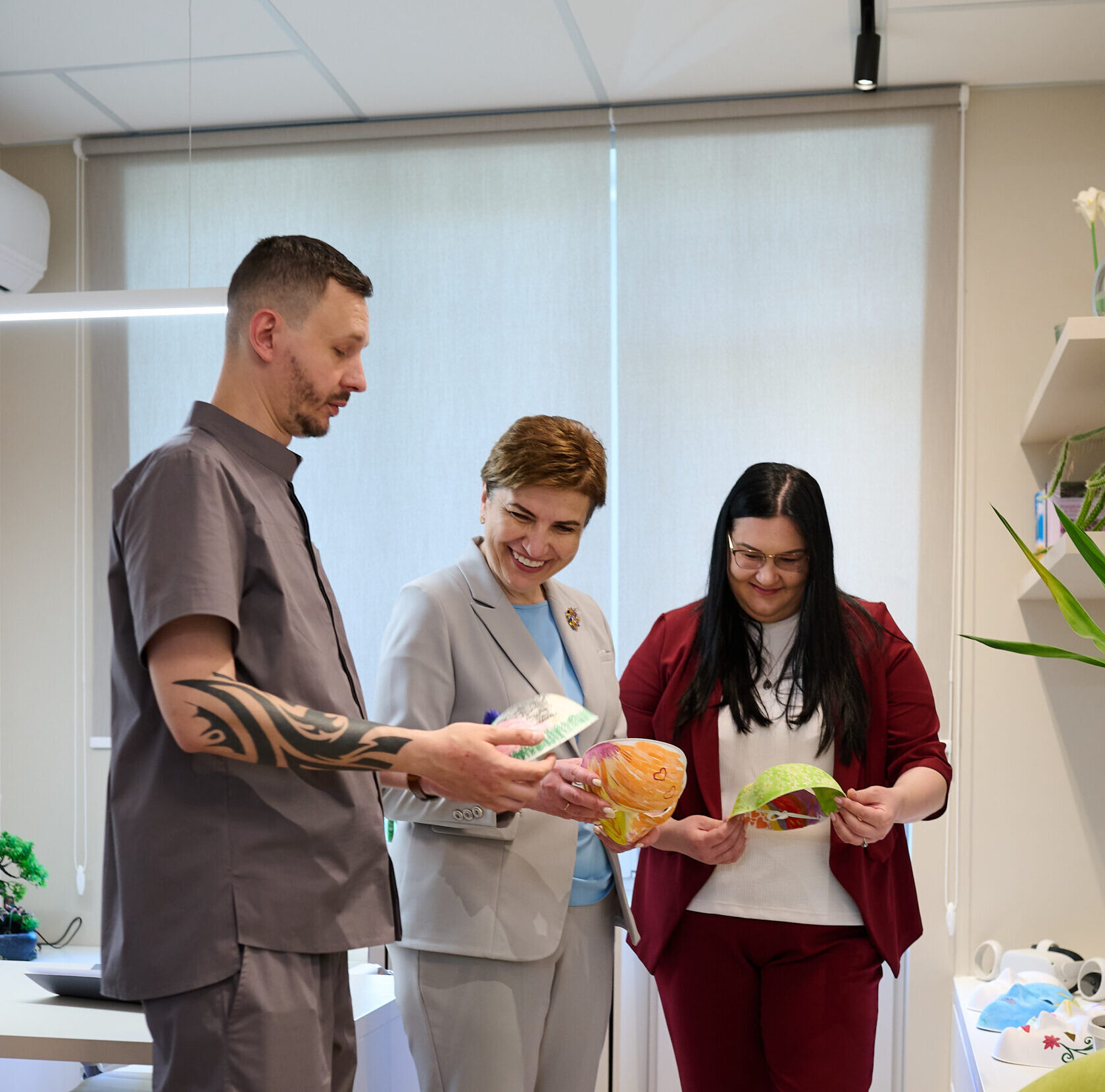
A multidisciplinary team of psychiatrists, clinical psychologists, nurses and nursing assistants works with defenders and their families. The team addresses, among other issues, the effects of stress, anxiety and depression, post-traumatic stress disorder, adjustment and psychosomatic difficulties, as well as psychotic conditions.
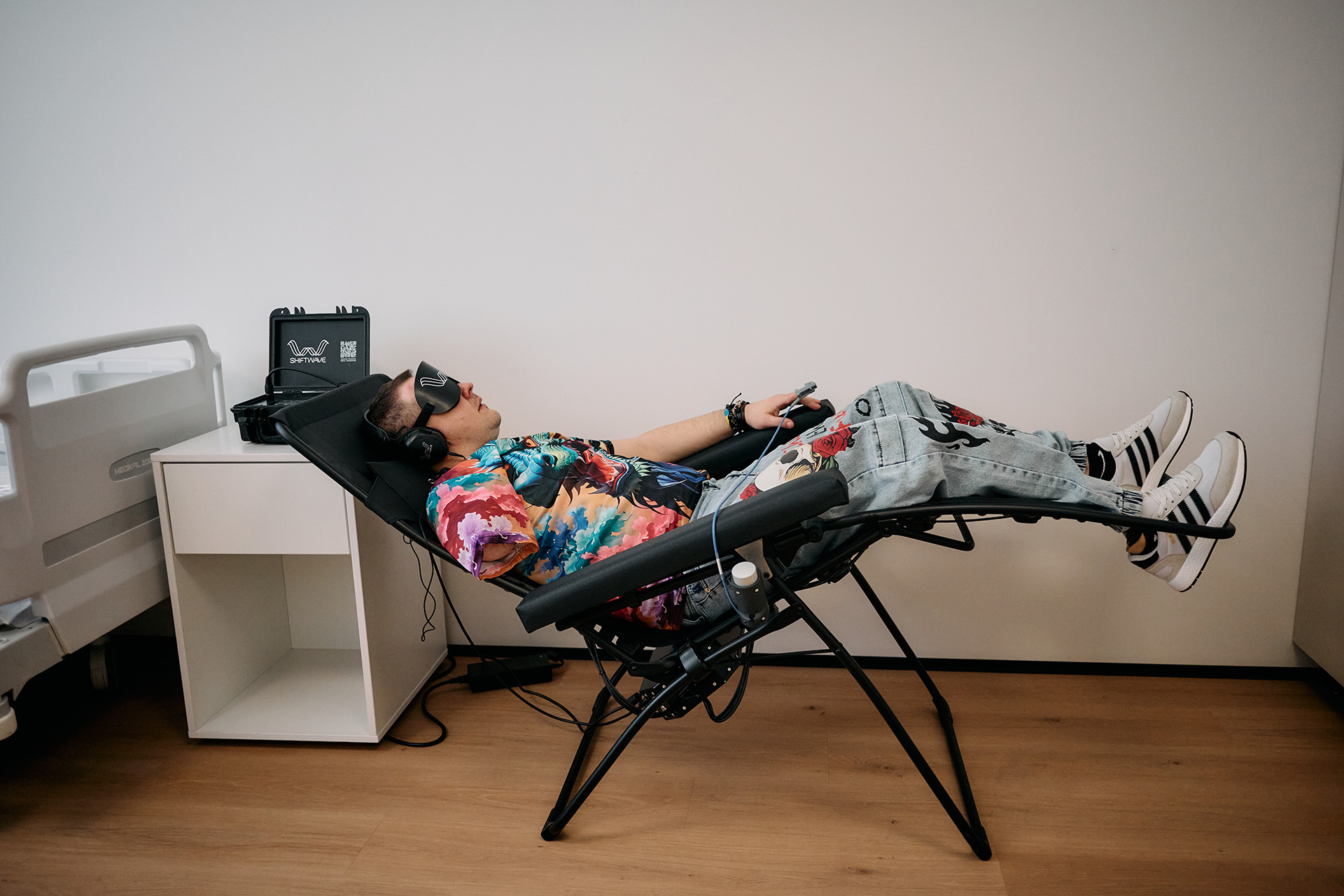
The center is equipped with everything required both for the professionals’ work and for visitors’ recovery. This includes the Shiftwave System for psychological relaxation and stress management, an EMDR therapy kit, art therapy materials, psychological assessment tools, computer and multimedia equipment, and professional literature for specialists.
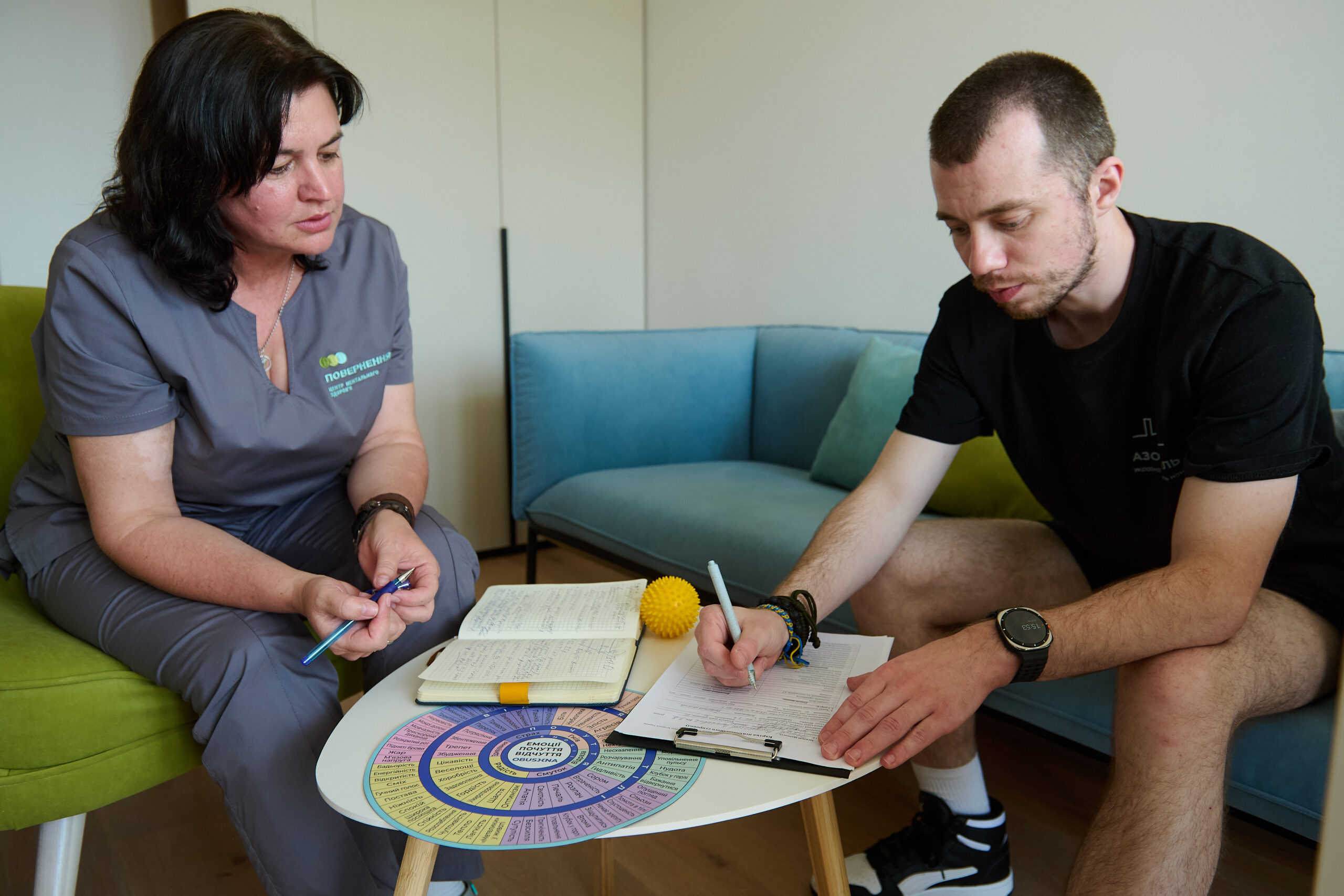
“Service members, particularly those who have returned from captivity, often need more than a one-time consultation—they need long-term, comprehensive recovery support. The consequences of severe traumatic experiences cannot be fully addressed in two or three weeks. That is why we combine psychiatric care, psychological support and modern instrumental methods that help to more accurately assess a person's condition and increase the effectiveness of treatment. Our task is to find an approach to each person and create the most effective recovery path for them," said Ihor Slobodian, head of the RETURNING center.
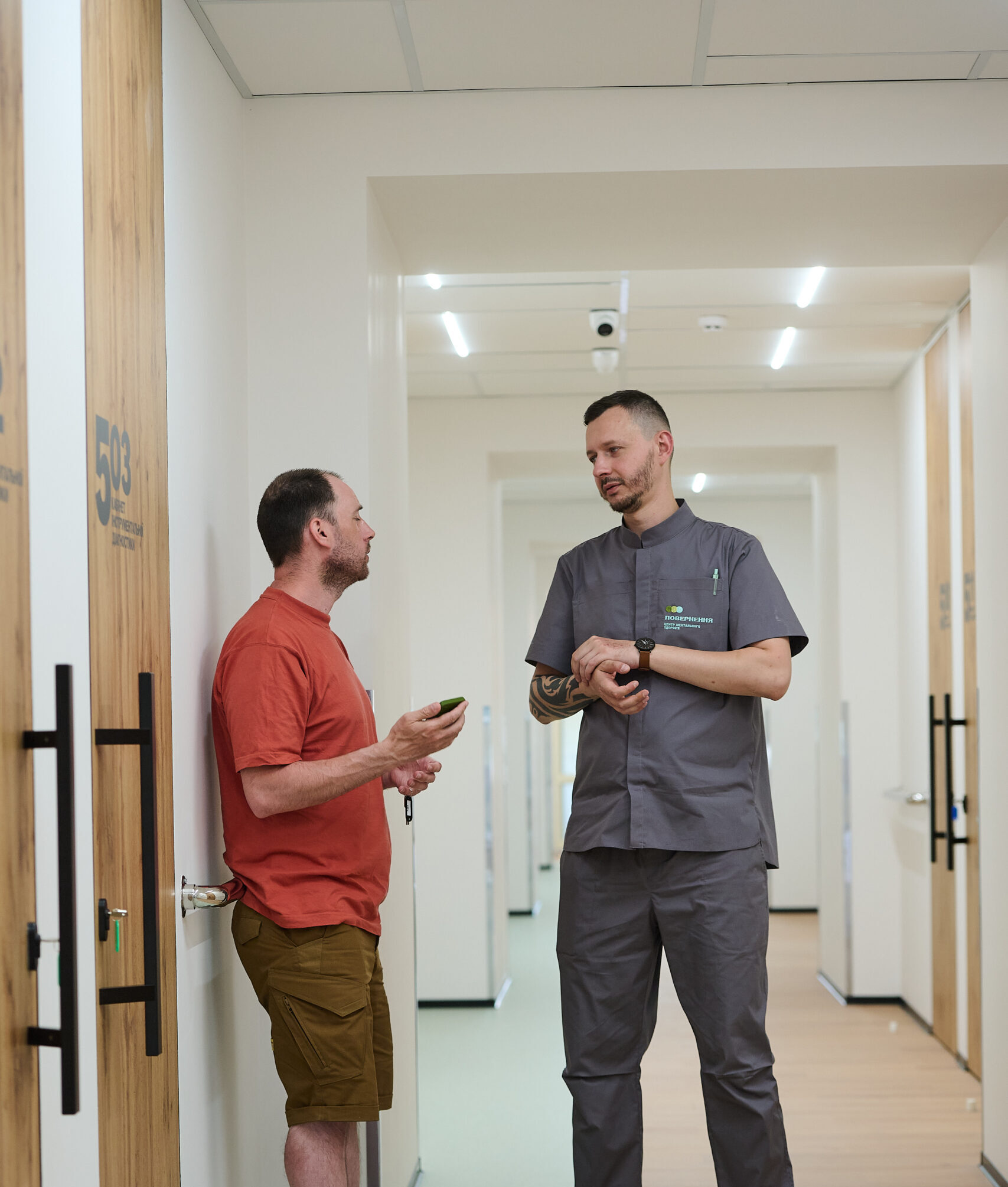
As of today, 17 centers of the RETURNING network, founded by Viktor and Olena Pinchuka, operate in Vinnytsia, Dnipro, Zhytomyr, Ivano-Frankivsk, Kyiv and in Kyiv Oblast, Kropyvnytskyi, Lutsk, Odesa, Poltava, Rivne, Ternopil, Uzhhorod, Khmelnytskyi, Cherkasy, Chernihiv, as well as on the basis of one of the medical institutions of the National Guard of Ukraine. More than 25,000 military personnel, veterans and their family members are assisted at the network's centers.
At the first stage of the RETURNING project, it is planned to open at least 25 such centers throughout Ukraine, which will be able to provide assistance to more than 100,000 military personnel, veterans and their family members every year.
A new center in the nationwide RETURNING (Ukr. «ПОВЕРНЕННЯ») network, founded by Victor and Olena Pinchuk, will operate at a medical facility in the Kyiv region. Each year, more than 350 service members, veterans and their families will be able to receive free, professional psychological support at the center. In total, the center will provide more than 1,500 consultations annually.
Specialists at the RETURNING center work with post-traumatic stress disorder (PTSD), anxiety disorders, depression, adjustment and psychosomatic difficulties, as well as other consequences of traumatic experiences. All services at RETURNING centers are free of charge for visitors.
RETURNING demonstrates a successful partnership between the private sector and the state: philanthropists establish mental health centers within public medical institutions.
“Psychological rehabilitation and mental health are vitally important. Our heroes need to understand this, know that support is available and seek it. I am pleased with what I see today: people are already coming to the centers, including with their families, and actively working on their recovery. Today, we are opening the 16th RETURNING center, and many more will follow. Gradually, these centers will operate throughout Ukraine, ensuring that every veteran and their loved ones can receive high-quality psychological support,” said Victor Pinchuk, founder of RETURNING.
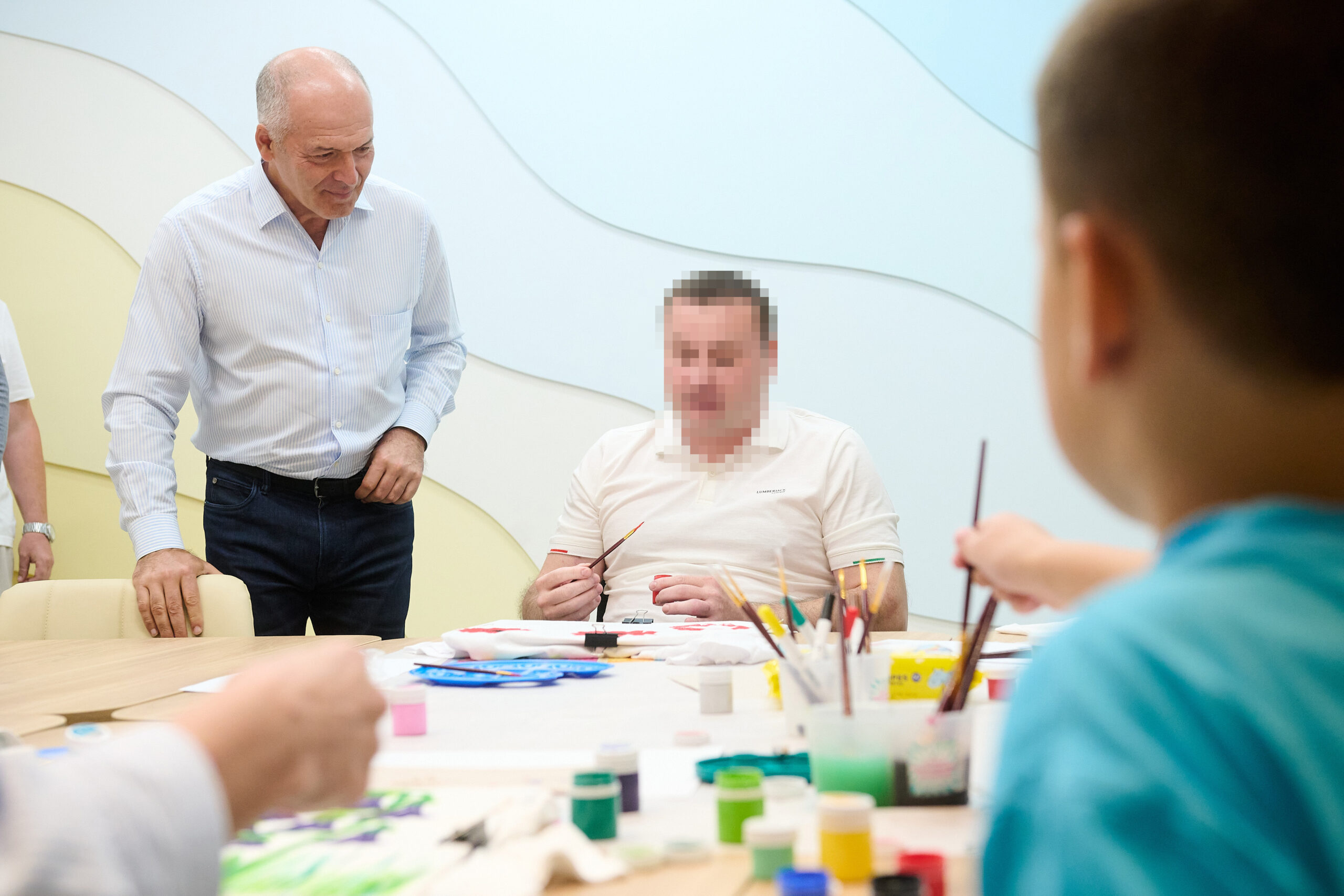
The RETURNING center uses a multidisciplinary approach. Visitors are supported by psychiatrists, psychologists, psychotherapists and nurses, as well as case managers, social workers and veteran support specialists when needed.
“We often remind the men and women serving our country that they are not machines. The brain also gets tired, and multiple concussions can affect emotional and cognitive functioning. Seeking help is therefore not a sign of weakness but an important step toward recovery. Some service members come to us on their own, others with the support of their wives, and others on the recommendation of fellow service members when someone tells them, ‘Listen, it helped me—you should try it too. “This is extremely important because hearing about a positive experience of receiving support helps people find the courage to seek assistance,” said Iryna Rozheliuk, Head of the Mental Health Stream.
The new RETURNING center includes specialists’ consultation rooms, a group therapy room, a doctors’ room, a procedure room, a senior nurse’s office, a reception area, a visitor waiting area and accessible bathrooms. The space was designed in accordance with the principles of barrier-free access, inclusivity and modern accessibility standards. Every decision—from the layout of the premises to communication practices—is intended to ensure that every visitor feels safe and can receive care in an atmosphere of dignity and trust.
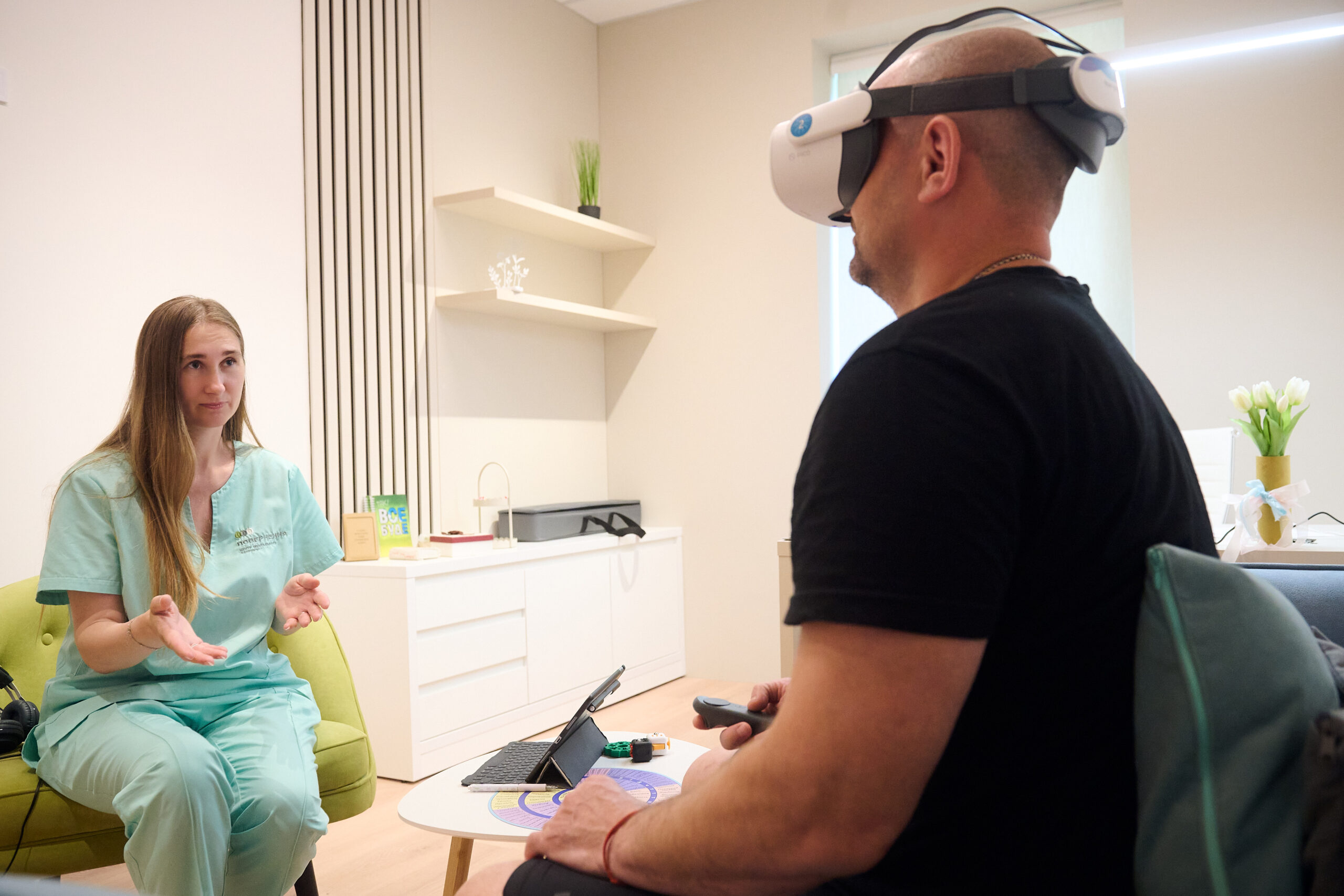
RETURNING centers currently operate in Vinnytsia, Dnipro, Zhytomyr, Ivano-Frankivsk, Kyiv, Kropyvnytskyi, Lutsk, Odesa, Poltava, Rivne, Ternopil, Uzhhorod, Khmelnytskyi, Cherkasy, Chernihiv and the Kyiv region. As of July 2026, the nationwide RETURNING network has already provided high-quality services free of charge to more than 25,000 service members, veterans and their families.
The first phase of the project envisages opening 25 centers across Ukraine. Every year, more than 100,000 service members, veterans and their families will be able to receive professional psychological support at these centers.
RETURNING (Ukr. «ПОВЕРНЕННЯ»), a project founded by Victor and Olena Pinchuk, held its second annual international research and practice conference, “RETURNING. An Ecosystem of Mental Health Care,” dedicated to supporting service members, veterans and their families.
The event brought together more than 200 participants, including Ukrainian and international experts, healthcare institution leaders, psychiatrists, psychologists, psychotherapists, and representatives of professional associations and organizations from countries including the United States, Ireland and Israel.
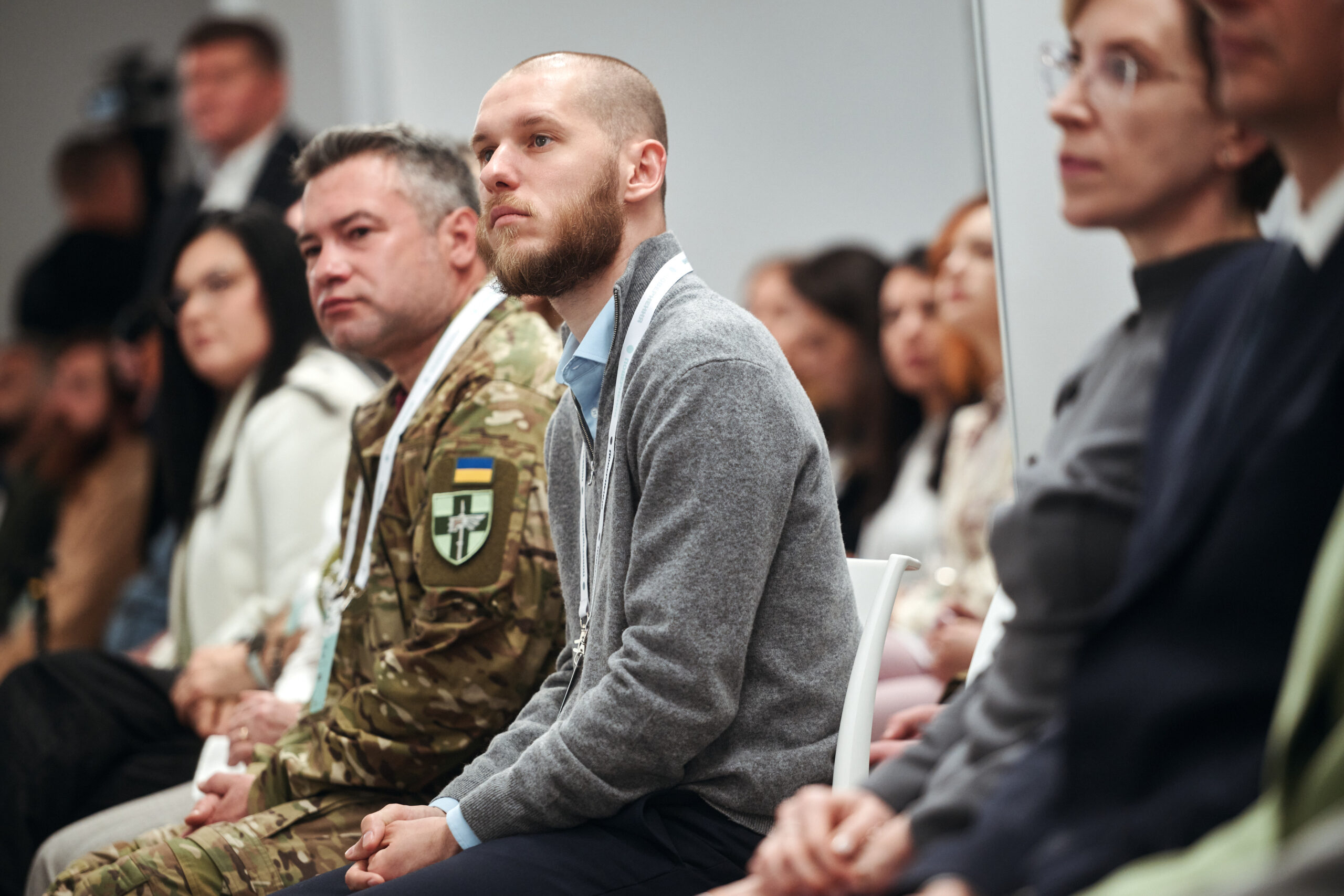
Active-duty service members, veterans and their families also took part, along with representatives of the Office of the President of Ukraine, the Ministry of Health, the Ministry of Veterans Affairs, the Ministry of Defence, the Ministry of Internal Affairs, the Ministry of Social Policy and the National Health Service of Ukraine.
Opening the conference, businessman and philanthropist Victor Pinchuk, founder of RETURNING, spoke about the project’s role in Ukraine’s future mental health ecosystem:
“Ukraine’s mental health ecosystem is currently being developed at several levels. At the initiative of First Lady Olena Zelenska, the state began building this system and is steadily advancing this work. In my view, RETURNING is one part of this future ecosystem—and perhaps already one of its most powerful and tangible elements. These are modern centers for mental health and psychological recovery, created in line with the world’s best models and standards. “To make this possible, we studied leading international experience and are adapting it to the Ukrainian context.”
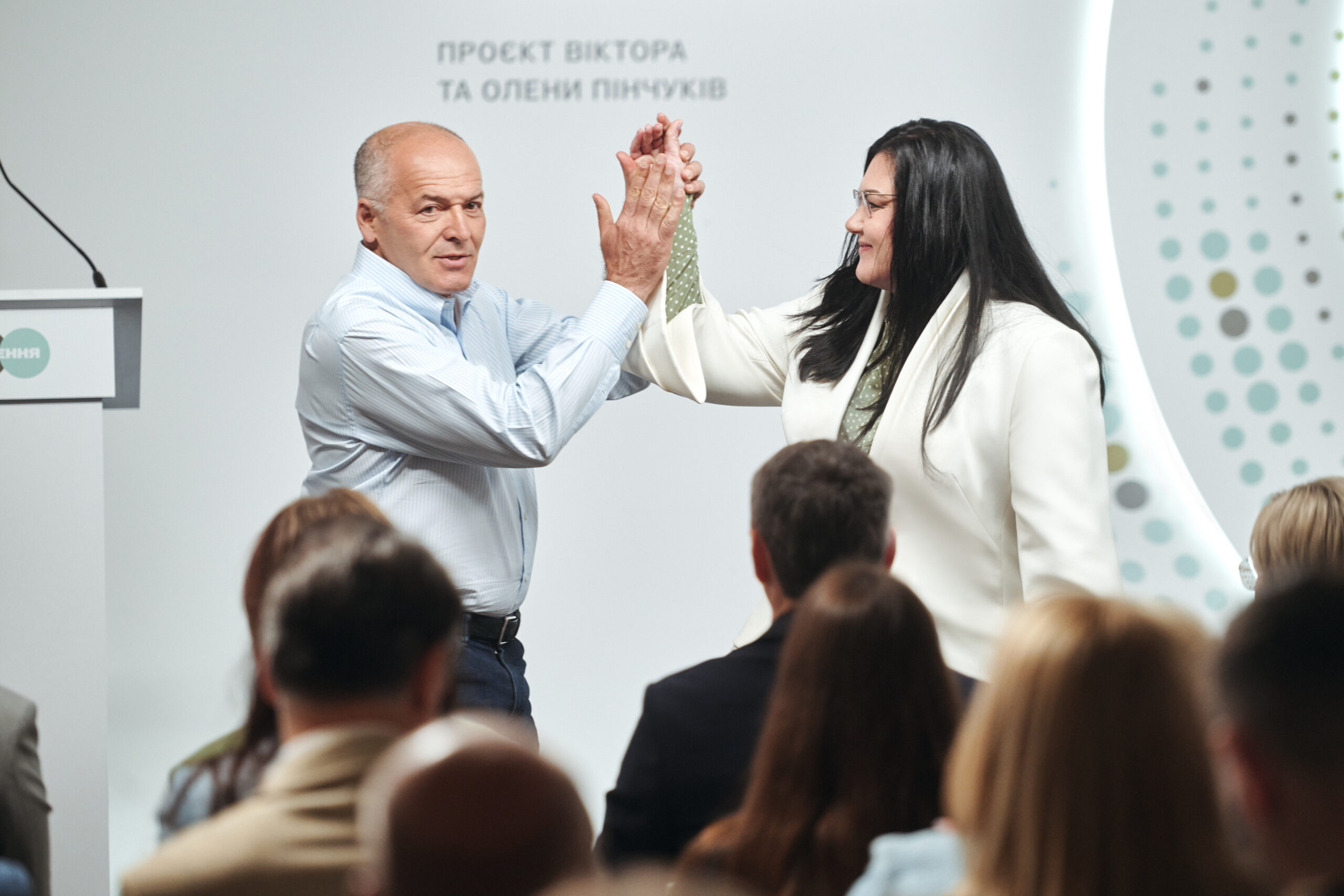
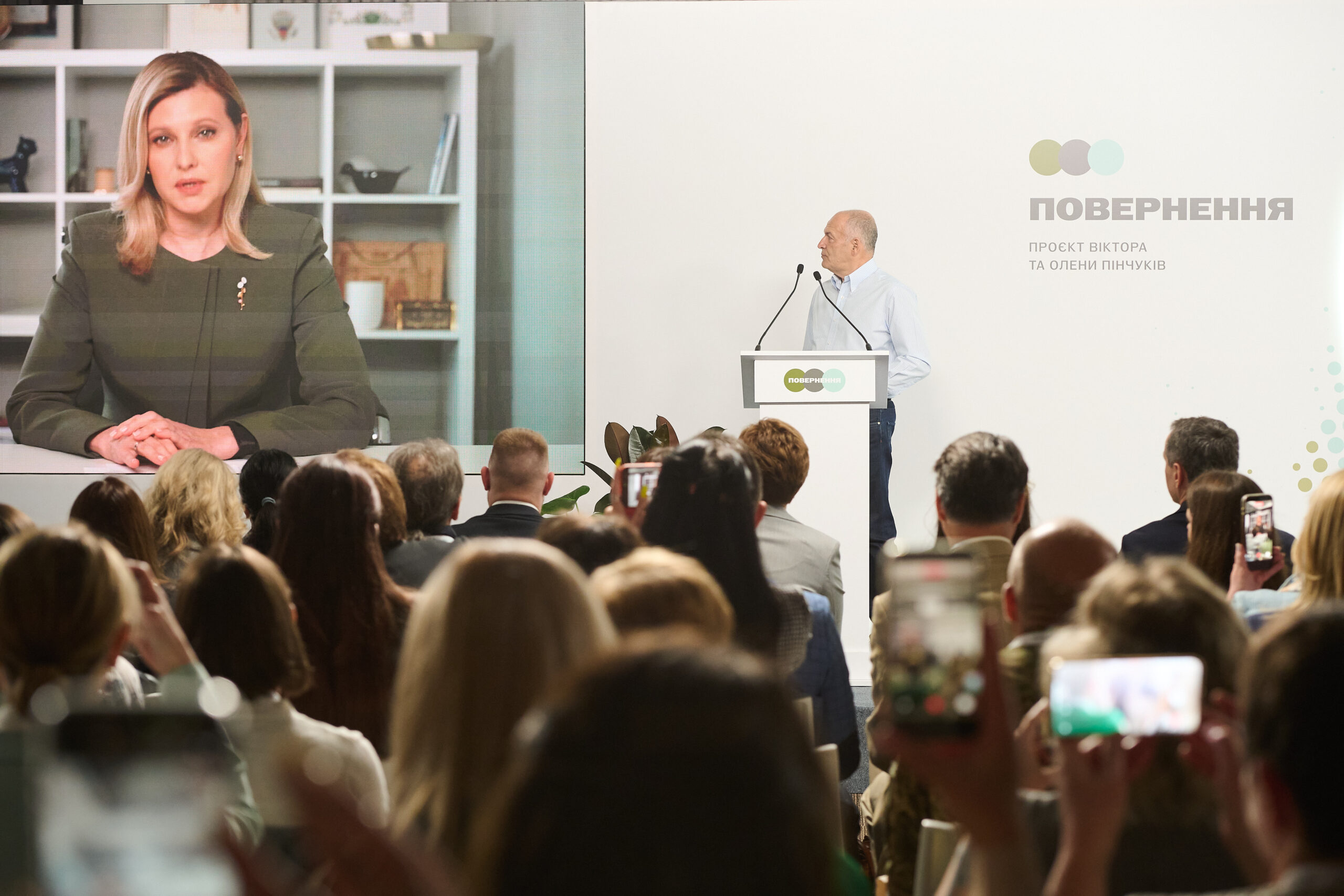
As part of the opening session, First Lady of Ukraine Olena Zelenska, initiator of the All-Ukrainian Mental Health Program “How Are You?”, delivered a special address.
“This private initiative has perfectly strengthened and complemented the national All-Ukrainian Mental Health Program, fitting into it like a missing piece of a puzzle. Through the national program, we are doing everything possible to bring psychological support closer to every Ukrainian: we are opening Resilience Centers and training everyone who works with people to provide psychological support. RETURNING has become an organic part of support pathways, Days of Joint Action, mental health guides and, more broadly, the entire recovery system Ukraine is building. “I know this from experience because I have already visited several centers, including those in Khmelnytskyi and Dnipro. I saw how this synergy works and how proud the regions and institutions are of this cooperation,” Olena Zelenska said.
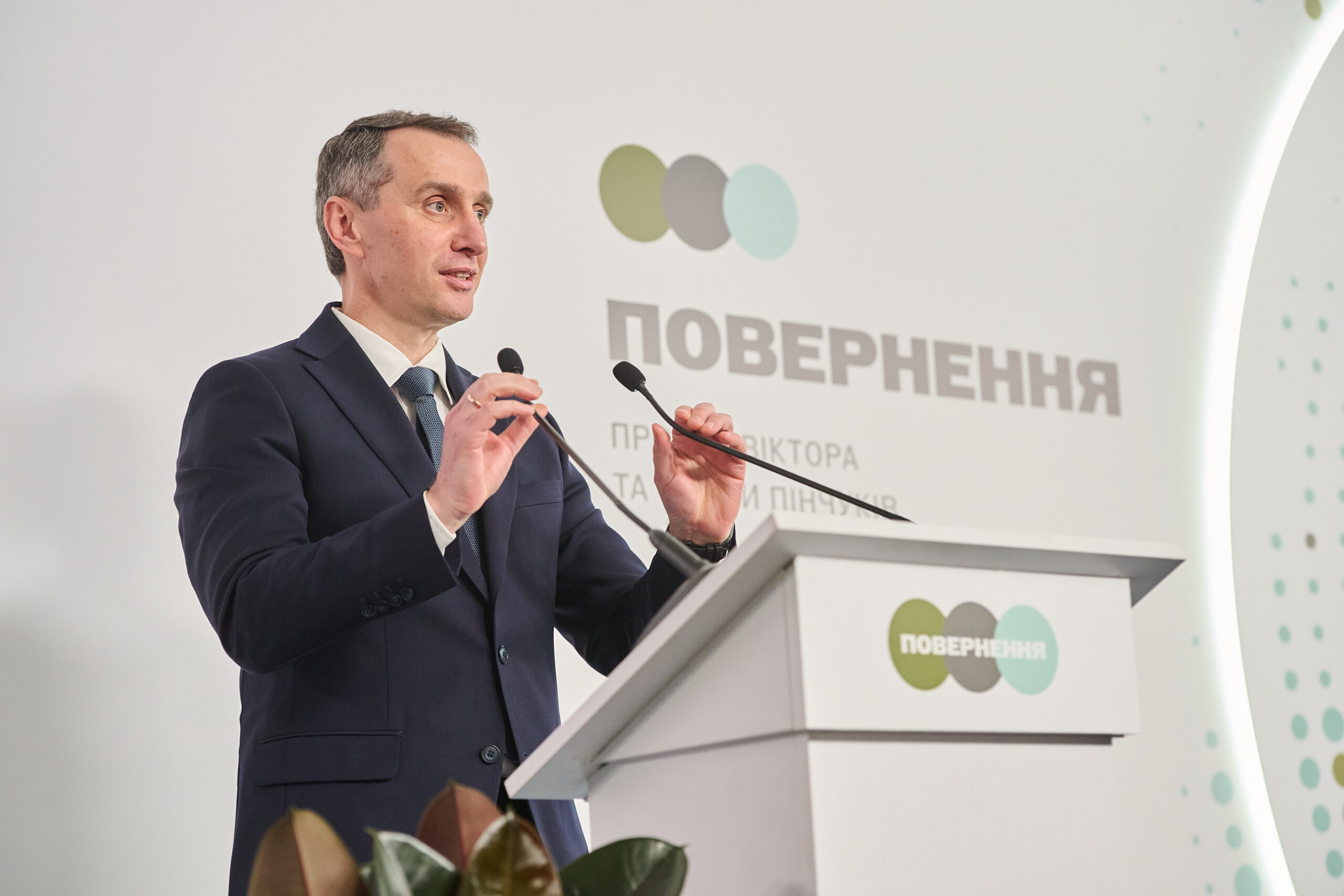
Participants were also addressed by Viktor Liashko, Minister of Health of Ukraine; Iryna Vereshchuk, Deputy Head of the Office of the President of Ukraine; Nataliia Husak, Head of the National Health Service of Ukraine; Ruslan Prykhodko, Deputy Minister of Veterans Affairs of Ukraine; and Svitlana Grytsenko, Head of the RETURNING project. The speakers discussed mental health as a pillar of societal resilience and an essential condition for the country’s recovery during the war.
Iryna Vereshchuk emphasized the role of mental health professionals in maintaining society’s resilience:
“It is mental health professionals who help service members, veterans, their families and Ukrainian civilians restore their inner strength and regain faith in themselves, their future and life itself. This is more than support—it is a matter of the nation’s spiritual resilience. In war, victory belongs to the nation that is capable of remaining mentally resilient.”
Viktor Liashko, Minister of Health of Ukraine, thanked the professionals who work with service members, veterans and their families every day:
"Don't forget to support each other, thank each other. Because you are a support. So that those who protect us today on the front lines, when they return, can receive a shoulder of support. I would like to thank everyone who created mental health centers, who came to work in them, who understood the need to help the state build standards that are equaled today," said Minister of Health Viktor Lyashko.
Ruslan Prykhodko, Deputy Minister of Veteran Affairs of Ukraine, emphasized the importance of a holistic ecosystem of care for veterans, servicemen and their families:
"Today, we are not just talking about individual initiatives or projects - we are talking about the formation of an integral ecosystem of care for veterans, servicemen and their families in Ukraine. And in this context, it is extremely important that initiatives such as the RETURNING project already demonstrate what a modern, affordable and effective mental health support system for our defenders can look like.
Inna Solodka, Deputy Minister of Social Policy, Family and Unity of Ukraine, emphasized the importance of partnership between mental health centers and Centers for Vitality:
"No mental health system works effectively if a person is left alone with his problems after a difficult experience. That is why we are implementing a flagship project developed jointly with the Coordination Center for Mental Health, which is a component of the All-Ukrainian mental health program "How are you?" and envisages the creation of Sustainability Centers as spaces of daily support in communities. Today, there are already 286 centers across the country where people can receive psychological first aid, social support, and support from specialists and the community. It is very important that mental health centers and Centers for Resilience work as partners.”
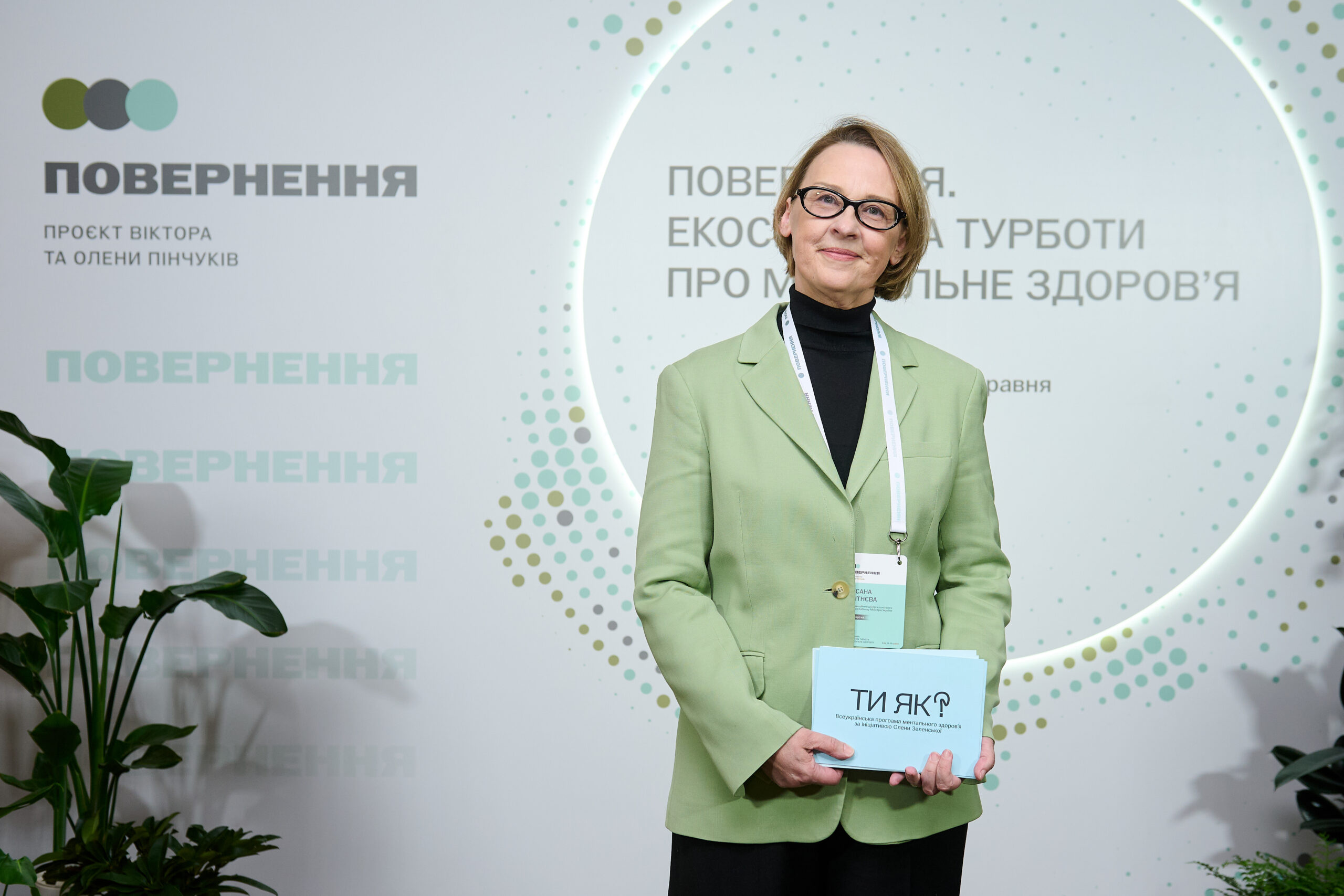
Oksana Zbitneva, head of the All-Ukrainian mental health program "How are you?", spoke about mental health as a matter of daily resilience of Ukrainians and restoration of the country's human capital:
"The war highlighted the importance of mental health in Ukraine at a very high level. We live life, give birth to children - in conditions that are difficult to call human. We learn to live with these experiences. And mental health for Ukrainians is about finding one's own points of support. Chronic exhaustion and stress are manifested in everyday life by a decrease in concentration and attention. It affects how we work, how we perform complex and simple tasks, how we behave while driving and how we deal with other daily tasks. The total "awakeness" that the enemy arranges for us is indicated on both the physical and mental levels. Therefore, we as a whole country will learn to cope with what is happening to us. And this is about mental health today and for many years to come. It's about restoring the most valuable thing in our country - human capital."
Separately, during the conference, the role of state policy and partnership of various sectors in the development of a sustainable mental health support system was emphasized. Inna Yashchuk, State Secretary of the Ministry of Internal Affairs of Ukraine, emphasized that in times of war, taking care of mental health is part of protecting the state:
"Mental health is about society's ability to live, trust, unite and win. This is extremely important during a full scale invasion. At the center of public policy, now more than ever, man and his dignity must be the central story. It is not about responding to a crisis, but about creating an environment where people feel protected and safe. Today, protecting our state also means protecting the inner strength of people," said Inna Yashchuk, State Secretary of the Ministry of Internal Affairs of Ukraine.
The name of the conference reflects the approach that RETURNING is developing within the All-Ukrainian network of mental health centers. Svitlana Hrytsenko, head of the RETURNING project, emphasized the importance of systematic and consistent support:
"The name of the conference "Ecosystem of mental health care" reflects the approach we are developing within the RETURNING project. After all, mental recovery does not begin and does not end with a single request for help. It needs a system: accessible centers, trained specialists, modern knowledge, support of loved ones and a society that learns to talk about mental health without stigma and condemnation. Care should not be random, but consistent - the kind that a person can rely on in the most difficult moments."
The clinical component of the conference covered the key mental health consequences of war for Ukraine’s defenders and their families. Specialists discussed psychological trauma and the brain, post-stress neurocognitive impairment, the neuroanatomy of psychological trauma, post-traumatic stress disorder, traumatic brain injuries, combat stress and complex trauma resulting from captivity.
Dedicated sessions explored practical approaches to care, including early intervention, psychological first aid, treatment for substance use disorders, a multidisciplinary approach to PTSD, physical manifestations of trauma, cardiovascular risks, sexual rehabilitation, and support for the families of service members, fallen defenders and those missing in action.
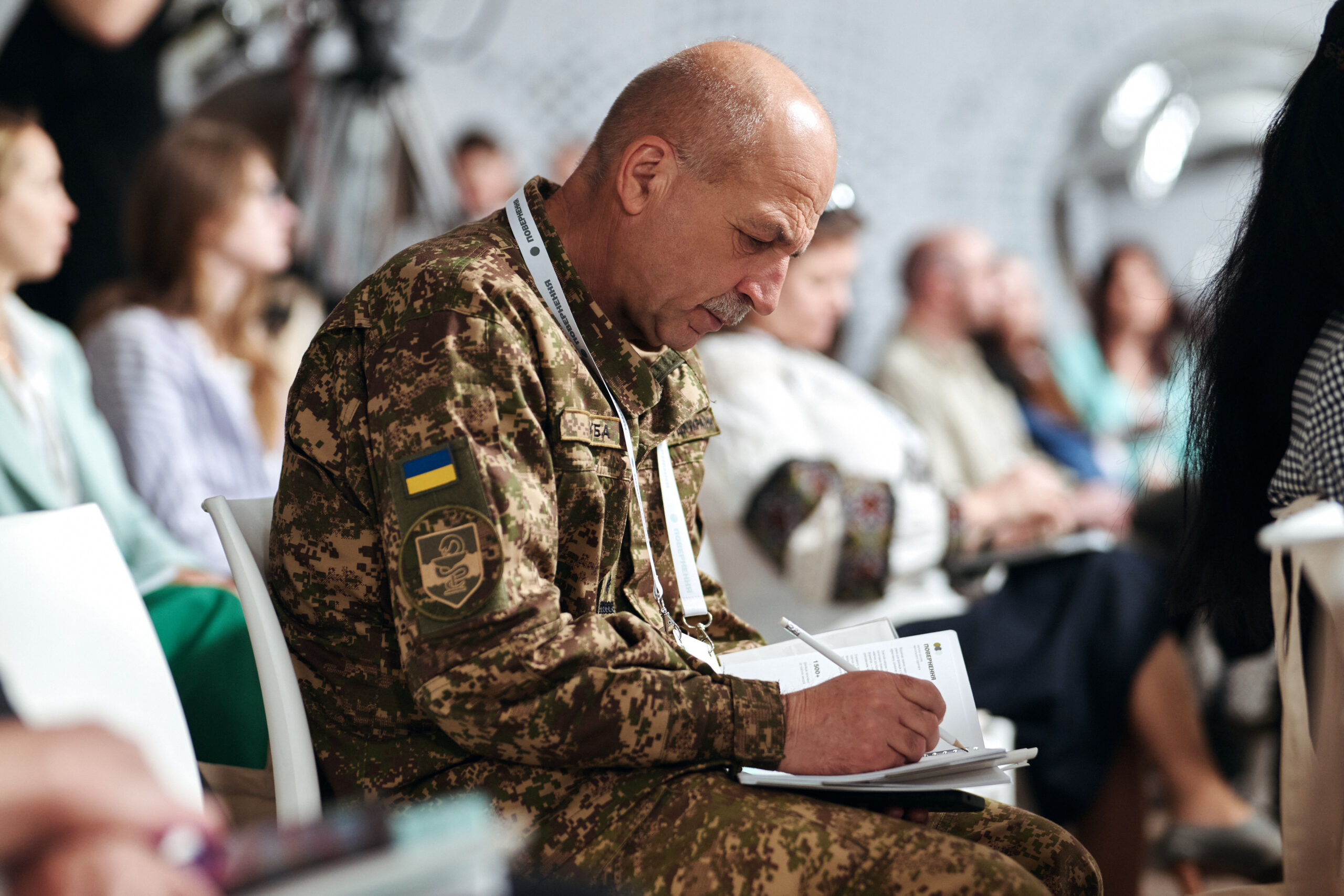
Veterans who participated in the conference also spoke about the importance of accessing support without stigma:
“Mental health matters to all Ukrainians because all of us, unfortunately, have been traumatized by the full-scale war. Ukraine now has an extensive mental health infrastructure. The most important thing is for veterans to know that these opportunities exist and to use them. There are many rehabilitation centers and nonprofit organizations that provide psychological support anonymously and without stigma, and that is extremely important,” veteran Dmytro Kozatskyi said.
Nataliia Husak, Head of the National Health Service of Ukraine, emphasized the need to unite the efforts of the state, the professional community, international partners and civil society:
“In 2026, under the Psychiatric Care component of the Program of Medical Guarantees, 382 contracts were concluded with healthcare providers for a total of UAH 5.849 billion. Of this amount, UAH 5.1495 billion was allocated to inpatient psychiatric care for adults and children; UAH 551.1 million to the development of mental health centers and mobile multidisciplinary teams; and UAH 148.4 million to addiction treatment using substitution maintenance therapy.”
The Ukrainian Association of Football presented a case study of its League of the Mighty project, demonstrating how amputee football can support veterans’ mental well-being, adaptation and return to an active life.
Singer Tina Karol was a special guest at the conference. Drawing on her own experience, she highlighted the importance of nurturing resilience and inner stability, as well as supporting those who help others navigate the recovery process every day:
“Strong people are not those who never fall. They are those who have learned to get back up.”
Mykyta Arkhypov, Head of the RETURNING center in Odesa, spoke about the importance of developing an ecosystem of mental health care not only by opening centers but also through professional training, shared standards, knowledge exchange and sustainable care pathways:
“Events like this are about more than acquiring new knowledge. They are about sharing experience, developing common approaches and building a professional community that works according to shared standards. This is how an ecosystem of care grows: through centers in different regions, trained professionals, sustainable care pathways and the ability for people to receive high-quality support regardless of the city in which they live. This is the essence of RETURNING—not to create isolated points of care but to build a network that operates systematically and consistently.”
RETURNING is a nationwide network of mental health centers founded by Victor and Olena Pinchuk to support Ukraine’s defenders, veterans and their families who have experienced the psychological consequences of the war caused by Russian aggression.
As of today, 15 centers in the network operate in Vinnytsia, Dnipro, Zhytomyr, Ivano-Frankivsk, Kyiv, Kropyvnytskyi, Lutsk, Odesa, Poltava, Rivne, Ternopil, Uzhhorod, Khmelnytskyi, Cherkasy and Chernihiv. More than 20,000 service members, veterans and their families are already receiving professional support free of charge at these centers.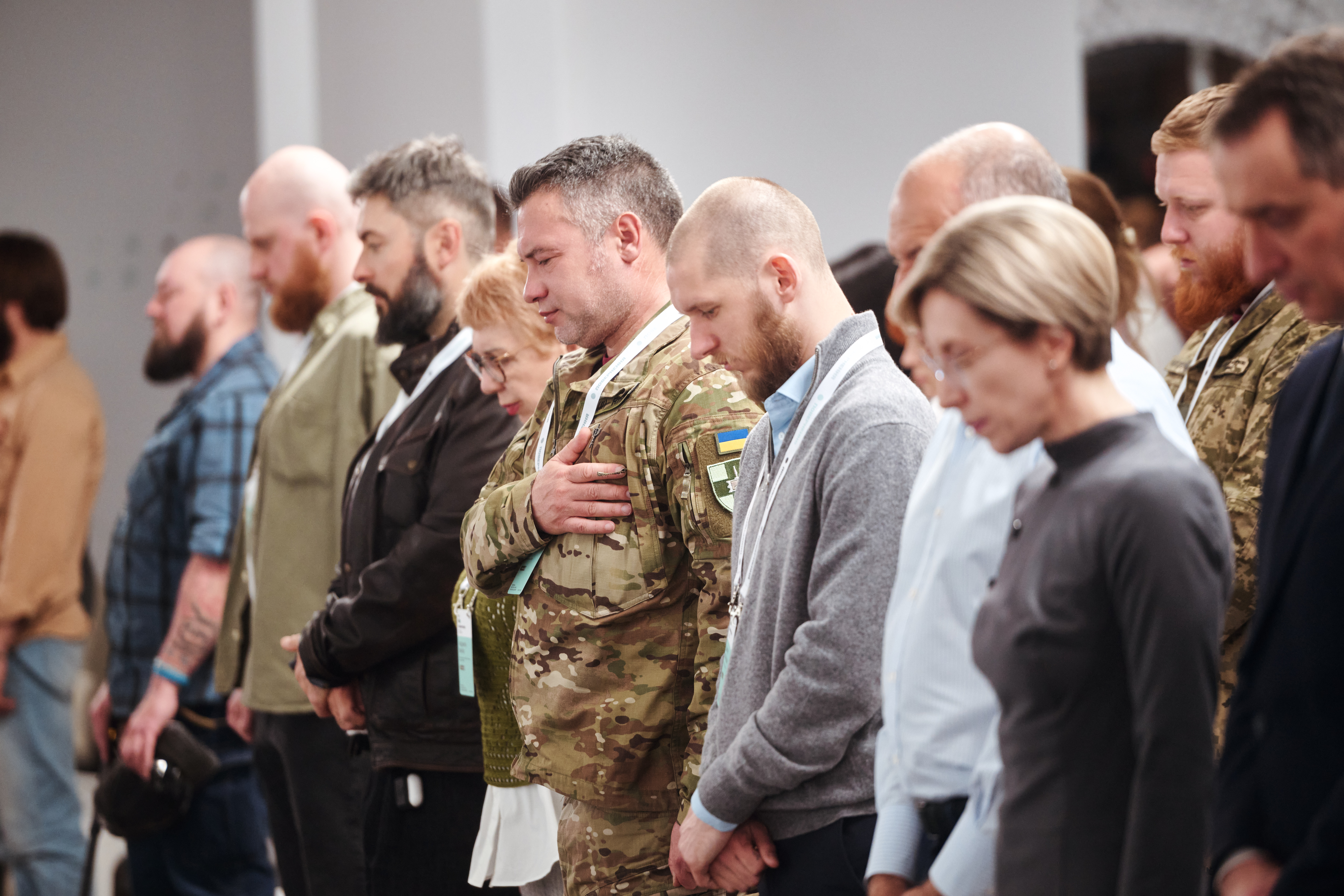
The Vinnytsia Mental Health Center in the nationwide RETURNING (Ukr. «ПОВЕРНЕННЯ») network will provide free, professional psychological support to more than 4,000 service members, veterans and their families each year. The project was founded by Victor and Olena Pinchuk to support the mental health of Ukraine’s defenders, veterans and their families who have experienced the psychological consequences of the war caused by Russian aggression.
Speaking about the importance of developing a culture of mental health care in Ukraine and overcoming the stigma surrounding psychological support, Victor Pinchuk, founder of RETURNING, said:
“Our society’s culture and traditions are still shaped by prejudice: ‘What do you mean, see a psychiatrist? What will people say—that I went to a mental hospital?’ In Western countries, the opposite is true: when people face problems in their family, with their children, in their marriage or at work, the first thing they do is consult a psychologist or psychiatrist. Sometimes it can even be difficult to get an appointment. Ukraine does not yet have this tradition or culture. That is why it is important for defenders to speak about mental health with one another and for doctors to explain why seeking help is necessary.”
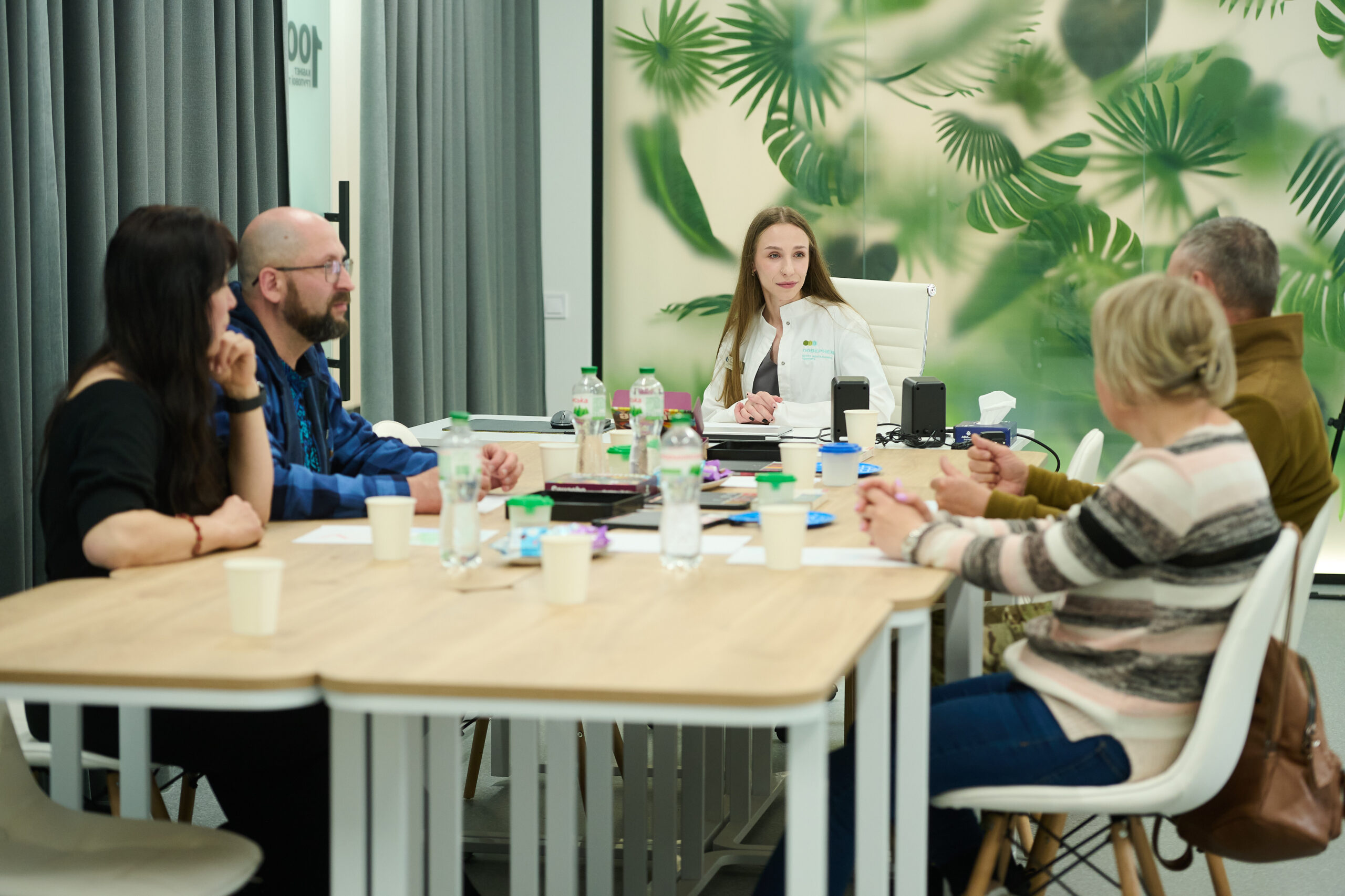
The RETURNING Mental Health Center in Vinnytsia is a space of support, safety and recovery for service members, veterans, people with combat experience, former prisoners of war and their families. The center provides individual and group support, addresses the consequences of traumatic experiences, helps visitors stabilize their condition and regain a sense of inner stability. When necessary, specialists may prescribe medication. Particular attention is given to psychological inclusion by creating a safe and confidential environment free from judgment and stigma.
RETURNING demonstrates a successful partnership between the private sector and the state, with philanthropists establishing centers within public and municipal medical institutions. With funding from RETURNING, part of the facility underwent a major renovation and was transformed into a modern, comfortable and barrier-free center designed to meet accessibility standards and the needs of wheelchair users.
The center includes consultation rooms for individual and family support, a group therapy room, a reception area with a waiting space, a day-care unit, a procedure room and accessible restrooms. It also features a pottery studio—a space for free self-expression where working with clay and other materials helps visitors reduce tension, better understand their emotional state and gradually regain a sense of control and inner stability.
The center is equipped with technology and materials for both the professionals’ work and visitors’ recovery. These include computer equipment, multimedia systems, the Shiftwave System for psychological relaxation, VR headsets, art therapy and pottery materials, therapeutic games, anti-stress and tactile tools, as well as professional literature for specialists.
Visitors are supported by a multidisciplinary team comprising psychiatrists, a medical psychologist, a clinical psychologist, nurses and a medical registrar. This enables a comprehensive approach to support that takes each person’s clinical, psychological and social needs into account.
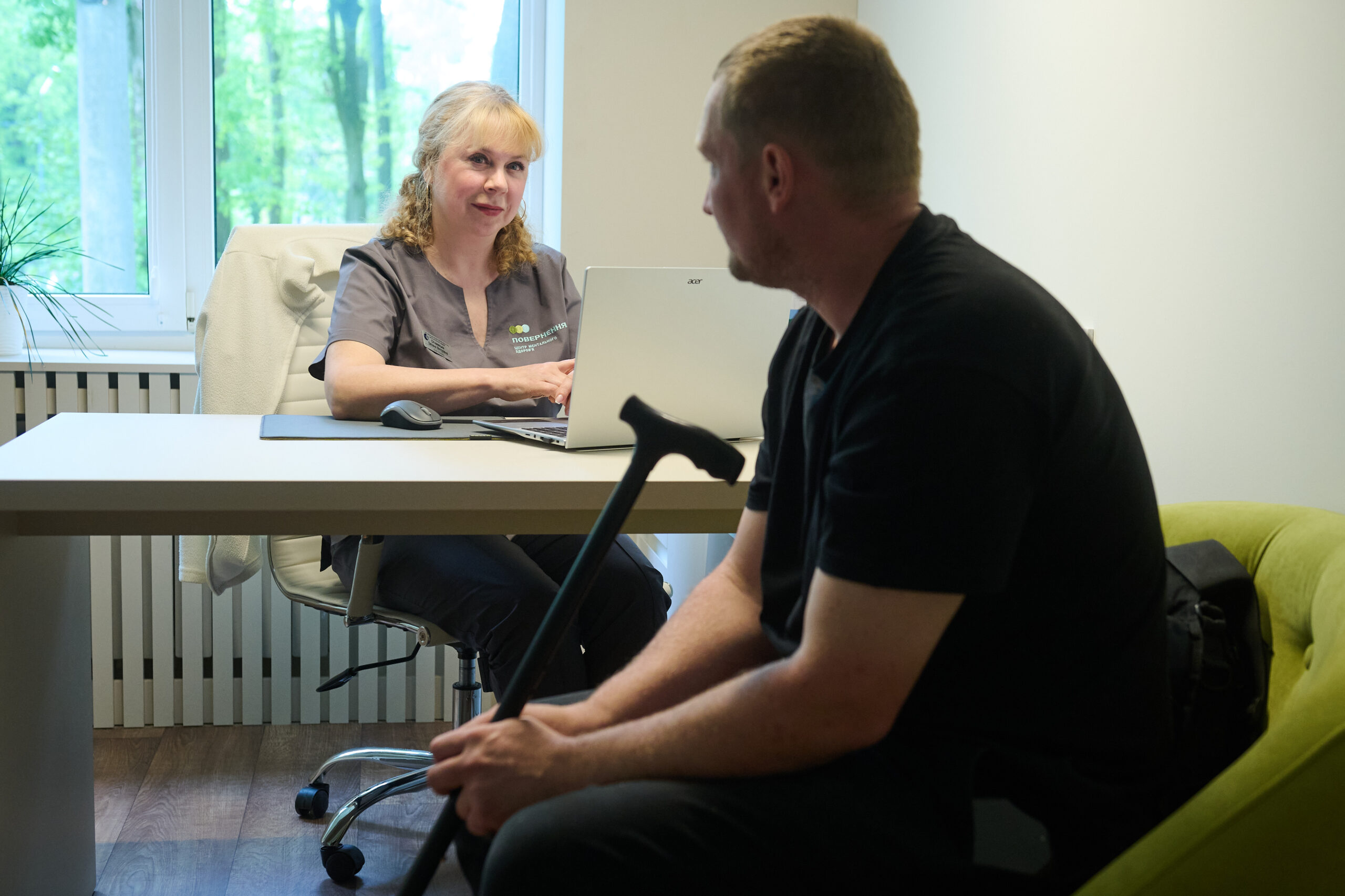
“Seeking help from mental health professionals is not a sign of weakness; it is an important step toward recovery. After combat, captivity, loss or prolonged exhaustion, it can be difficult for a person to cope with the consequences of what they have experienced on their own. Our goal is to create a safe space where service members, veterans and their loved ones can receive professional support without judgment and with respect for their experiences,” said Inha Tyshkul, Head of the RETURNING Center in Vinnytsia.
Support at the Vinnytsia RETURNING Center is provided free of charge on an outpatient basis or, when necessary, at visitors’ places of residence. Specialists work with stress-related conditions, anxiety and depressive disorders, post-traumatic stress disorder, adjustment and psychosomatic difficulties, as well as psychotic conditions.
As of today, 15 centers in the RETURNING network, founded by Victor and Olena Pinchuk, operate in Vinnytsia, Dnipro, Zhytomyr, Ivano-Frankivsk, Kyiv, Kropyvnytskyi, Lutsk, Odesa, Poltava, Rivne, Ternopil, Uzhhorod, Khmelnytskyi, Cherkasy and Chernihiv. The first phase of RETURNING envisages opening 25 centers across Ukraine, which together will be able to support more than 100,000 service members, veterans and their families each year.
Address of the RETURNING Center in Vinnytsia: 92 Khmelnytske Highway, Main Building, Letter “B”, Vinnytsia, Ukraine
Reception phone number: +38 067 581 97 57
Email for inquiries: [email protected]
The RETURNING (ukr. ПОВЕРНЕННЯ) mental health center in Odesa will provide free, professional psychological support to more than 4,000 service members, veterans, and their family members each year. The RETURNING project was founded by Victor and Olena Pinchuk to support the mental health of Ukraine’s defenders, veterans, and their families affected by the psychological consequences of the war caused by Russian aggression.
The RETURNING project demonstrates a successful partnership between the private sector and the state, where philanthropists establish centers based within public healthcare institutions.
«“Skilled professionals are the foundation of a successful mental health ecosystem. That is why the POVERNENNIA network systematically invests in education—both for its own teams and for specialists across the field.Our training programs engage all multidisciplinary teams and are grounded in the best practices from Ukraine and around the world. Particular attention is given to implementing effective approaches, including EMDR, cognitive behavioral therapy (CBT), and family therapy, as well as developing regular supervision as a key tool for supporting professionals. We train specialists to work with the most complex cases—such as captivity experiences, PTSD, and addiction—so that our centers combine not only comfort and inclusivity, but above all, high-quality and professional care.,” said Svitlana Grytsenko, Head of the RETURNING project.
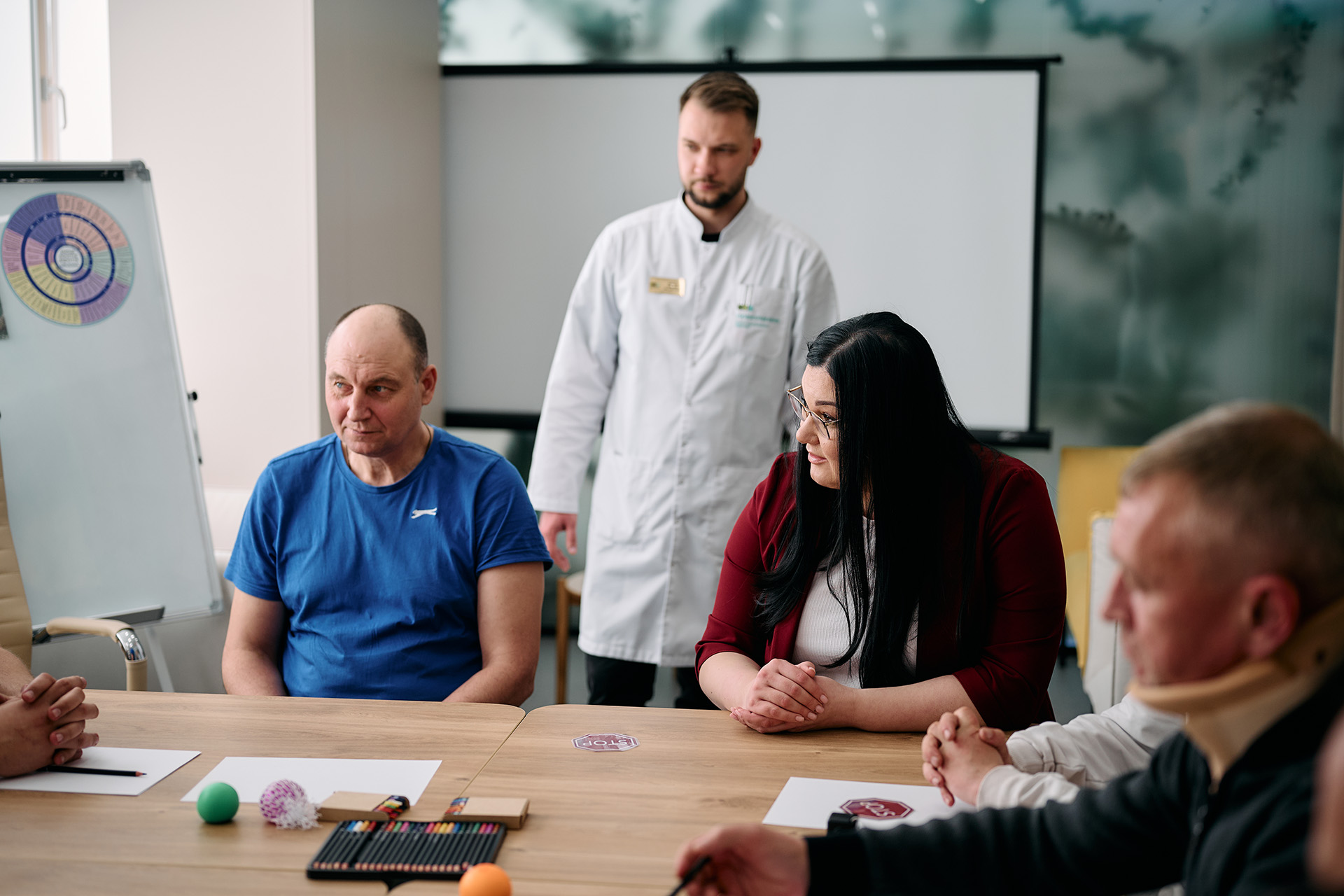
The RETURNING center in Odesa is located at26-A Akademika Zabolotnoho Street (8th floor). The center provides facilities for individual, family, and group work: project funding has equipped offices for individual and family consultations, a space for group therapy, a two-bed day inpatient unit with multifunctional medical beds, a treatment room, a reception area with a waiting zone, a staff room, and an accessible restroom for visitors.
The center is equipped with the necessary tools for both specialists’ work and patients’ recovery, including modern equipment, the Shiftwave psychological relief system (USA), and tools for psychotherapeutic practice.
Visitors are supported by a multidisciplinary team — psychiatrists, psychologists, psychotherapists, and, when needed, social workers and veteran support specialists. This approach ensures comprehensive care that addresses clinical, psychological, and social needs.
“Seeking psychological help is a sign of strength and responsibility for one’s own well-being. In the context of war, support is important not only for service members and veterans, but also for their families, as trauma affects the entire family. RETURNING centers are designed to provide a safe and comfortable recovery environment — a space free from judgment and stigma. Psychological inclusivity, respect for each person’s experience, and a sense of safety form the foundation for trust and recovery,” said Mykyta Arkhypov, Head of the RETURNING Center in Odesa.
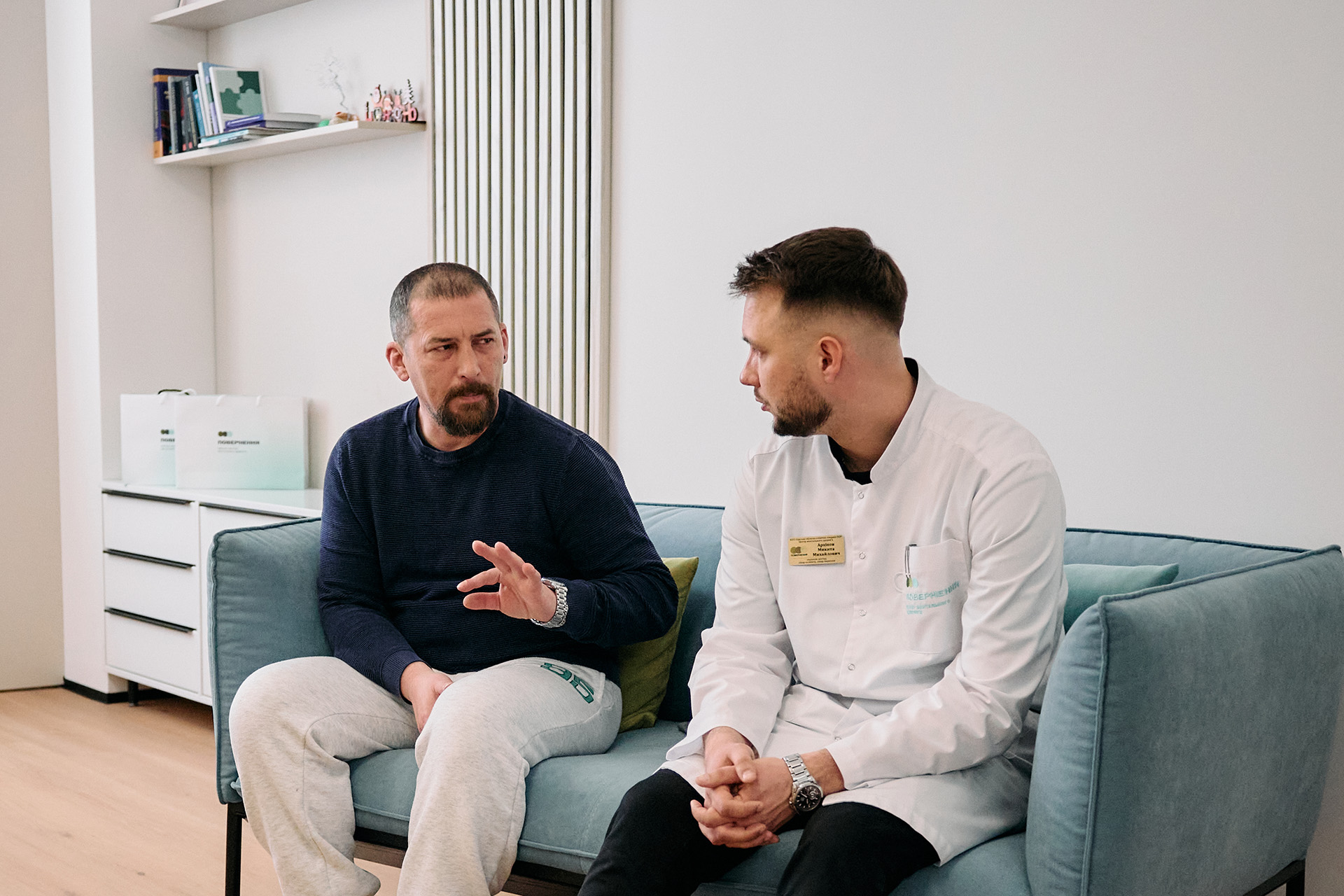
Support is provided on an outpatient basis or, if needed, at the visitor’s place of residence. Specialists work with the effects of stress, anxiety and depressive conditions, post-traumatic stress disorder (PTSD), adjustment and psychosomatic difficulties, as well as other mental health conditions. The center applies modern, evidence-based approaches to trauma care, offering individual, group, and family consultations. Special attention is given to psychological inclusivity — creating a safe, stigma-free environment that respects each person’s experience and ensures confidentiality.
As of today, 14 RETURNING centers founded by Victor and Olena Pinchuk are already operating in Cherkasy, Chernihiv, Dnipro, Ivano-Frankivsk, Khmelnytskyi, Kropyvnytskyi, Kyiv, Lutsk, Odesa, Poltava, Rivne, Ternopil, Uzhhorod, and Zhytomyr. In the first phase, the RETURNING project plans to open 25 centers across Ukraine, which will collectively provide support to more than 100,000 service members, veterans, and their families each year.
Address of the RETURNING center in Odesa:26-A Akademika Zabolotnoho Street (8th floor)
Reception phone number: : +38 093 744 48 47 Email for inquiries:: [email protected]
A new mental health center of the RETURNING network in Uzhhorod will provide free professional psychological support to more than 4,000 military personnel, veterans, and their family members each year. The RETURNING project was founded by Victor and Olena Pinchuk to support the mental health of Ukraine’s defenders, veterans, and their families who have experienced the psychological impact of the war caused by Russian aggression.
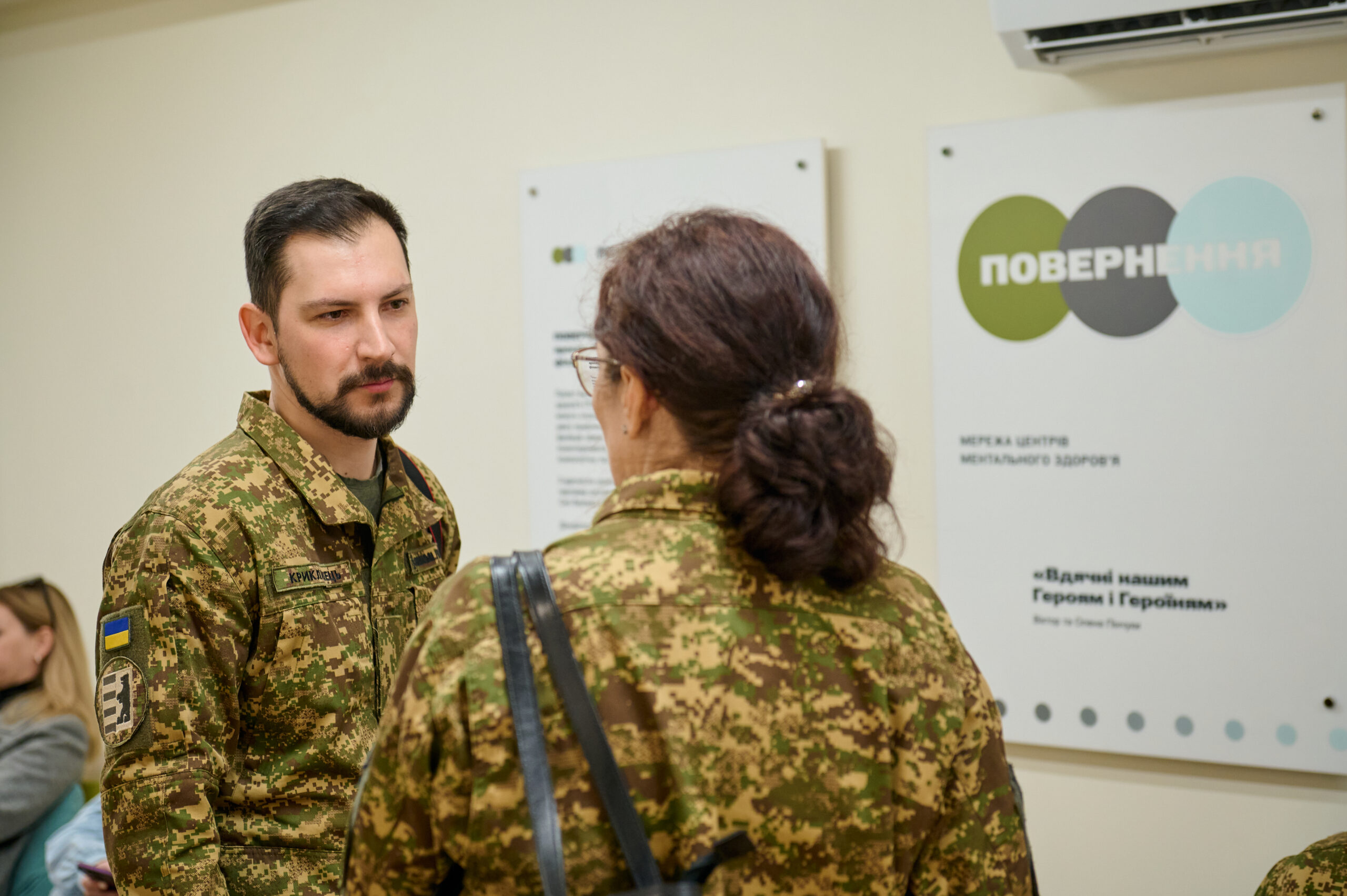
The RETURNING project demonstrates a successful partnership between the private sector and the state, where philanthropists create modern, comfortable, and barrier-free mental health centers based within public medical institutions. The Uzhhorod RETURNING center was established at a state medical facility located at 20 Ivana Korshynskoho Street.
“War affects not only people’s physical health but also their mental health—and these effects are often less visible, yet they significantly shape quality of life. Timely professional support is essential for recovery. Today, more than 10,000 people have already received help at 13 RETURNING centers. We are expanding this network across Ukraine so that high-quality, accessible, and systematic care is available close to those who have experienced the psychological consequences of war. This is a contribution to people’s resilience and to the future of the country,” said Svitlana Grytsenko, Head of the RETURNING project.
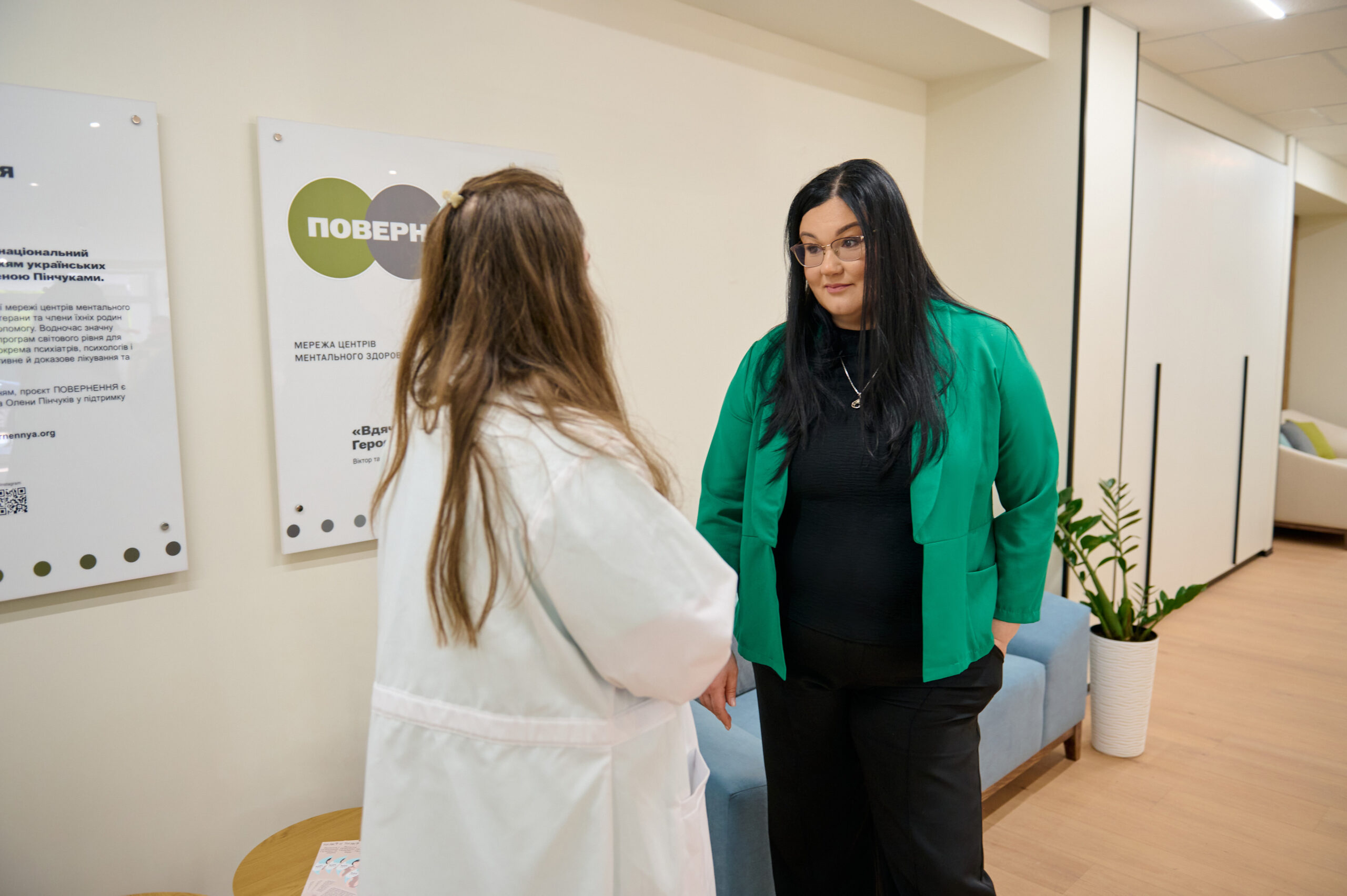
The RETURNING center includes rooms for individual and family sessions, a group therapy space, a day inpatient unit, a treatment room, a reception area with a waiting space, staff facilities, and inclusive restrooms.
Funded by the RETURNING project, the center is also equipped with modern technology, software, and tools for psycho-emotional recovery, including the Shiftwave system (USA). In addition, a range of psychotherapeutic tools is used, such as metaphorical cards, art therapy materials, anti-stress tools, and professional literature.
A multidisciplinary team works with visitors at the center, including psychiatrists, psychologists, psychotherapists, and nurses, with social workers involved when needed. This approach allows for addressing clinical, psychological, and social needs comprehensively.
“In working with military personnel, veterans, and their families, a person-centered approach is key—seeing not a diagnosis, but a person with their experience, pain, and strengths. We also follow the principle of psychological inclusivity, creating a safe space where everyone can be heard without judgment or stigma. This trust becomes the foundation for recovery,” said Maryna Foluchko, Head of the RETURNING Center in Uzhhorod.
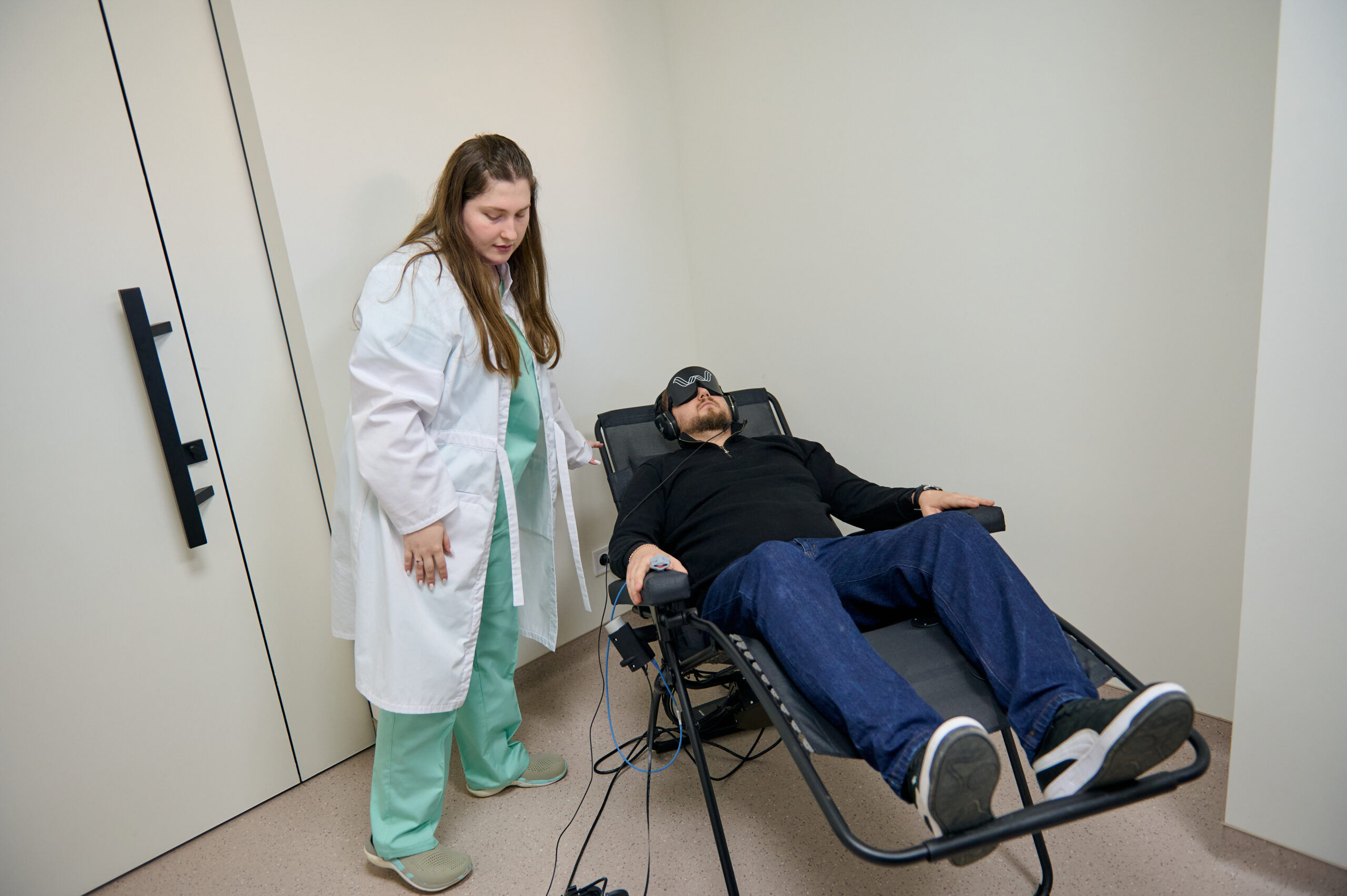
Support is provided on an outpatient basis or, if needed, through mobile outreach teams. Specialists work with stress-related conditions, anxiety and depressive states, PTSD, adjustment difficulties, and other mental health conditions. The center applies evidence-based approaches, including cognitive behavioral therapy and trauma-focused therapy, as well as stabilization techniques, self-regulation, and psychoeducation. Individual, group, and family counseling are available, along with medication support when necessary.
In addition to Uzhhorod, RETURNING centers already operate in Ivano-Frankivsk, Dnipro, Zhytomyr, Kyiv, Kropyvnytskyi, Lutsk, Poltava, Rivne, Ternopil, Khmelnytskyi, and Chernihiv. In the first phase of the RETURNING project, founded by Victor and Olena Pinchuk, at least 25 centers are planned to open across Ukraine.
Address: 20 Ivana Korshynskoho St., Uzhhorod
Reception phone: +38 066 312 36 78
Email: [email protected]
A comfortable, inclusive, and modern mental health center in the RETURNING (Ukr. «ПОВЕРНЕННЯ») network has opened in Zhytomyr for service members, veterans, and their families. It is the 12th center in the nationwide network founded by Victor and Olena Pinchuk to support the mental health of Ukraine’s defenders, veterans, and their family members affected by the psychological consequences of war.
Each year, more than 4,000 service members, veterans, and their families will be able to receive free, professional psychological support at the center.
Anyone experiencing the effects of psychological trauma can seek support here. The center’s specialists work with post-traumatic stress disorder (PTSD), anxiety and depressive disorders, adjustment disorders, psychosomatic conditions, and other consequences of psychological trauma. All services are provided free of charge.
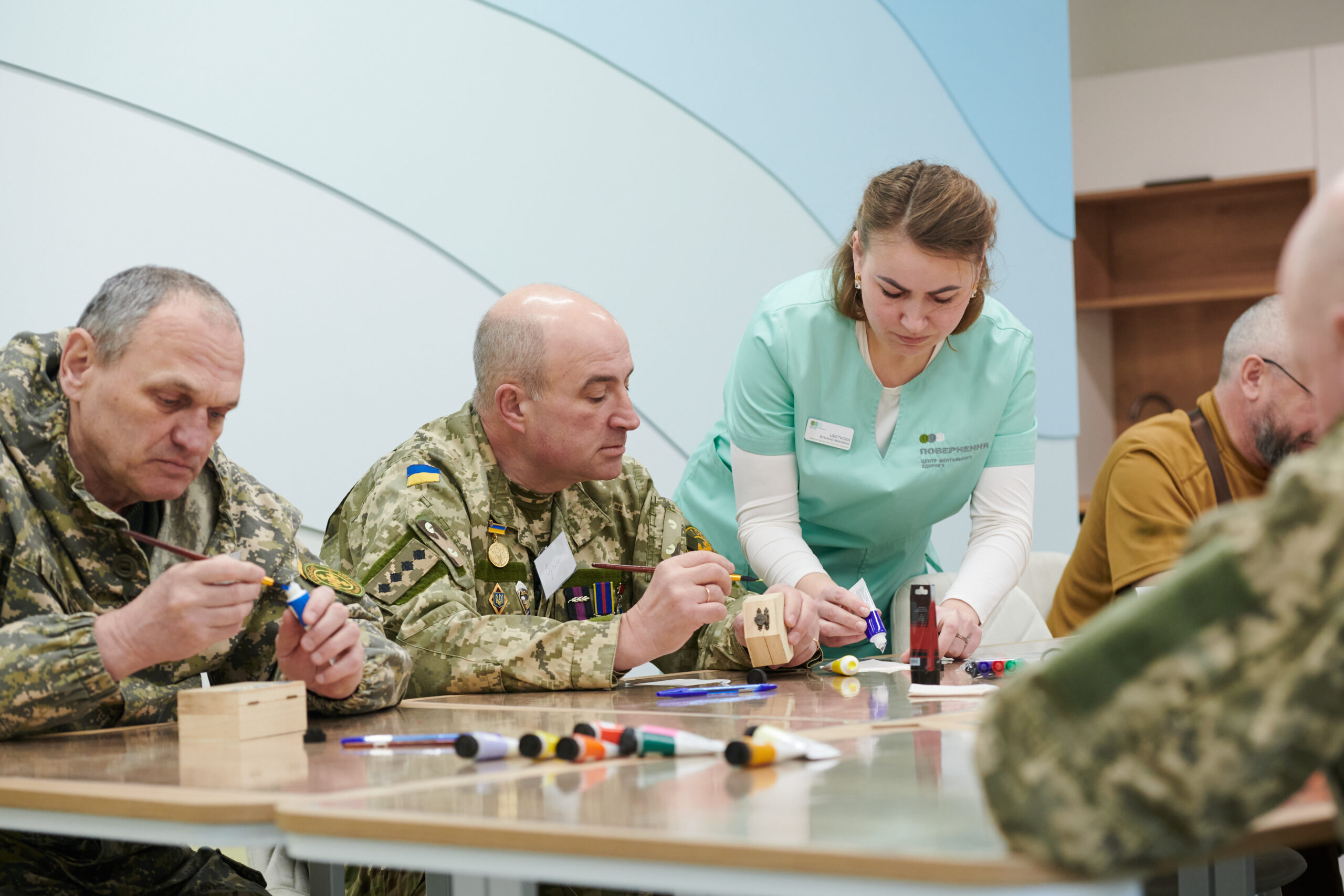
“Together with my wife, Olena, we are building the RETURNING network because we understand the enormous psychological strain our heroes on the front line are under. We need to help them return to normal life as fully as possible. Supporting the mental health of service members, veterans, and their families must be an absolute priority for the state. We can already see that this approach works and that the private sector can be a powerful partner,” said Victor Pinchuk. He added: “More than 10,000 of our heroes, veterans, and their family members are already receiving support and recovering at RETURNING centers.”
The center was established through a public-private partnership. It operates in the former premises of the Regional Medical Consultative and Diagnostic Center at 1 Viktora Kosenka Street. The entire facility complies with accessibility standards.
The center includes rooms for individual and family therapy, a group therapy room, a two-bed day-care unit equipped with adjustable medical beds, a procedure room, a reception and waiting area, and staff facilities. It is fully accessible, with wide doorways, no thresholds, and restrooms adapted for wheelchair users.
The center is equipped with a Shiftwave System (USA), an EMDR kit, computers, art therapy materials, stress-relief tools, resources for body-based practices, and a professional library covering psychology, psychiatry, and psychotherapy.
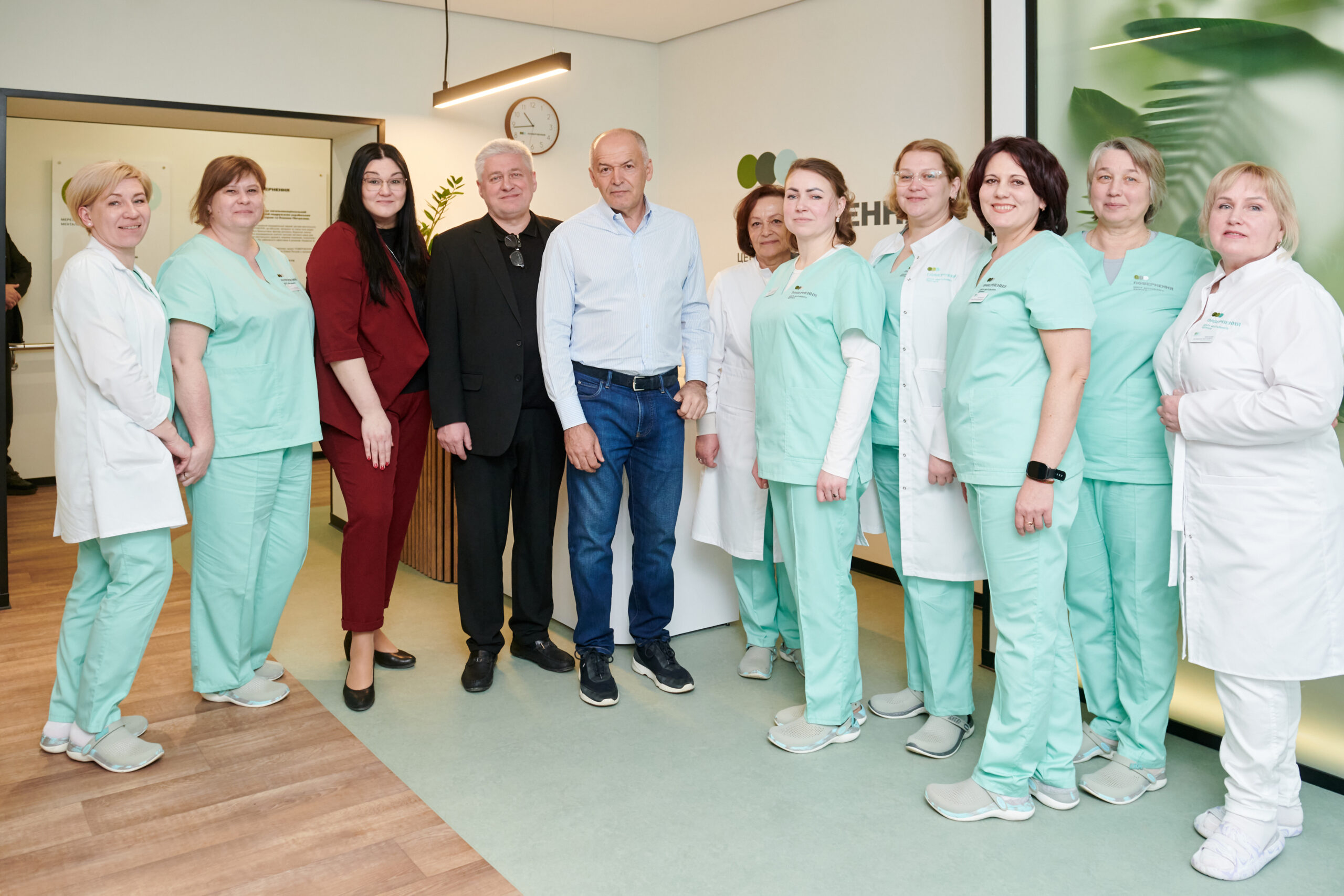
The multidisciplinary team includes psychiatrists, a medical psychologist, clinical psychologists, a psychotherapist, a social worker, a head nurse, a nurse, and junior medical staff. Together, they provide comprehensive support that addresses patients’ clinical, psychological, and social needs. “Opening the RETURNING center today is especially timely, as prolonged stress and traumatic experiences have the greatest impact on service members, veterans, and their families.Timely professional support is not merely assistance; it is a tool for preserving mental resilience, restoring functioning, and preventing future complications.
“We are grateful to Victor and Olena Pinchuk for creating opportunities to provide systematic mental health support and for the continuous professional development opportunities available to our team,” said Alyona Tsvetkova, Head of the RETURNING Center.
Beyond psychological recovery, the project aims to systematically develop Ukraine’s mental health sector. Since the launch of RETURNING in 2025, nearly 100 educational events have been held as part of 14 training programs, involving more than 1,500 professionals from both within and beyond the network. Team members have also completed international training placements in Ireland and the United Kingdom.
RETURNING centers also operate in Dnipro, Kyiv, Cherkasy, Chernihiv, Kropyvnytskyi, Ternopil, Rivne, Lutsk, Khmelnytskyi, Poltava, and Ivano-Frankivsk. During the first stage, Victor and Olena Pinchuk plan to expand the nationwide network to 25 centers.
RETURNING mental helath center
Zhytomyr, Street Viktor Kosenko, 1
+38 095 802 38 42
Svitlana Grytsenko, Member of the Board of the Victor Pinchuk Foundation and Head of the RECOVERY and RETURNING (Ukr. «ПОВЕРНЕННЯ») projects, has been awarded the Order of Merit, III class. The corresponding Decree of the President of Ukraine No. 136/2026 has been published on the official website of the Head of State.
The award recognizes the team’s systematic work and Victor and Olena Pinchuk’s consistent support for the creation and development of a nationwide ecosystem for the physical and psychological recovery of service members, veterans, and their families.
“We are developing the RECOVERY and RETURNING projects with deep gratitude to the service members defending Ukraine today. Our reports contain figures—the number of centers, patients, and educational programs. But for us, behind every figure is an individual: their pain, their journey to recovery, and their family. RECOVERY and RETURNING stand for support, dignity, and respect for every defender of Ukraine. “We work to ensure that support is systematic, high-quality, and accessible wherever it is needed,” said Svitlana Grytsenko, Member of the Board of the Victor Pinchuk Foundation and Head of the RECOVERY and RETURNING projects.
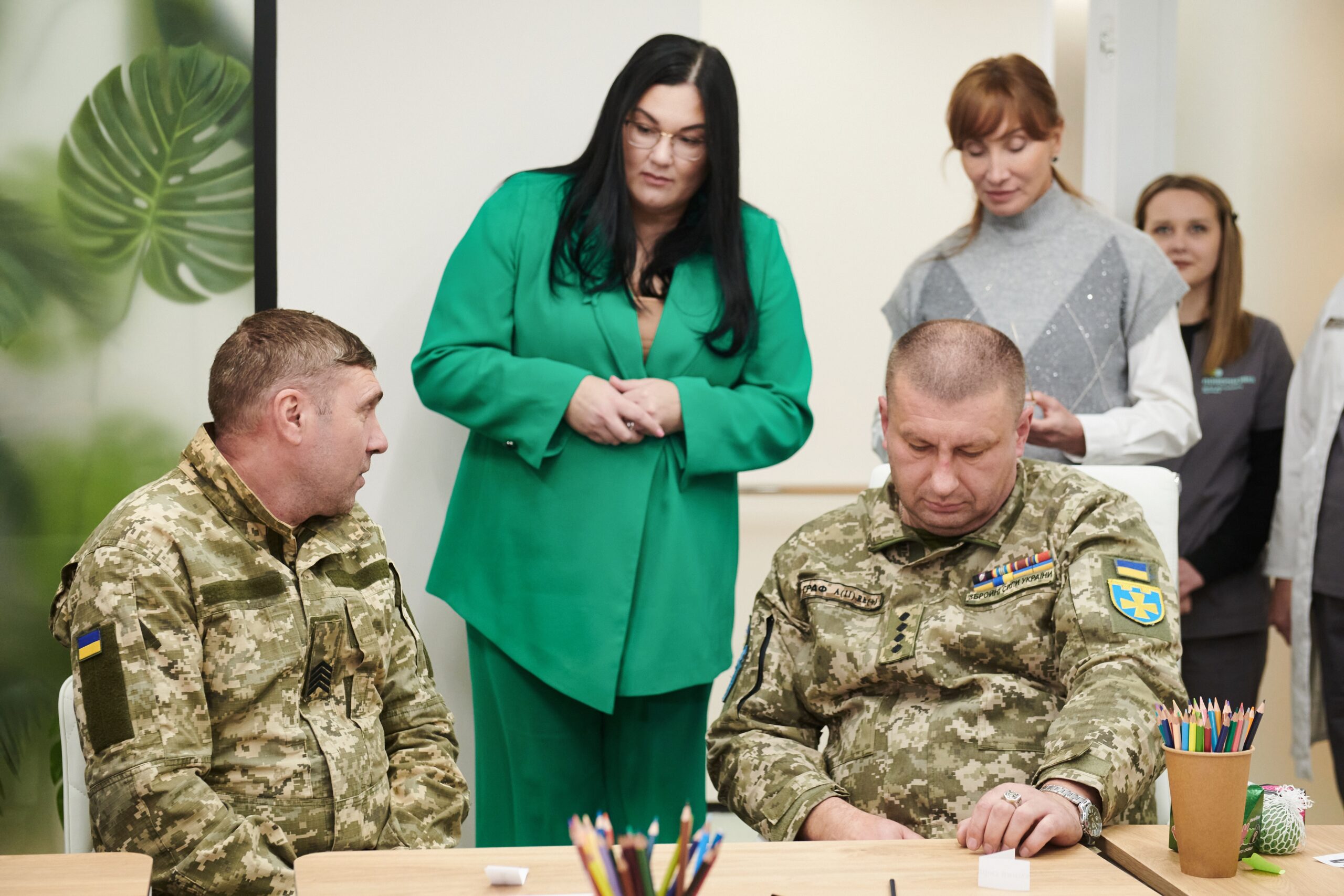
The RECOVERY and RETURNING projects exemplify a successful partnership between the private sector and the state, with philanthropists creating and developing innovative physical rehabilitation and mental health centers within public medical institutions.
There are currently 18 innovative RECOVERY rehabilitation centers operating in Ukraine, providing free services to service members. More than 40,000 Ukrainian defenders have already undergone rehabilitation at centers across the network. In 2026, the network is expected to expand to at least 20 centers, with the capacity to provide rehabilitation to around 27,000 service members annually.
RECOVERY also systematically invests in the development of the professional community, as specialists are shaping the future of rehabilitation in Ukraine. The project regularly implements continuing education and professional development programs. More than 6,400 medical professionals—from both within and beyond the network—have already participated in educational events and professional placements in the United States and 10 European countries.
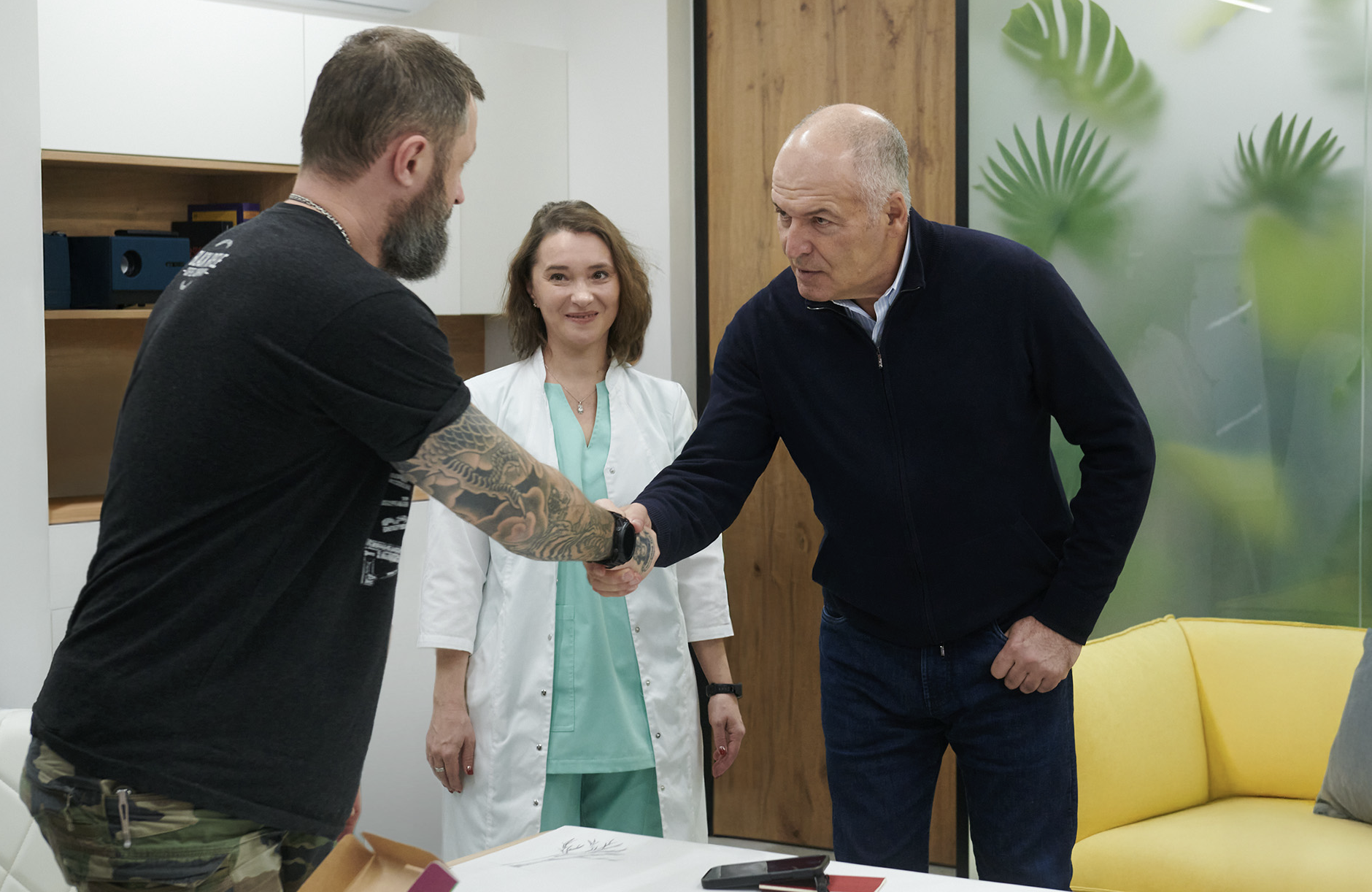
Within the nationwide RETURNING project, which supports the mental health of service members, veterans, and their families, more than 10,000 people have already received support. Eleven mental health centers are currently operating, while the first phase of the project calls for the opening of 25 centers across Ukraine.
RETURNING also runs an educational program aimed at the systematic development of Ukraine’s mental health sector. In collaboration with Ukrainian and international experts, the project provides professional development opportunities for specialists, including webinars, training sessions, and supervision. During its first year, the educational program reached more than 1,500 participants through 90 events held in Ukraine and abroad.
The RECOVERY and RETURNING projects exemplify long-term, systematic support for Ukraine’s service members, veterans, and their families, with a focus on quality of care, professional expertise, and sustainable solutions.
The 11th center of the nationwide network of RETURNING (Ukr. «ПОВЕРНЕННЯ») mental health centers has begun operating in Cherkasy. The RETURNING project was founded by Victor and Olena Pinchuk to support the mental health of Ukraine’s defenders, veterans, and their family members who have experienced the psychological consequences of the war caused by Russian aggression.
The RETURNING Center in Cherkasy will be able to provide assistance to more than 4,000 service members, veterans, and their family members every year. It is a space of support, safety, and recovery for people who have experienced war, been released from captivity, as well as for their loved ones.
“The opening of the 11th RETURNING Center is another step toward creating a psychological rehabilitation system for veterans, military personnel, and their families. Following the RECOVERY physical rehabilitation project, my wife Olena and I decided to focus on psychological recovery, because millions of people in Ukraine are living under stress, while veterans at the front are experiencing it most acutely. These centers help our heroes stay closer to their families, receive professional support, and prepare for a new life after the war. It is important to us that specialists are trained according to the best international standards — because only in this way can psychological rehabilitation become meaningful support. Our heroes are fighting for peace today, and tomorrow they will be active participants in rebuilding the country. These centers are our way of saying ‘thank you’ to them and helping them return to normal life,” said Victor Pinchuk, businessman and philanthropist, founder of the RETURNING project.
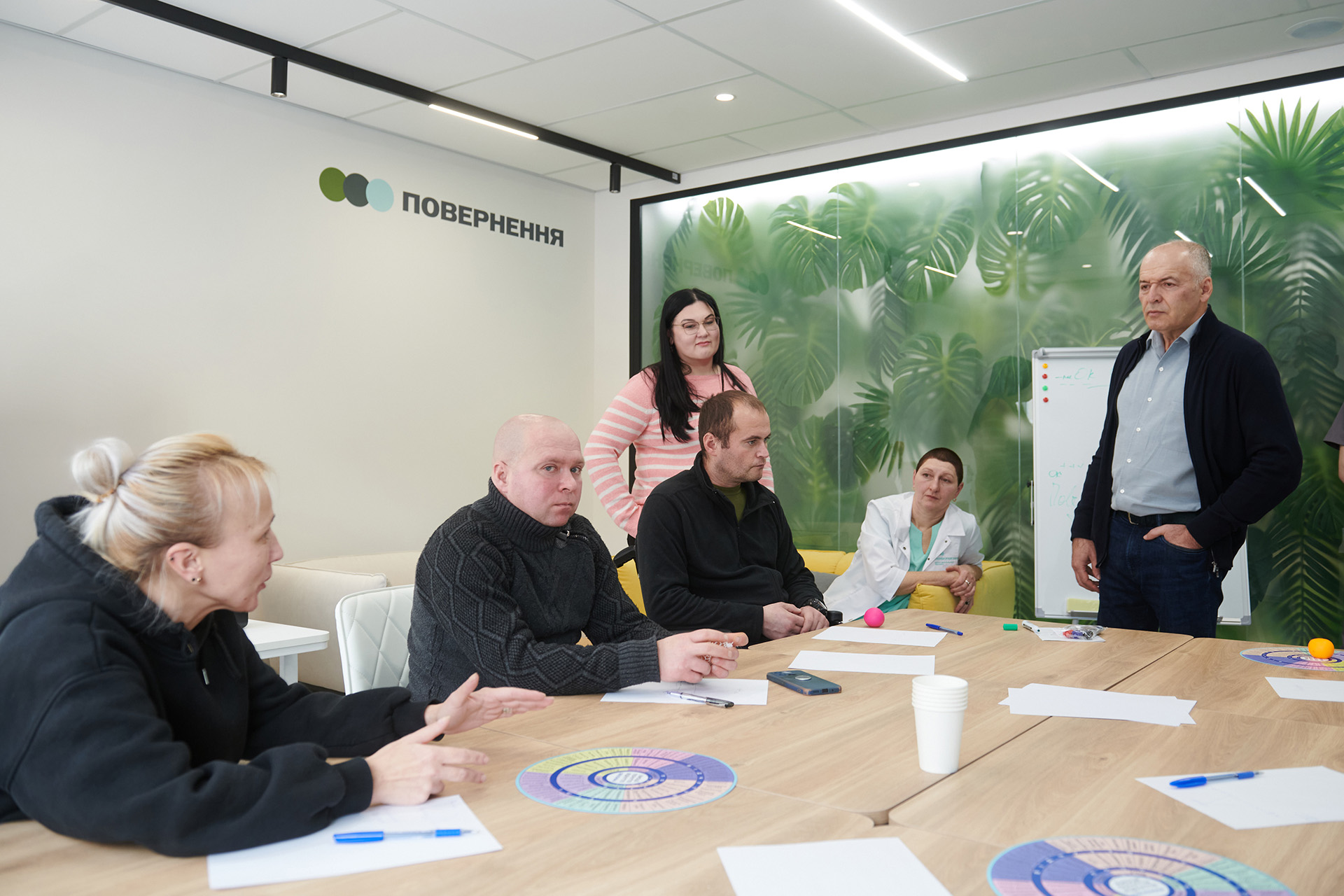
One of the key values of the Cherkasy Center and the RETURNING network as a whole is psychological inclusivity. The space, communication, and therapeutic approaches are designed so that everyone — regardless of their experience, condition, or the severity of their trauma — can feel safe, respected, and accepted. This is particularly important at a time when many people avoid seeking help because they fear judgment, stigma, or losing control over their own lives. Here, people can talk about difficult things without fear and without having to prove anything.
The RETURNING project demonstrates successful partnership between the private and public sectors, with philanthropists creating modern, comfortable, and barrier-free mental health centers within public healthcare institutions. The new RETURNING center has been established within one of Kyiv’s key healthcare facilities.
With funding from the RETURNING project, major renovations were carried out in part of the second floor of one of the key medical institutions in the Cherkasy region. A mental health center for military personnel, veterans, and their family members has been created in this space. The premises have been equipped in accordance with inclusivity requirements: wide doorways, no thresholds, medical-grade non-slip linoleum, and accessible sanitary facilities suitable for people who use wheelchairs.
The RETURNING Center comprises nine main rooms: two psychiatrists’ offices, two psychologists’ offices, a physician-psychologist’s office, two group therapy rooms, the center director’s office, and a treatment room. The center also has a two-bed day hospital ward equipped with electric multifunctional beds and an accessible bathroom, a doctors’ office, a reception area with a waiting zone, a cloakroom, a storage room, and sanitary facilities for visitors and staff.
The Cherkasy RETURNING Center has received an innovative Shiftwave psychological relaxation system from the United States, as well as computers, laptops, a projector, psychological games, associative cards, art therapy materials, stress-relief toys, tactile and massage mats, and yoga mats. Specialists have also been provided with 40 professional books on psychology, psychiatry, and psychotherapy.
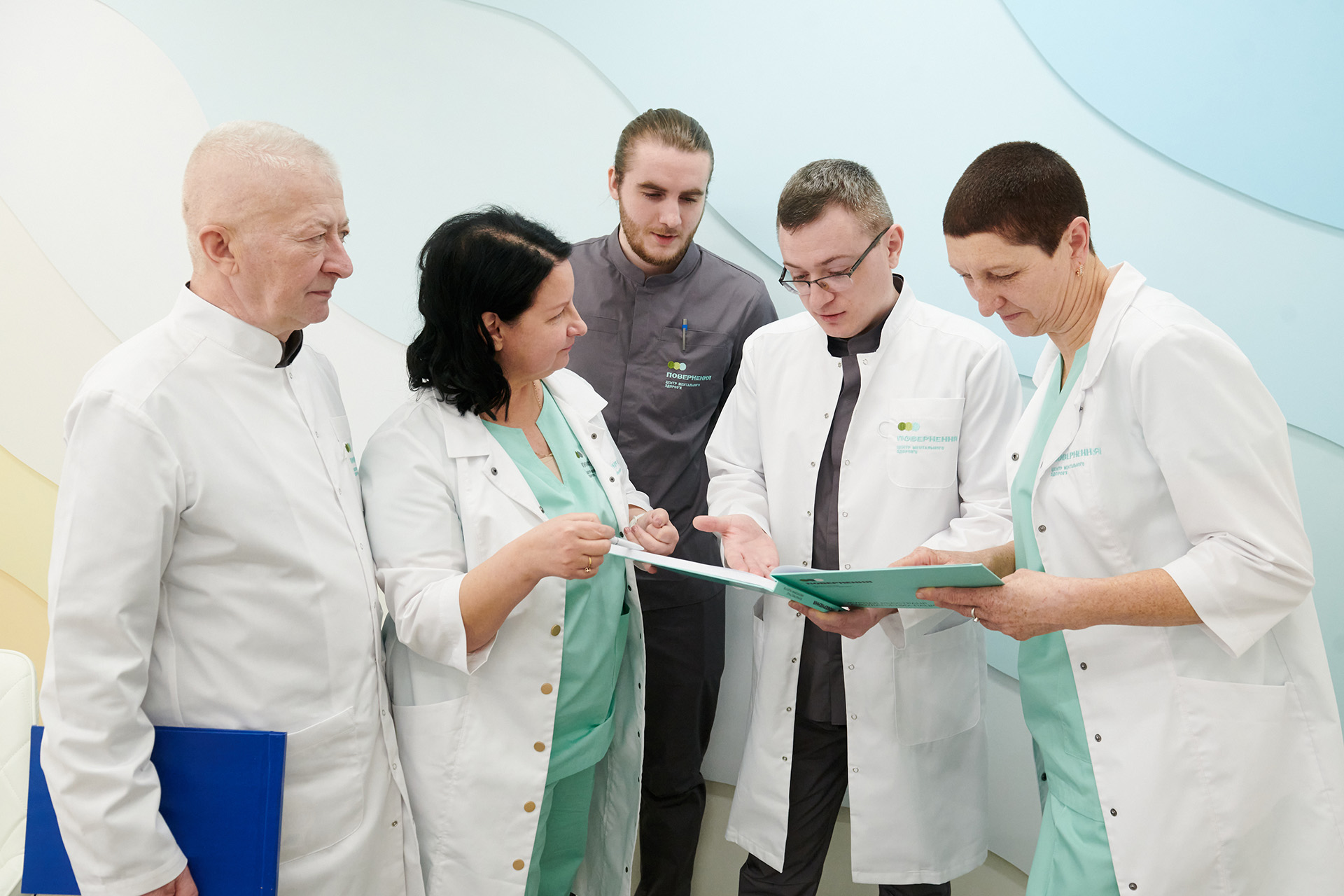
The center’s multidisciplinary team consists of three psychiatrists, a physician-psychologist, a clinical psychologist, two nurses, and an administrator. A social worker is involved when necessary.
The RETURNING Center provides psychosocial and psychiatric care on an outpatient basis and at clients’ places of residence. Specialists work with the effects of stress, anxiety and depressive conditions, post-traumatic stress disorder (PTSD), adjustment, psychosomatic, and psychotic conditions. The center uses effective approaches including individual, group, and crisis counseling, low-intensity interventions, psychoeducation, stabilization and self-regulation techniques. Medication therapy is prescribed when necessary. All work is based on the principles of confidentiality, respect for human rights, and non-stigmatization. All members of the center’s team regularly participate in educational programs provided through the RETURNING project.
“For us at the RETURNING Center, regular professional development — ongoing training provided through the project — is critically important for the quality of our services. Veterans, military personnel, and former prisoners of war have complex experiences, and working with them without specialized training is unacceptable. During wartime, demand for psychosocial support is growing, so specialists must have access to modern, effective tools. This is a matter of professional responsibility,” said Serhii Pokhnatiuk, head of the RETURNING Center in Cherkasy
The goal of the RETURNING project is not only psychological recovery, but also the systemic development of the mental health sector in Ukraine. In cooperation with Ukrainian and international experts, educational programs are being implemented for specialists, including training sessions, workshops, and supervision. The educational component is based on evidence-based methods such as EMDR, cognitive behavioral therapy, and trauma-focused therapy. Last year, the project held 60 educational events as part of 11 programs, involving 1,500 specialists, and organized two international fellowships in Ireland and Northern Ireland.
In addition to Cherkasy, the RETURNING network of mental health centers is already operating in Dnipro, Kyiv, Kropyvnytskyi, Lutsk, Poltava, Rivne, Ternopil, Khmelnytskyi, Chernihiv, and Ivano-Frankivsk. All centers operate within public healthcare facilities and provide free outpatient care. The first stage of the RETURNING project envisages the opening of 25 centers across Ukraine.
Address of the RETURNING center in Cherkasy:
Cherkasy, st. Olena Telighy, 4, lit. "A-6"
Phone: 0472-66-24-00