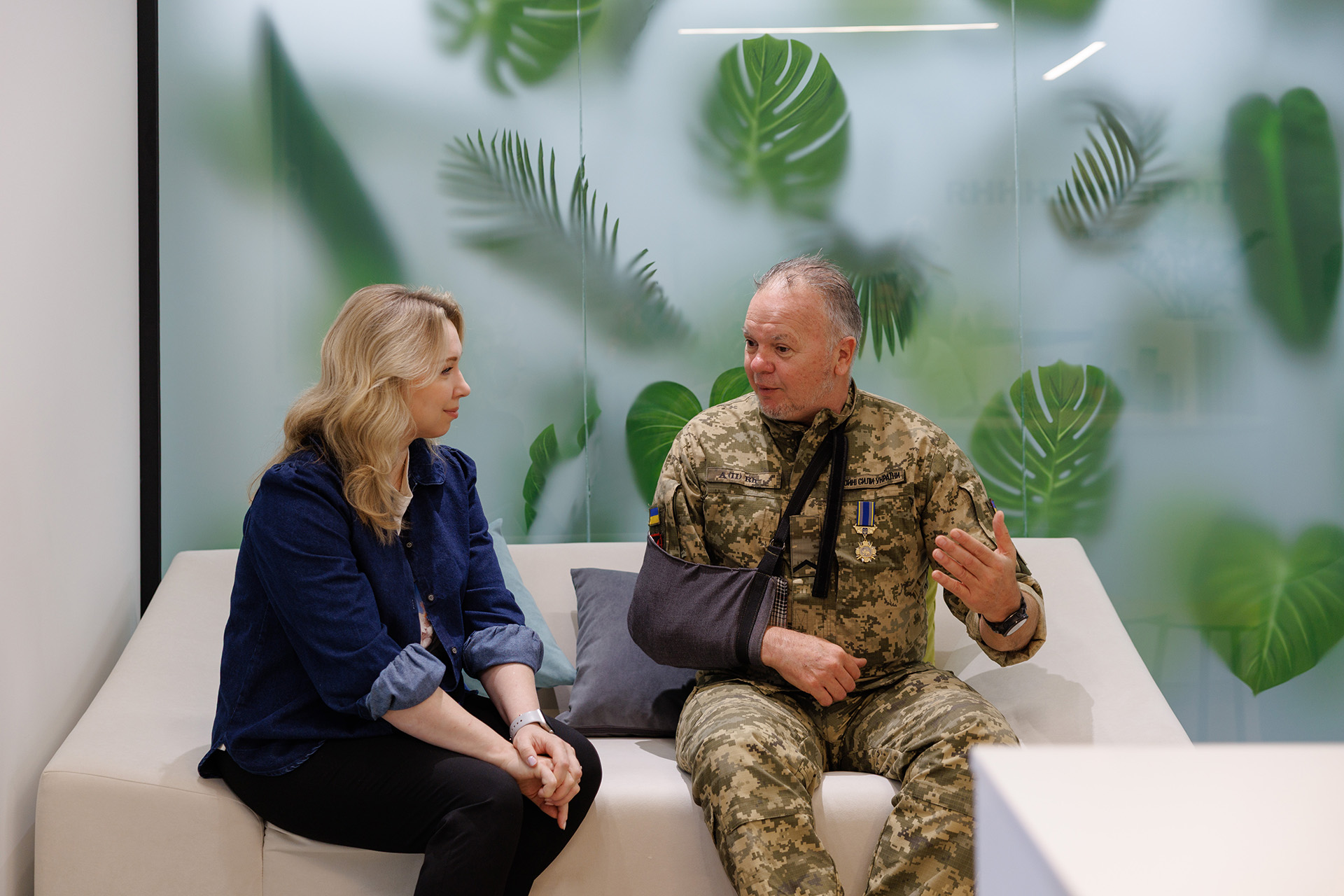
The nationwide network of mental health centers RETURNING (ukr.ПОВЕРНЕННЯ) has expanded, with its tenth center now opening in Ivano-Frankivsk. The RETURNING project was founded by Victor Pinchuk and Olena Pinchuk to support the mental health of Ukraine’s service members, veterans, and their family members who have experienced the psychological consequences of the war caused by Russia’s aggression.
Each year, the Ivano-Frankivsk center will be able to provide professional, free psychological support to more than 4,000 service members, veterans, and members of their families.
The RETURNING project demonstrates a successful public–private partnership in which philanthropists create modern, comfortable, and barrier-free mental health centers within public medical institutions. The opening of the network’s 10th center responds to the urgent need for accessible, high-quality, and professional psychological care for service members, veterans, and their families.
Victor Pinchuk, founder of the RETURNING project, said:
“Psychological rehabilitation is far more complex than it may seem, because millions of people need psychological support. Many of us may not yet realize it, but over time almost everyone will require psychological rehabilitation. Our absolute focus within the RETURNING network is on service members, veterans, and their families. It is important that they learn about these centers, understand their value, and believe in the effectiveness of this support. That is why we visit the centers, talk to people, see what works well and where there are shortcomings—and just as importantly, speak about this publicly.”
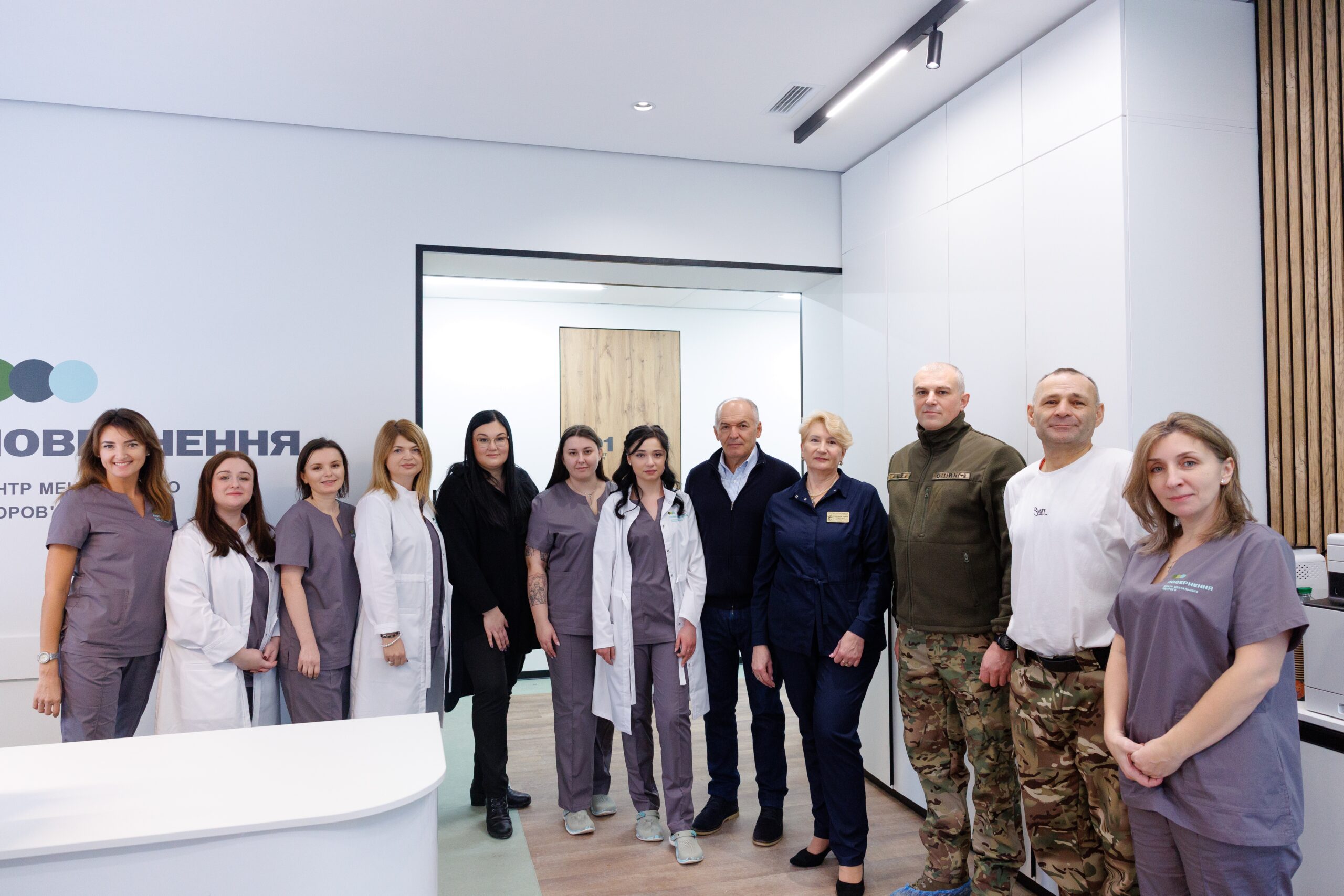
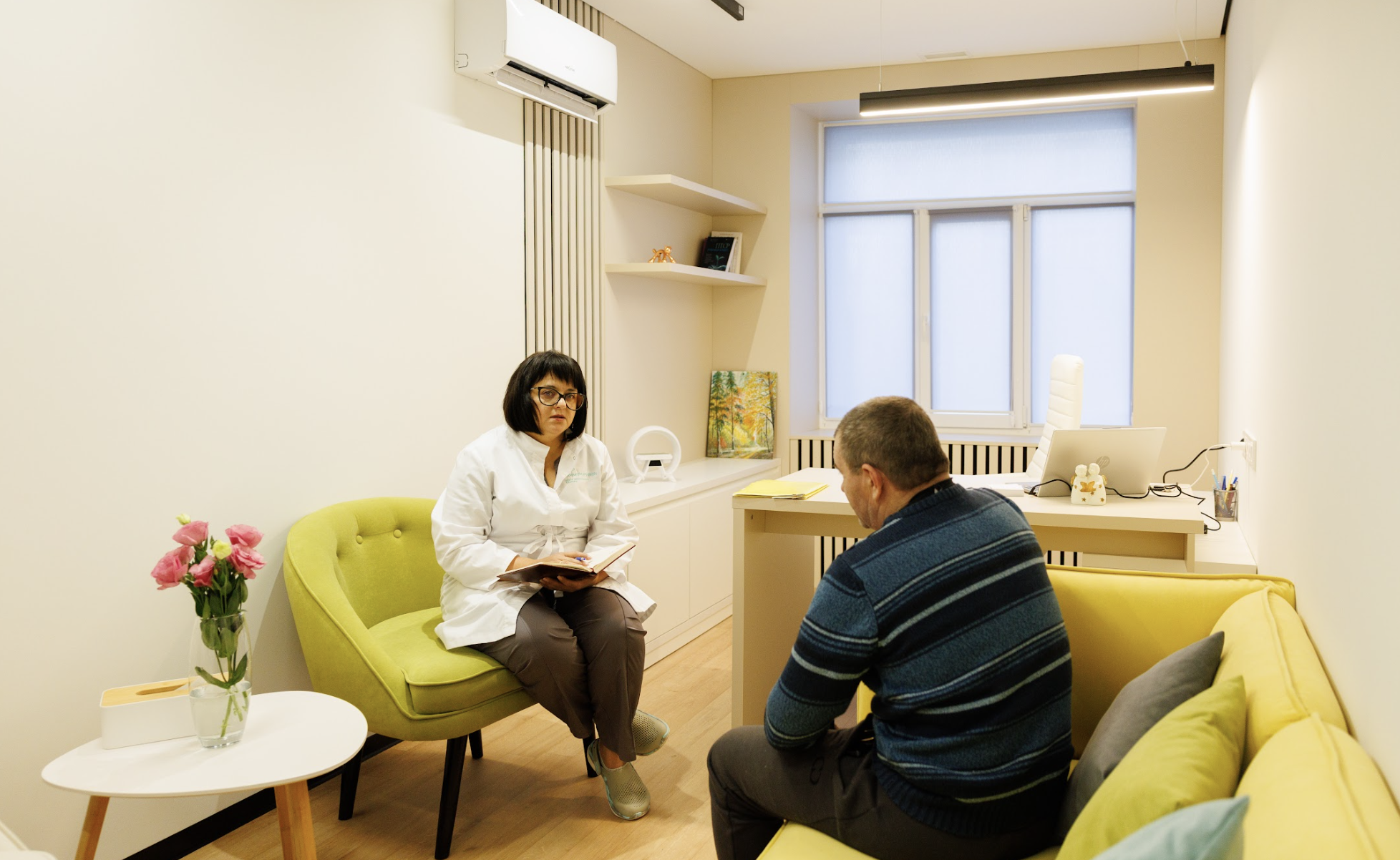
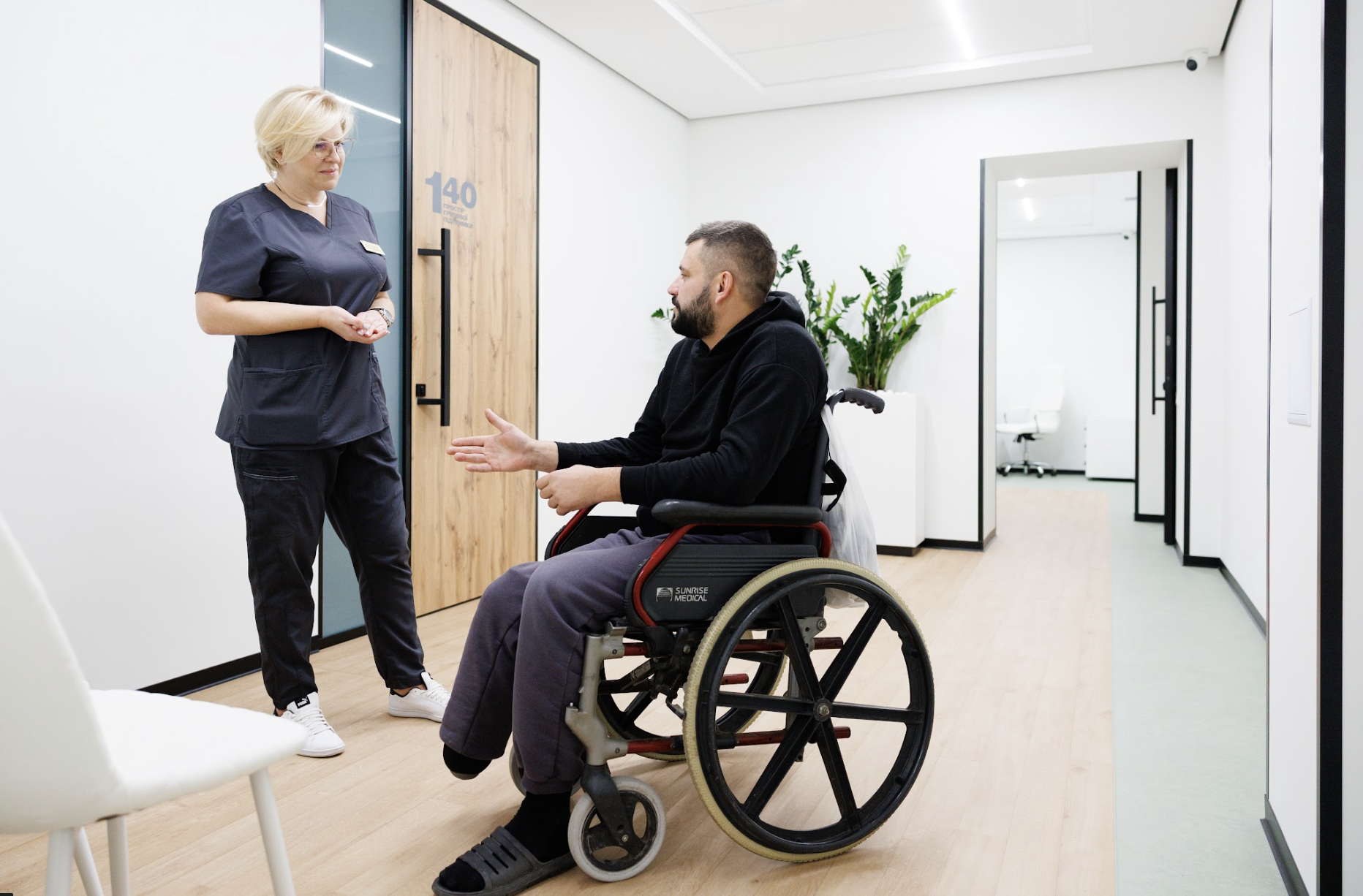
The RETURNING center has been designed in line with barrier-free principles. Wide doorways, the absence of thresholds, medical-grade non-slip flooring, and inclusive restrooms adapted for wheelchair users ensure physical accessibility and comfort for visitors with different needs.
A core value of the center and of the entire RETURNING network is psychological inclusivity. The space, communication, and therapeutic approaches are structured so that every person—regardless of background, condition, or depth of trauma—can feel safe and speak about difficult experiences without fear of judgment or evaluation.
The Ivano-Frankivsk RETURNING center is designed for comprehensive care and includes three specialists’ offices for individual and family psychosocial and psychiatric support, a group therapy room, a two-bed day-care unit with medical electric multifunctional beds and an inclusive bathroom, a treatment room, a doctors’ office, a reception area with a waiting space for patients, and inclusive restrooms. The entire environment is designed to reduce stress, build trust, and support the psychological recovery process.
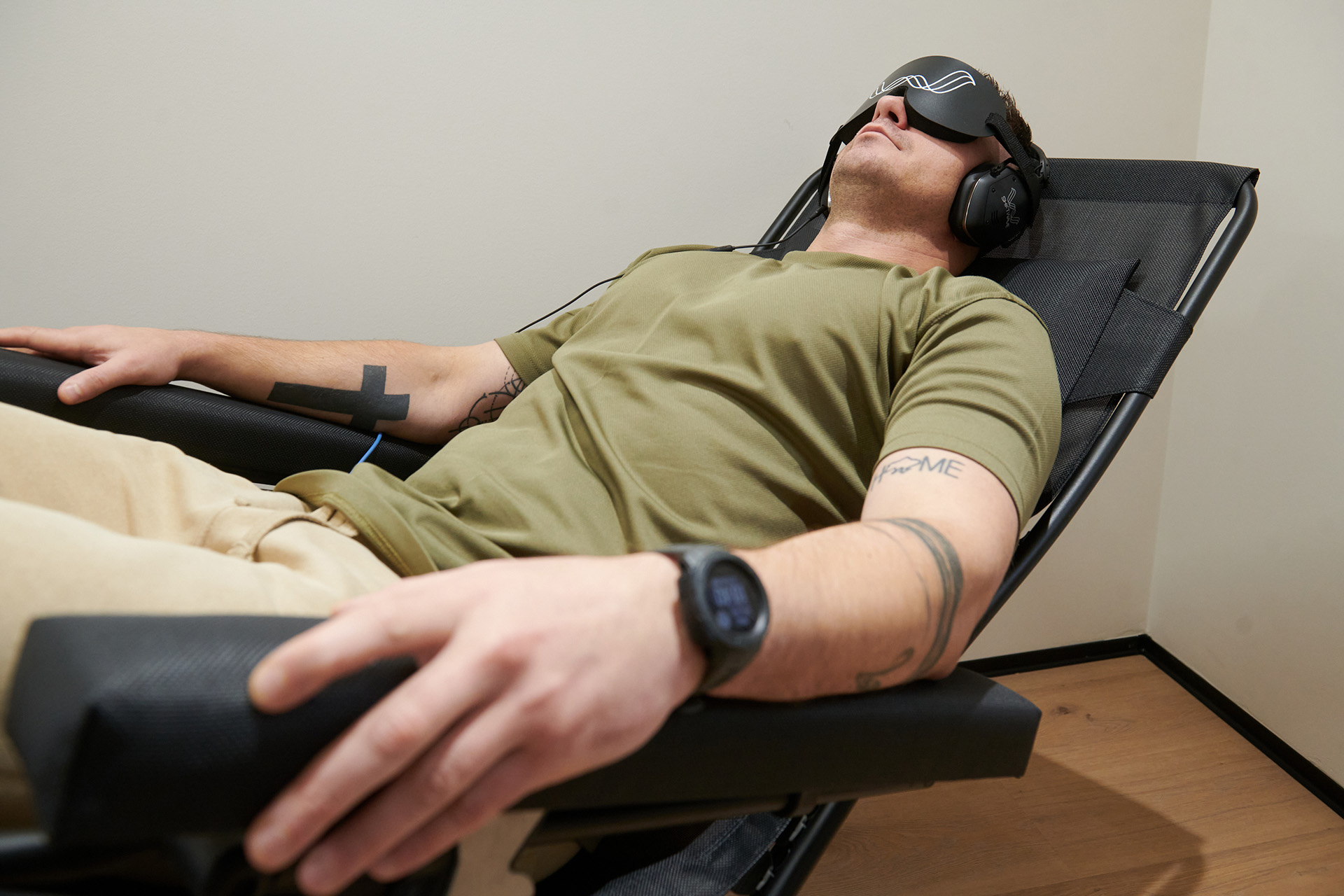
The RETURNING mental health center is equipped with all necessary equipment, technology, and therapeutic tools for working with the consequences of trauma. This includes computer equipment with licensed software, a multimedia projector and screen, laptops for specialists, the Shiftwave System (USA) for stress management and psychological relaxation, EMDR therapy tools, psychological board games, metaphorical associative cards, art therapy materials, tactile and sensory materials, yoga mats, and other resources that support recovery.
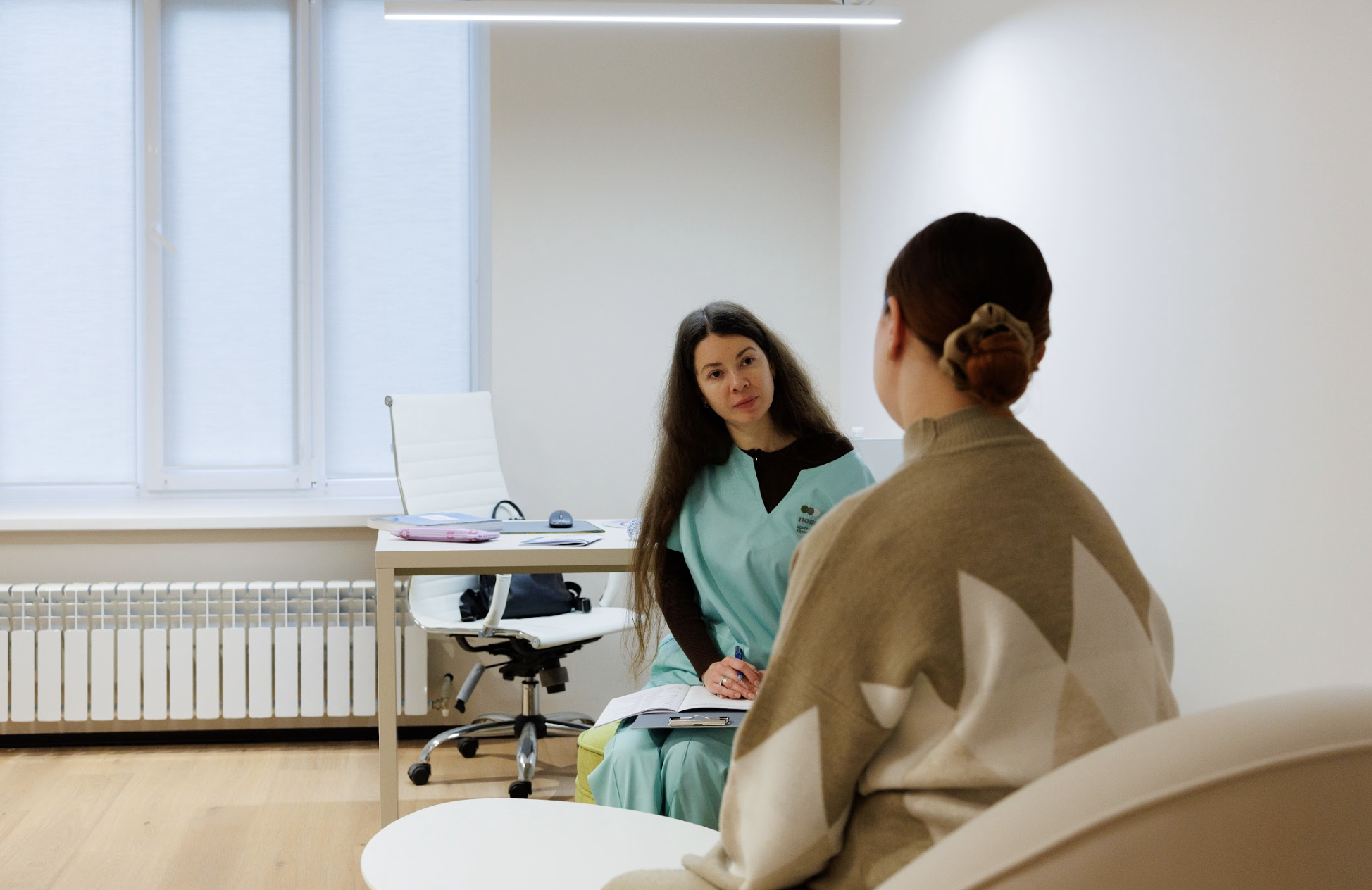
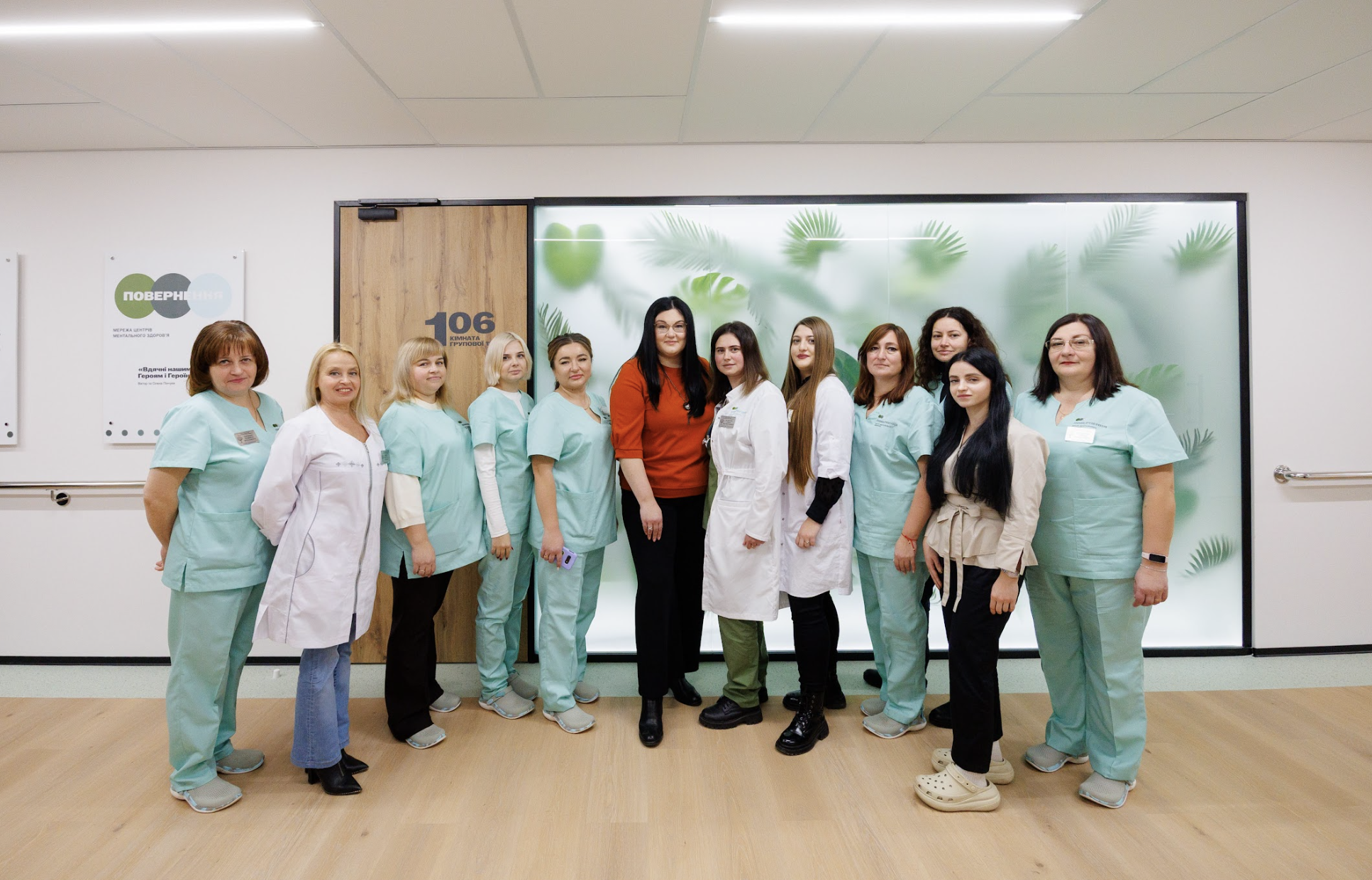
The center operates with a multidisciplinary team consisting of two psychiatrists, two clinical psychologists, two practical psychologists, a nurse, a registrar, and a veteran support specialist. This model ensures a comprehensive approach that addresses the clinical, psychological, and social needs of each person.
Mariia Matskiv, Head of the RETURNING Center in Ivano-Frankivsk, noted:
“The opening of the RETURNING mental health center is a step toward a society that recognizes mental well-being as a key component of national resilience, especially in times of war. Today, psychological support is not supplementary—it is critically necessary for service members and their families who live under prolonged stress and uncertainty. The center was created as a safe, patient-centered space where specialists work with respect for each person’s experience, recovery pace, and real needs.”
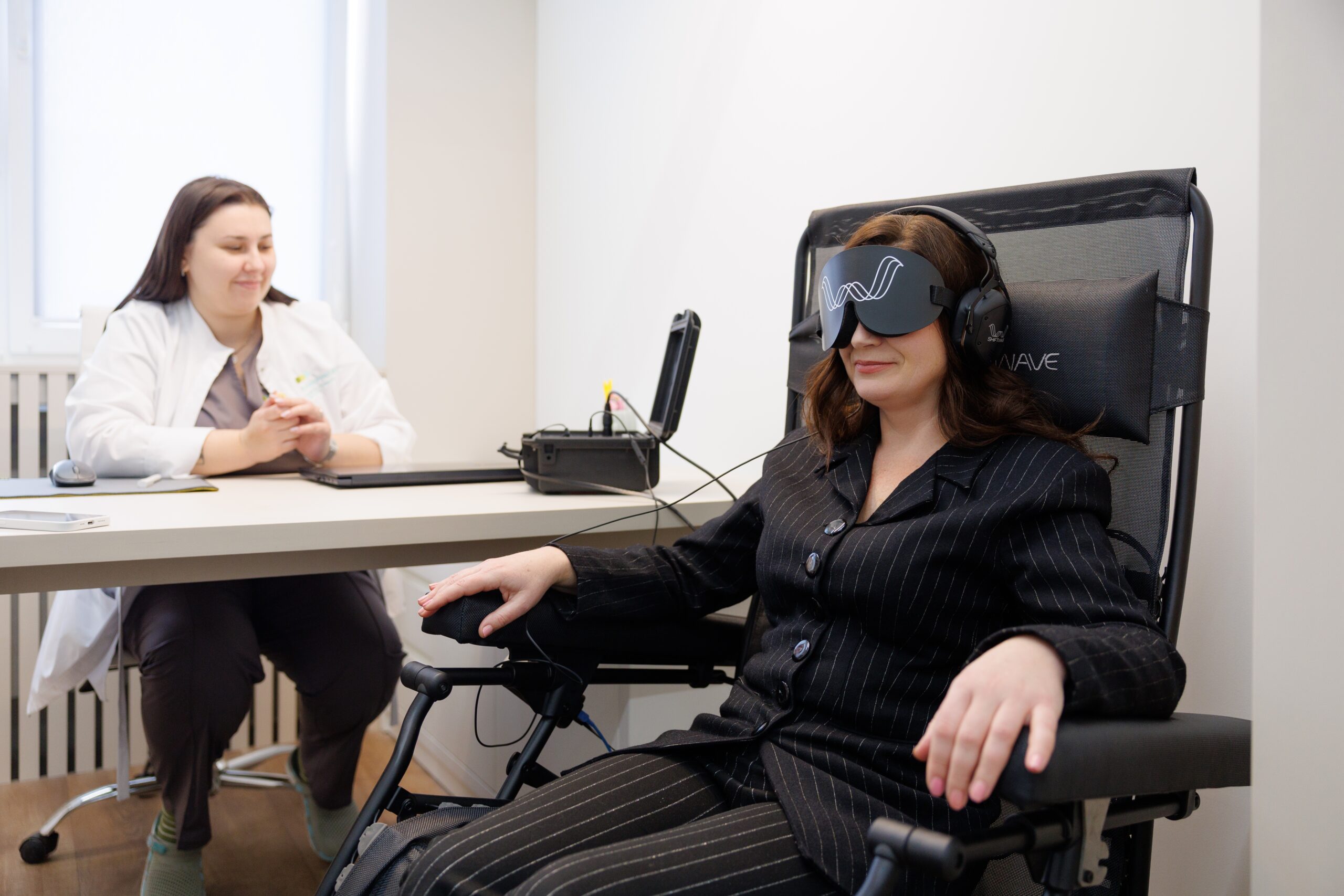
The RETURNING mental health center provides support to people experiencing the effects of stress, anxiety and depressive disorders, post-traumatic stress disorder, psychosomatic symptoms, and difficulties adapting to civilian life. Its work is based on evidence-based approaches, with particular attention to each person’s pace, sense of safety, and the gradual restoration of psychological resilience.
An important component of the RETURNING project is its educational track, aimed at the systemic development of Ukraine’s mental health sector. In cooperation with Ukrainian and international experts, the project implements modern training programs for professionals, including practical trainings, workshops, and supervision based on evidence-based methods such as EMDR, cognitive behavioral therapy, and trauma-focused therapy. This educational track is implemented in partnership with leading Ukrainian and international institutions, ensuring consistency of approaches and long-term impact.
The nationwide network of RETURNING mental health centers is already operating in Dnipro, Kyiv, Ivano-Frankivsk, Kropyvnytskyi, Lutsk, Poltava, Rivne, Ternopil, Khmelnytskyi, and Chernihiv, and continues to expand. All centers operate within public medical institutions and provide free outpatient care to service members, veterans, and their families.
At the first stage of the project, its founders—Victor and Olena Pinchuk—plan to establish 25 RETURNING centers across Ukraine, which will be able to support more than 100,000 service members, veterans, and family members each year.
The ninth center of the nationwide RETURNING (Ukr. «ПОВЕРНЕННЯ») mental health center network has opened in Kyiv. The project was founded by Victor and Olena Pinchuk to support the mental health of Ukrainian service members and defenders, veterans, and their family members who have experienced psychological consequences of the war caused by Russian aggression.
Each year, the Kyiv center will be able to provide high-quality, free psychological support to more than 4 000 service members, veterans, and their family members.
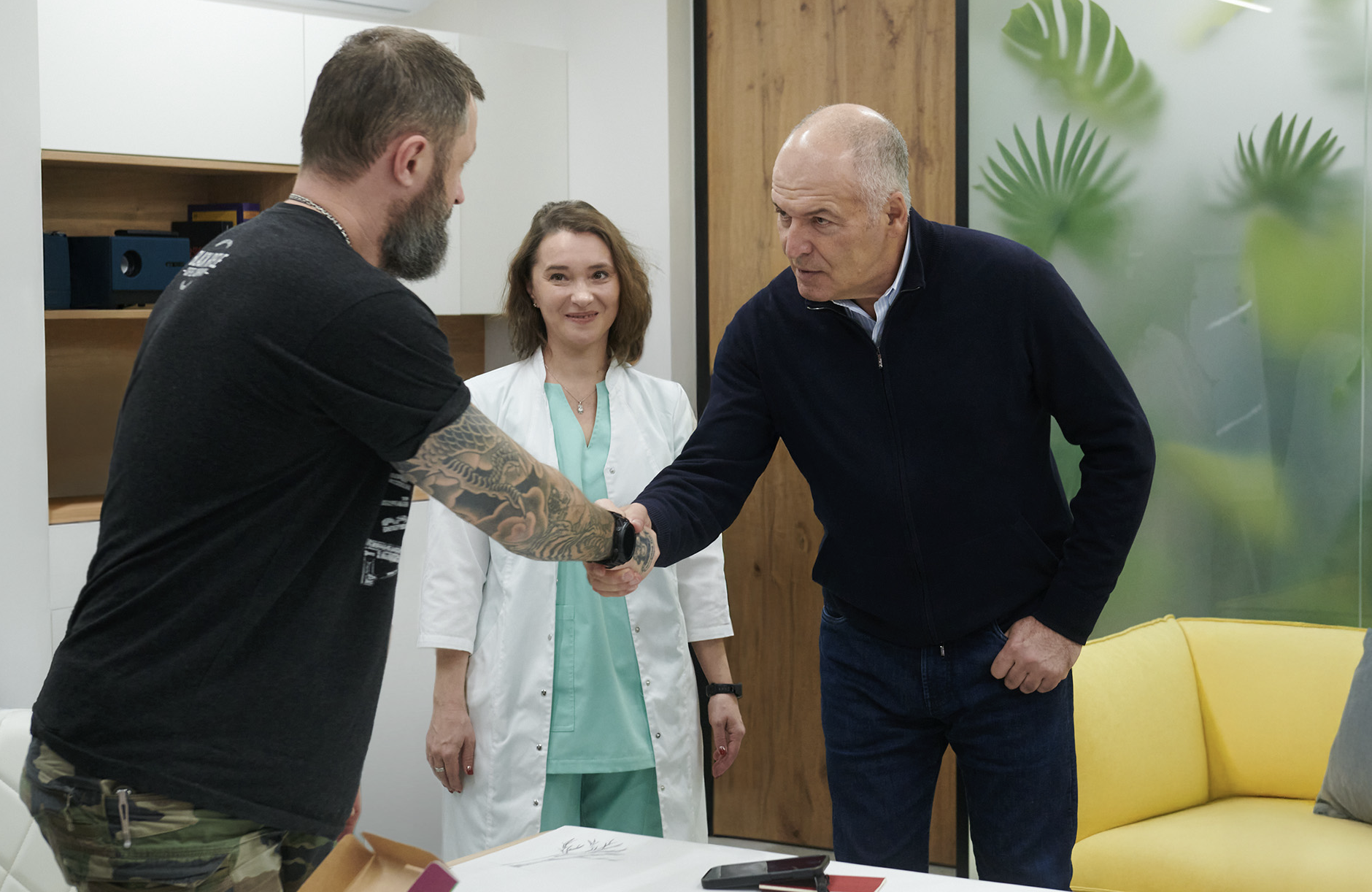
The RETURNING project demonstrates successful partnership between the private and public sectors, with philanthropists creating modern, comfortable, and barrier-free mental health centers within public healthcare institutions. The new RETURNING center has been established within one of Kyiv’s key healthcare facilities.
As part of the RETURNING project, a major renovation of part of the facility’s first floor was carried out. The center was designed in accordance with the principles of accessibility, inclusivity, and psychological safety. Wide doorways, the absence of thresholds, accessible bathrooms, and non-slip flooring create an environment where everyone can feel comfortable and treated with dignity, regardless of physical limitations or health conditions.
One of the key values of the center and the entire RETURNING network is psychological inclusivity. This means that the space, communication, and therapeutic approaches are designed so that every visitor — regardless of their experience, condition, or the severity of their trauma — feels safe, respected, accepted, and able to talk about the most difficult things without fear of being misunderstood or judged.
During the opening of the center, RETURNING project founder Victor Pinchuk said:
“RETURNING is a strategic project for me and my wife, Olena. Unfortunately, for our country, this will be a project not only for the duration of the war and not only for the coming years. I believe that the next generation will also care for the mental health of those who fought and continue to fight, as well as their family members.” Victor Pinchuk also emphasized: “We are creating these centers as an open benchmark so that the state, businesses, and philanthropists can join and scale this model. Working with veterans is not about years, but about decades. Alongside defense and economic recovery, this is one of the key areas that will shape the country’s development for many years to come.”
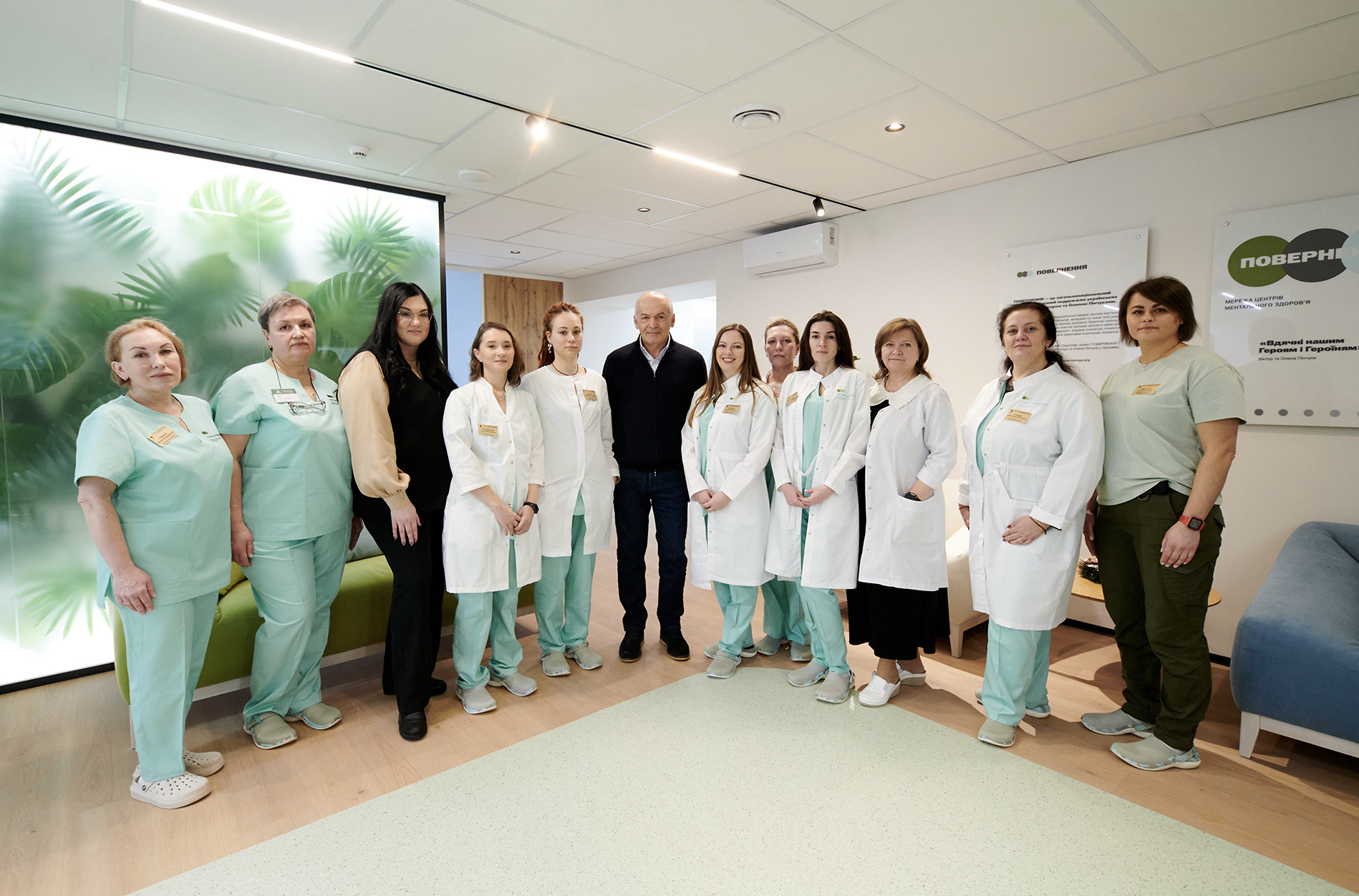
The Kyiv RETURNING center has been designed to support comprehensive care and includes rooms for individual and group therapy, a day hospital ward, a treatment room, a doctors’ office, and a reception area with a comfortable waiting space. The entire environment is designed to reduce tension, create a sense of calm and trust, and support the psychological recovery process.
The RETURNING mental health center is equipped with the necessary equipment, technology, and therapeutic tools for working with the consequences of trauma. These include computer and multimedia equipment, the Shiftwave System for psychological relaxation and stress management, EMDR therapy tools, materials for art therapy and sensory regulation, as well as professional literature.
The center has a multidisciplinary team consisting of two physicians, two clinical psychologists, two practical psychologists, a nurse, and a veteran support specialist. This model enables a comprehensive approach to care that takes into account a person’s clinical, psychological, and social needs.
Nataliia Petrenko, head of the Kyiv mental health center, said:
“A person-centered approach to mental health means starting not with a diagnosis, but with the person — their experience, feelings, pace, and needs. It is important to us that veterans are active participants in their own recovery: that they set goals, articulate their needs, and understand the purpose of every step. This kind of cooperation creates trust, a sense of support and safety — the foundation for sustainable and long-term recovery.”
The RETURNING mental health center provides support to people experiencing the consequences of stress, anxiety and depressive disorders, post-traumatic stress disorder, psychosomatic symptoms, and difficulties adapting to civilian life. Evidence-based, trauma-informed approaches are used, with particular attention to each person’s pace, sense of safety, and gradual restoration of psychological resilience.
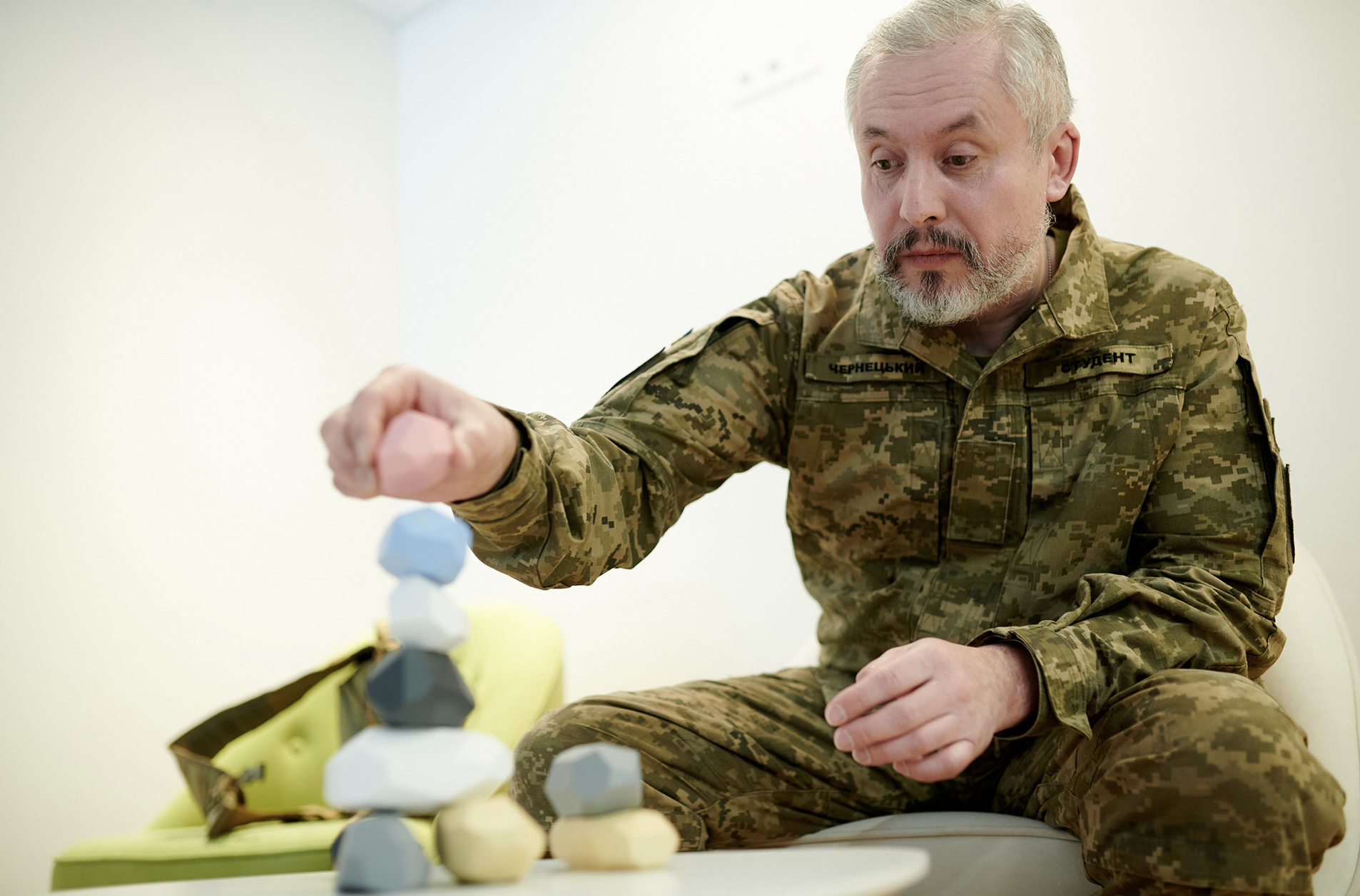
Another important component of the RETURNING project is its educational program, aimed at the systematic development of the mental health sector in Ukraine. In cooperation with Ukrainian and international experts, the project implements modern training programs for specialists, including practical training sessions, workshops, and supervision based on evidence-based methods such as EMDR, cognitive behavioral therapy, and trauma-focused therapy. This educational component helps ensure consistency in approaches, high-quality care, and the long-term impact of the RETURNING project on Ukraine’s mental health system.
The nationwide RETURNING network of mental health centers is already operating in Dnipro, Kyiv, Kropyvnytskyi, Lutsk, Poltava, Rivne, Ternopil, Khmelnytskyi, and Chernihiv, and continues to expand. All centers operate within public healthcare institutions and provide free outpatient care to service members, veterans, and their family members.
At the first stage, the project’s founders, Victor and Olena Pinchuk, plan to establish 25 RETURNING centers across Ukraine,which will be able to provide support to more than 100,000 service members, veterans, and their family members every year.
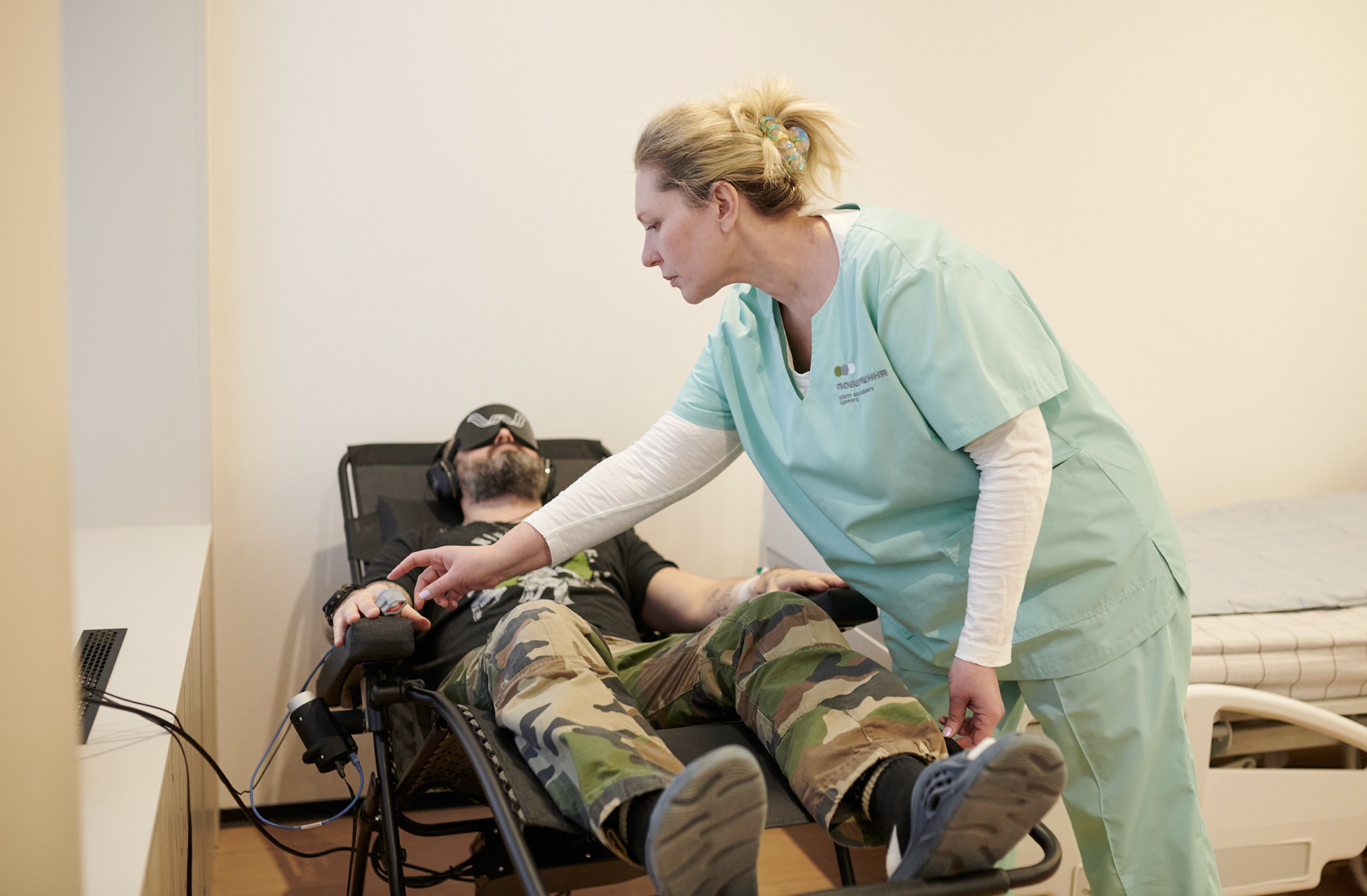
Representatives of the nationwide network of mental health centers RETURNING (Ukr. «ПОВЕРНЕННЯ») — a project founded by Victor and Olena Pinchuk to support the mental health of service members, veterans, and their families — took part in a study visit to Dublin, Ireland, and Belfast, Northern Ireland, as part of the network’s educational programs.
Mental health professionals from 10 regions of Ukraine — Vinnytsia, Dnipropetrovsk, Kyiv, Kirovohrad, Volyn, Odesa, Poltava, Ternopil, Cherkasy, and Chernihiv regions — studied models of cooperation between government institutions, civil society organizations, and private service providers to develop a deeper understanding of approaches to delivering mental health services for veterans and their families.
RETURNING center leaders had the opportunity to visit key institutions in Ireland, including the Department of Health, as well as meet with Minister of State for Mental Health Mary Butler and Dr Lorcan Martin, President of the College of Psychiatrists of Ireland. Participants also visited a number of specialized healthcare facilities to learn how the system operates in practice, including Ballyfermot Community Mental Health Centre, Blanchardstown Acute Inpatient Unit, The Phoenix Care Centre, Arches Recovery College, and the National Forensic Hospital.
In Northern Ireland, the program focused on leading academic and community organizations in Belfast working with trauma, the consequences of conflict, and recovery in post-conflict communities. Participants visited Queen’s University Belfast, the WAVE Trauma Centre, which works with veterans and civilians affected by trauma, and Inspire, a community organization providing comprehensive mental health services.
Ireland was chosen for this visit for a specific reason: its experience of conflict provides a particularly relevant context for Ukraine. From the late 1960s until the signing of the Belfast Agreement in 1998, the island experienced a period of violent conflict known as The Troubles, which resulted in more than 3,500 deaths, tens of thousands of injuries, and around 40,000 people experiencing trauma, loss, or displacement. In response, the country began reforming its mental health system, shifting from institutional care toward community-based services, developing multidisciplinary teams, and introducing support programs for people affected by the conflict.
The main objective of the study visit was to provide Ukrainian specialists with an in-depth understanding of Ireland’s approaches to delivering mental health services for veterans, their families, and people affected by conflict; psychological support for trauma; interventions related to bereavement and grief; suicide prevention; and addiction treatment.
Particular attention was paid to studying a person-centered approach to mental health care, exploring the latest evidence base for effective interventions, and analyzing the relationship between mental health promotion, prevention, and direct interventions.
The study visit to Ireland and Northern Ireland therefore contributed to the development of mental health policy in Ukraine and created additional opportunities to further strengthen the system of care and support for service members, war veterans, and their families.
A comfortable and inclusive mental health center of the nationwide RETURNING (Ukr. «ПОВЕРНЕННЯ») network has opened in Chernihiv, providing support for service members, veterans, and their families. This is the eighth center of the nationwide network,founded by Victor and Olena Pinchuk to support Ukraine’s Security and Defense Forces.
More than 4,000 Ukrainian defenders will be able to receive high-quality, comprehensive support at the Chernihiv RETURNING center each year.
Service members, veterans, and their family members experiencing the consequences of psychological trauma can seek help at the RETURNING mental health center in Chernihiv. The center’s specialists work with post-traumatic stress disorder (PTSD), anxiety disorders, depression, adjustment and psychosomatic difficulties, as well as other consequences of traumatic experiences. All services at the RETURNING center are provided free of charge.

“We understand that the entire Ukrainian community needs psychological support today. But the focus of the RETURNING project is primarily on our Heroes and Heroines: service members, veterans, and their families. Our mental health centers are true fortresses where defenders can take off their psychological armor. It is important that they know about these centers, because many service members, due to masculinity, are used to saying: ‘Why would we need help? We can handle it ourselves.’ But here they can speak openly with specialists. And it is important that society, as well as the military and veteran community, be ready to seek this support,” said Victor Pinchuk, founder of the RETURNING project.
The RETURNING project demonstrates successful partnership between the private and public sectors, with philanthropists creating mental health centers within public healthcare institutions. All RETURNING centers provide free outpatient care to defenders and their families.
The Chernihiv center has four specialist offices for individual and family psychological and psychiatric care, a group therapy room, a two-bed day hospital ward with electric multifunctional medical beds and an accessible bathroom, a reception area with a waiting room, a treatment room, a doctors’ office, a staff room with a bathroom, and an accessible bathroom for visitors.
The center is equipped with modern tools for psychological support, including the Shiftwave System (USA) stress-management system, EMDR therapy equipment, art therapy materials, and psychological resources for individual and group work. Specialists also have all the necessary equipment, including a multimedia projector, computers, multifunctional devices, and laptops.
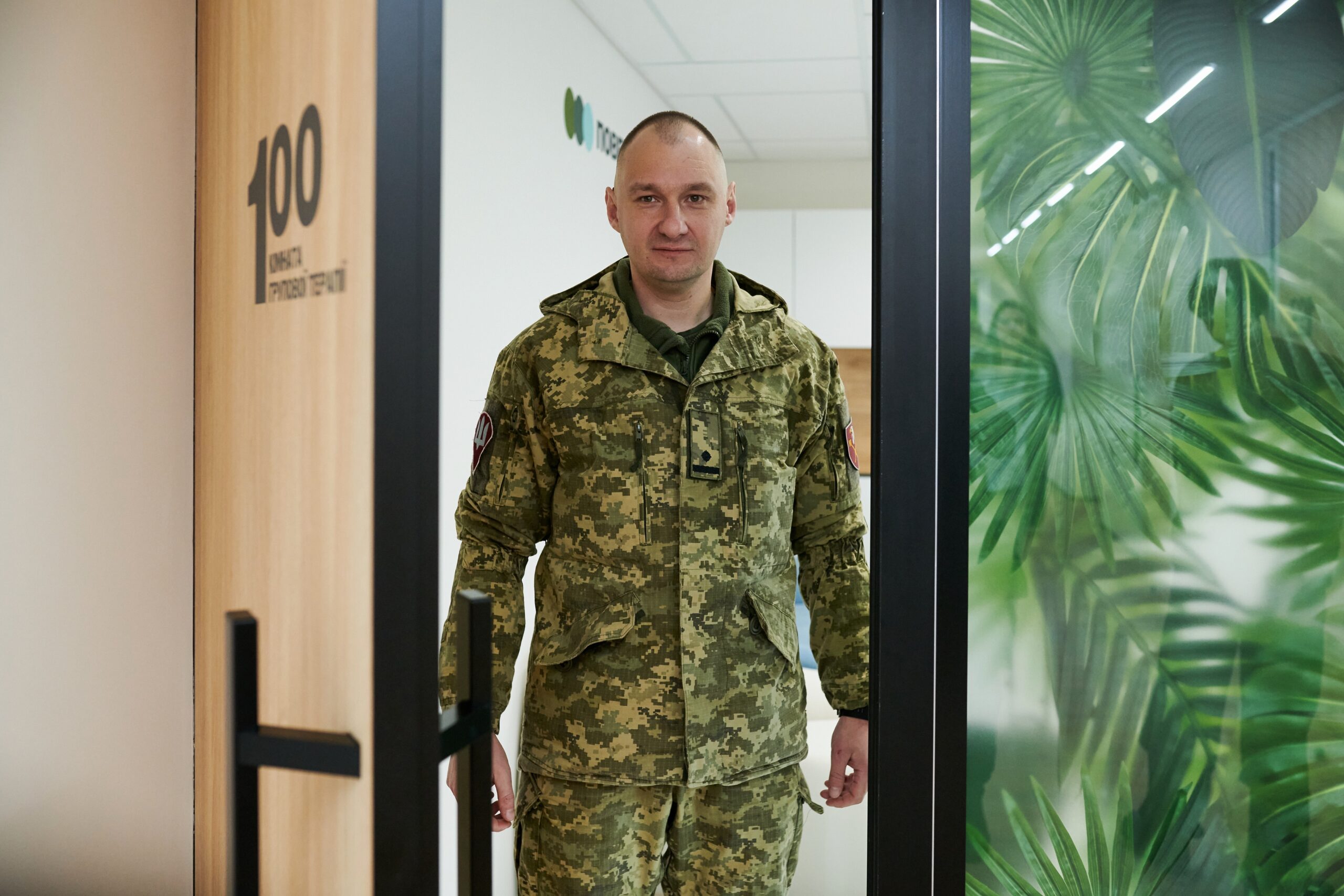
As in other RETURNING centers, the Chernihiv center has a multidisciplinary team of psychiatrists, psychotherapists, psychologists, and nurses, with case managers, social workers, and veteran support specialists involved when needed. They support each person throughout the entire process — from an initial consultation to long-term therapy and psychological recovery.
“If you need psychological support or feel that you need to speak with a psychiatrist, please reach out. All assistance at our center is completely confidential: conversations remain within the consultation room. You will receive support, acceptance, and professional guidance. We work without judgment, with sensitivity and understanding toward every patient. Our approach is not about treating a ‘disorder,’ but about helping the person, their experiences, and their story. This standard of care allows us to create a safe space where service members, veterans, and their families can experience genuine relief and begin their journey toward recovery,” said Anastasiia Shevchenko, head of the RETURNING mental health center in Chernihiv.
Particular attention is paid to creating a safe environment, providing empathetic support, and gradually restoring patients’ psychological resilience. The “peer-to-peer” approach also plays an important role in this process — service members and veterans are supported by specialists who have gone through similar experiences themselves. This kind of connection reduces barriers caused by distrust, creates a sense of understanding without the need for lengthy explanations, and allows people to open up at their own pace. It strengthens the effectiveness of care and makes the recovery process more natural and supportive.
Today, RETURNING centers are already operating in Dnipro, Ternopil, Poltava, Kropyvnytskyi, Rivne, Khmelnytskyi, Lutsk, and Chernihiv. More than 2,800 people have received care across the network.
The first stage of the project envisages opening 20–25 mental health centers across Ukraine. Each year, more than 100,000 service members, veterans, and their family members will be able to receive professional psychological support free of charge, helping them regain strength, balance, and confidence in themselves.
The seventh mental health center of the RETURNING (Ukr. «ПОВЕРНЕННЯ») network has opened in Lutsk. The network was founded by Victor and Olena Pinchuk to support Ukraine’s Security and Defense Forces. Every year, 4,000 military personnel, veterans and their family members will be able to receive high-quality, comprehensive and free psychological support here.
The RETURNING project demonstrates a successful example of partnership between the private sector and the state, with philanthropists establishing mental health centers at public medical institutions. The new center is based at one of the key medical institutions in the Volyn region.
With funding from the RETURNING project, part of the first-floor premises was renovated and a modern, comfortable and fully accessible center was created in accordance with global accessibility standards. The center features wide doorways, no thresholds, medical non-slip linoleum flooring and accessible sanitary facilities, including those adapted for wheelchair users.
The center includes five specialist offices, a group therapy room, a two-bed day-care ward with electric multifunctional beds and an accessible bathroom with a shower, as well as a treatment room, doctors’ office, staff lounge, reception area with a waiting room, accessible sanitary facilities for visitors and a storage room.
The center is equipped with everything needed for therapy and trauma-focused work, including the Shiftwave System (USA) for psychological relaxation and stress management, art therapy materials, metaphorical associative cards, board and psychological games, stress-relief tools, tactile mats, massage balls, yoga mats and other equipment. Specialists also have access to a professional library and equipment for effective work, including two computer sets, multifunctional devices, a multimedia projector and screen, and four laptops.
As in other centers of the RETURNING network, the Lutsk center has a multidisciplinary team that includes psychiatrists, psychologists, psychotherapists, nurses, case managers and social workers. They support each person throughout all stages of care — from initial consultation to long-term therapy and mental recovery.
“When we build the nationwide network of RETURNING centers, we start not with the walls, but with the teams. The best specialists are the heart of every center. They create an atmosphere of safety, trust and psychological inclusivity where military personnel and veterans can talk about the most difficult things and receive support that truly works. It is fundamentally important to us that help is close at hand. That is why we are opening centers across Ukraine — so that everyone who needs support can access professional services closer to home, in their own city,” says Svitlana Grytsenko, Head of the RETURNING project.
Psychological inclusivity is at the core of all RETURNING centers. This means that the space, communication and therapeutic approaches are designed so that every visitor — regardless of their experience, condition or trauma — feels safe, respected and accepted, with the opportunity to talk about the most difficult things without fear of being misunderstood or judged. In Lutsk, this philosophy is reinforced by the peer-to-peer approach and a team of specialists with a deep understanding of the realities of war.
Particular attention is paid to creating a safe environment and fostering trust. The center is headed by Olha Ostapchuk, who has three years of combat experience as part of the 100th Separate Mechanized Brigade, where she served as head of the medical service. She was demobilized in March 2025 and is a retired major of the medical service.
“For everyone who comes to our center, we develop an individual recovery plan. For some, the focus is more on anxiety; for others, on traumatic memories or adapting to civilian life. It is important that people feel they are not going through this journey alone — we move forward with them, step by step. We take a comprehensive approach, from stabilization and psychotherapy to medication support, group sessions and daily assistance from the multidisciplinary team. And, of course, we create a safe space where people can speak openly without fear of being misunderstood,” says Olha Ostapchuk, Head of the RETURNING center in Lutsk.
The RETURNING mental health center in Lutsk will provide military personnel, veterans and their family members with effective psychological support, including cognitive behavioral therapy, Gestalt therapy, trauma-focused psychotherapy, stabilization and self-regulation techniques, group therapy and crisis counseling. Specialists work with people experiencing post-traumatic stress disorder (PTSD), anxiety and depressive disorders, adjustment difficulties, psychosomatic symptoms and other consequences of psychological trauma.
All centers in the RETURNING network operate on an outpatient basis and provide free services. During the first stage of the project, 20–25 centers are planned to open across Ukraine. Every year, they will be able to provide professional support to more than 100,000 military personnel, veterans and their family members.
A comfortable and inclusive RETURNING mental health center for military personnel, veterans and their family members has opened in Khmelnytskyi. It is the sixth center in the nationwide network founded by Victor and Olena Pinchuk to support Ukraine’s Security and Defense Forces
More than 4,000 Ukrainian defenders will be able to receive high-quality, professional mental health support at the Khmelnytskyi RETURNING center every year.
Military personnel, veterans and their family members experiencing the consequences of psychological trauma can seek assistance at the RETURNING mental health center in Khmelnytskyi. The center’s specialists work with post-traumatic stress disorder (PTSD), anxiety disorders, depression, adjustment and psychosomatic difficulties, as well as other consequences of traumatic experiences. All services at the RETURNING center are provided free of charge.
The RETURNING project demonstrates successful cooperation between the private sector and the state, with philanthropists establishing mental health centers at public medical institutions.. All RETURNING centers provide free outpatient mental health services to Ukrainian defenders and their family members.
“The RETURNING project combines two key areas — developing a nationwide network of centers and educating mental health professionals. We are creating a network that brings support closer to every service member and their family, while at the same time investing in knowledge so that Ukrainian specialists can provide assistance at the highest level. This synergy is what ensures strong results and effective recovery for our defenders and their families,” says Svitlana Grytsenko, Head of the RETURNING project.
The new center has been established at one of the key medical institutions in the Khmelnytskyi region. The Khmelnytskyi RETURNING center includes rooms for individual, family and group therapy, a day-care ward equipped with electric medical multifunctional beds, a reception area with a waiting room, a treatment room, and modern accessible sanitary facilities.
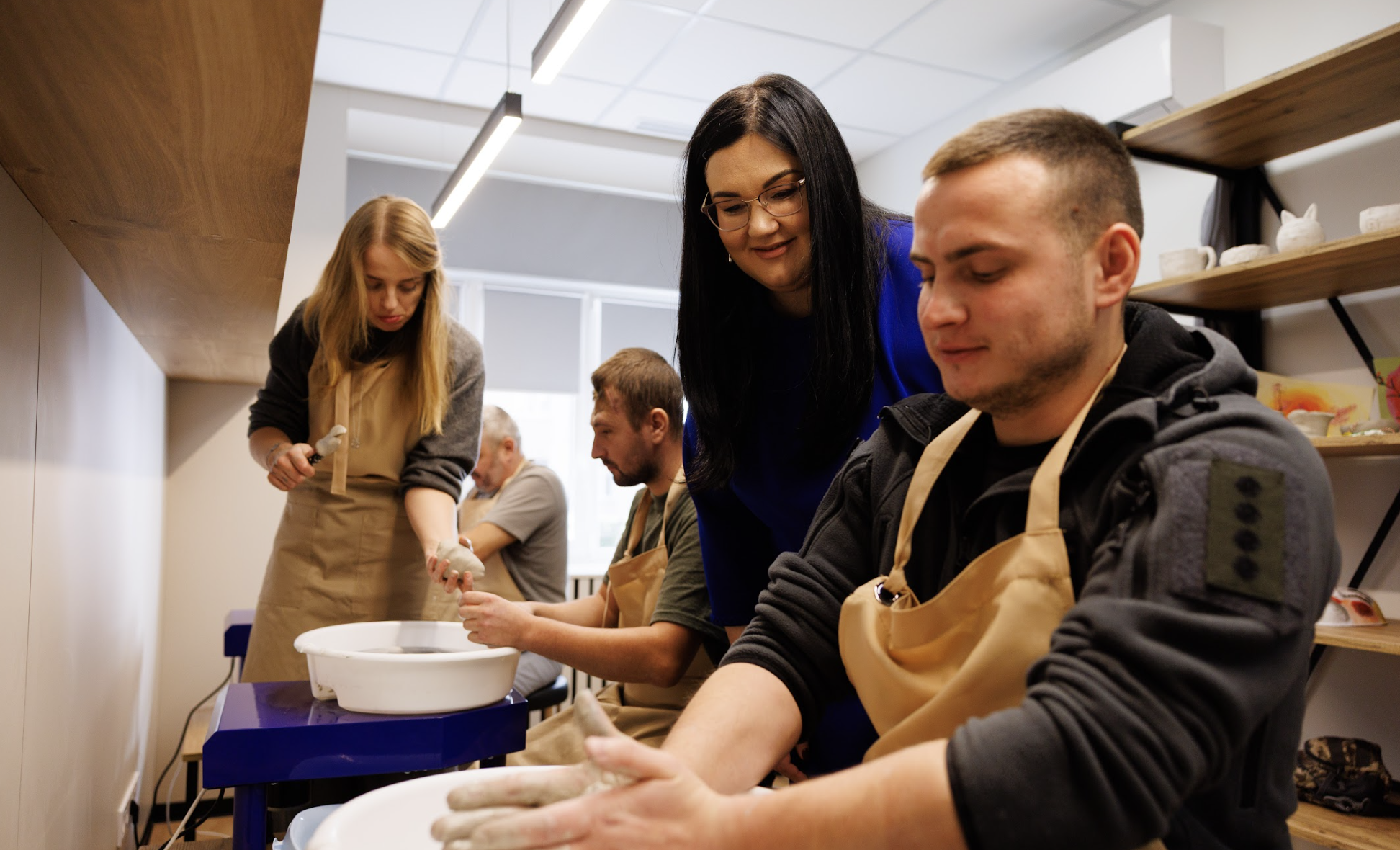
A distinctive feature of the Khmelnytskyi center is a space for free self-expression with pottery and art workshops. Art therapy is an effective tool for recovery: it helps people safely express their emotions, process traumatic experiences and restore inner balance through creative activities.
The center is equipped with the Shiftwave System (USA) for psychological relaxation and stress management, an EMDRtherapy kit, materials for art and pottery therapy, board games, stress-relief tools and equipment for body-based practices. Specialists have access to multimedia equipment, computers and a professional library.
As in other RETURNING centers, the Khmelnytskyi center has a multidisciplinary team that includes psychiatrists, psychologists, psychotherapists, nurses, case managers and social workers. They support each person throughout all stages of care — from initial consultation to long-term therapy and mental recovery.
“Effective assistance is always a team effort. At our center, each person is supported by specialists from different fields — from psychiatrists and psychologists to social workers. This multidisciplinary approach allows us to see the person as a whole, taking into account their experience, needs and resources. This is what makes recovery consistent, profound and effective,” says Anait Bolibrukh, Head of the RETURNING mental health center in Khmelnytskyi.
The RETURNING project was founded by Victor and Olena Pinchuk to help military personnel, veterans and their family members overcome the psychological consequences of war. All centers in the network are established at public medical institutions and provide free outpatient mental health support.
The network’s centers are currently operating in Dnipro, Ternopil, Poltava, Kropyvnytskyi, Rivne and Khmelnytskyi. During the first stage of the RETURNING project, 20–25 mental health centers are planned to open across Ukraine. Every year, more than 100,000 military personnel, veterans and their family members will be able to receive professional psychological support at these centers, helping them regain strength, balance and confidence in themselves.
A welcoming and inclusive RETURNING mental health center for military personnel, veterans, and their family members has opened in Rivne. This is the fifth center in the nationwide network founded by Victor and Olena Pinchuk to support Ukraine’s Security and Defense Forces.
Every year, 4,000 defenders will be able to receive high-quality and free psychological support at the Rivne RETURNING center.
 Military personnel, veterans, and their family members experiencing the consequences of psychological trauma can seek support at the RETURNING mental health center in Rivne. The center’s specialists work with post-traumatic stress disorder (PTSD), anxiety and depressive conditions, adjustment and psychosomatic difficulties, emotional exhaustion, panic attacks, sleep disorders, and other conditions.
“When a loved one is at war, two people are at war. Alongside every defender, there is a family going through its own journey of anxiety, waiting, and, sadly, sometimes loss. That is why mental health support must include not only military personnel and veterans, but also their loved ones. Recovery is a shared process, and the strength of a family often becomes the foundation on which a person’s faith in themselves and in life after the war can grow,” said Svitlana Hrytsenko, Head of the RETURNING project.
The RETURNING project demonstrates a successful partnership between the private sector and the state, with philanthropists establishing mental health centers at public healthcare facilities. The new RETURNING center has been established at one of the key healthcare facilities in the Rivne region. As part of the project, the first-floor premises underwent major renovations, creating a fully barrier-free space with wide doorways, no thresholds, and medical-grade anti-slip linoleum flooring.
The RETURNING mental health center in Rivne includes four rooms for individual and family support, a group therapy room, a two-bed day hospital room with multifunctional electric medical beds and an accessible restroom with a shower, a treatment room, a reception area, a staff lounge with a wardrobe, and accessible restrooms suitable for wheelchair users.

The center’s equipment is an important component of its work. It includes the Shiftwave System (USA), a psychological relaxation and stress management system designed to help reduce anxiety and tension. Specialists also have access to psychological board games, puzzles, metaphorical associative cards, materials for art and sound therapy, anti-stress toys, tactile mats, and massage balls. The center’s team has dedicated workstations with computer equipment, a multimedia projector, and a professional library. This creates the conditions both for high-quality professional work and for patients’ comfort during their visits.
As in other centers of the RETURNING network, the Rivne mental health center is staffed by a multidisciplinary team comprising psychiatrists, psychologists, psychotherapists, and nurses, as well as case managers, social workers, and veteran support specialists when needed. This approach ensures comprehensive support — from initial counseling to long-term therapy.
“Since the first days of the war, the Rivne region has welcomed thousands of wounded military personnel and their families. For many, the region became a temporary home, and for some, a new one. That is why mental recovery is particularly important here. The RETURNING center, in my view, is not simply a place where people receive help, but a space of trust and recovery where everyone can speak openly about their experiences and feelings without fear. According to the WHO, one in five people who have experienced war requires psychological support — and we are here to make that support accessible, timely, and professional,” said Alla Myronchuk, Head of the RETURNING Mental Health Center in Rivne.
High-quality mental recovery is only possible with the involvement of professionals. That is why the RETURNING project implements world-class educational programs for psychologists, psychiatrists, psychotherapists, and other mental health professionals, including training sessions, workshops, and supervision that provide practical tools for working with war-related trauma.
The RETURNING mental health center network was founded by Victor and Olena Pinchuk to help military personnel, veterans, and their families overcome psychological trauma resulting from Russia’s aggression against Ukraine. Today, RETURNING centers are operating in Dnipro, Ternopil, Poltava, Kropyvnytskyi, and Rivne.
At the first stage of the RETURNING project, 20–25 mental health centers are planned to open across Ukraine. Every year, more than 100,000 people will be able to receive professional and free psychological support at these centers, helping them restore their strength, balance, and confidence in themselves.
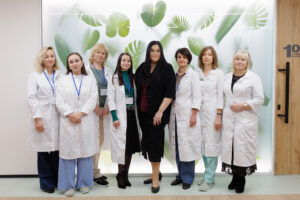
A mental health center for military personnel, veterans, and their family members has opened in Kropyvnytskyi. This is the fourth center of the RETURNING (Ukr. «ПОВЕРНЕННЯ») network, founded by Victor and Olena Pinchuk to support people who have experienced psychological trauma as a result of Russia’s aggression against Ukraine.
More than 4,000 Ukrainian defenders and their family members will be able to receive high-quality psychological support at the Kropyvnytskyi RETURNING center every year.
The RETURNING project demonstrates a successful partnership between the private sector and the state, with philanthropists establishing mental health centers at public healthcare facilities. As part of the project, sections of one of Kropyvnytskyi’s leading hospitals underwent major renovations, creating a modern, comfortable, and barrier-free space where military personnel, veterans, and their family members can receive comprehensive psychological support.
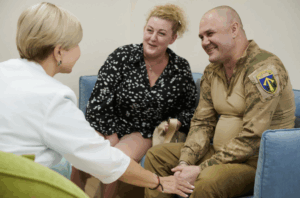
“High-quality psychological support for military personnel and their families begins with professionals who continuously develop their expertise. That is why, as we build the nationwide network of RETURNING mental health centers, we focus not only on creating modern facilities, but also on the systematic professional development of specialists. As of the end of October 2025, more than 60 educational events have been held in cooperation with Ukrainian and international experts. Our goal is to introduce the highest standards of mental health support in Ukraine for people who have experienced the consequences of war,” said Svitlana Hrytsenko, Head of the RETURNING project.
The new center includes three specialist rooms for individual and family psychological support, a group therapy room, a two-bed day hospital room equipped with multifunctional electric medical beds, a treatment room, a staff room, a staff lounge, an equipment storage room, a wardrobe, a reception area, and accessible restrooms.
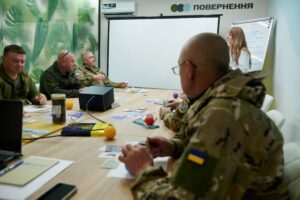
The center is equipped with everything necessary, from computer equipment and a multimedia projector to the Shiftwave System (USA) for psychological relaxation and stress management. It also has art therapy materials, board games, yoga equipment, and a professional library on psychology and psychotherapy.
The Kropyvnytskyi RETURNING center’s multidisciplinary team includes psychiatrists, psychologists, psychotherapists, and nurses, as well as case managers, social workers, and veteran support specialistswhen needed. This approach ensures comprehensive support — from initial counseling to long-term therapy and social adaptation.
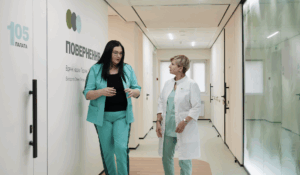
“For us, the most important thing is to see a person behind every request, not a diagnosis. At the RETURNING center, we are creating a space where people can feel safe and trust from the very first minutes. There is no stigma or judgment here — only acceptance, support, and professional care. We protect the privacy of every person, because genuine recovery begins with respect for personal boundaries,” said Antonina Kurinna, Head of the RETURNING Mental Health Center in Kropyvnytskyi.
The center’s specialists use evidence-based approaches including cognitive behavioral therapy, Gestalt therapy, trauma-focused therapy, stabilization and self-regulation techniques, group therapy, and crisis counseling. Particular attention is paid to creating a safe environment, providing empathetic care, and supporting the gradual restoration of patients’ psychological resilience.
RETURNING mental health centers provide free support to military personnel, veterans, and their family members. At the first stage of the RETURNING project, 20–25 mental health centers are planned to open across Ukraine. Every year, they will be able to provide professional support to more than 100,000 military personnel and their family members.
A RETURNING mental health center for military personnel, veterans, and their family members has opened in Poltava. This is the third center of the nationwide RETURNING (Ukr. «ПОВЕРНЕННЯ») network, founded by Victor and Olena Pinchuk to support the mental health of people who have experienced psychological trauma as a result of Russia’s aggression against Ukraine.
More than 4,000 Ukrainian defenders and their family members will be able to receive high-quality psychological support at the Poltava RETURNING center every year.
The RETURNING project demonstrates a successful partnership between the private sector and the state, with philanthropists establishing mental health centers at public healthcare facilities. As part of the project, a comfortable, modern, and barrier-free space has been created at one of Poltava’s leading healthcare facilities, where military personnel, veterans, and their families can receive comprehensive psychological support.
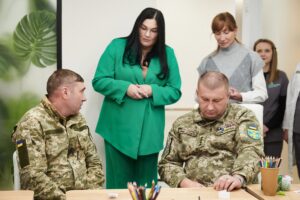
“Mental health during wartime is a matter of national resilience. Military personnel, veterans, and their families face challenges every day that require not only courage, but also systematic psychological support. Through the RETURNING project, we are creating centers where care is based on effective approaches and collaboration among specialists from different fields. Our educational component is also of great importance: thanks to it, all members of multidisciplinary teams continuously improve their qualifications, receive supervision, and exchange experience. All of this enables us to provide the highest standard of care to our defenders and their families,” said Svitlana Hrytsenko, Head of the RETURNING project.
The Poltava RETURNING center fully meets accessibility requirements. It features wide doorways, no thresholds, medical-grade anti-slip linoleum flooring, and restrooms adapted for wheelchair users. RETURNING mental health centers are designed as psychologically inclusive spaces where anyone can seek support without fear of judgment or stigma. An atmosphere of trust and respect for patients’ privacy is an integral part of the work of the network’s specialists.
The center has everything necessary for comfortable visits and professional work: a convenient reception area with a waiting zone, rooms for individual, family, and psychiatric support, a spacious group therapy room, a day hospital room with an accessible restroom, a treatment room, as well as staff and equipment storage facilities.
The center is equipped with everything necessary for high-quality care, including computer equipment, a multimedia projector and screen, the Shiftwave System (USA) for psychological relaxation and stress management, art therapy materials, psychological board games, metaphorical associative cards, yoga mats, and other tools. Specialists have also been provided with a selection of professional publications on psychology, psychiatry, and psychotherapy.
The Poltava RETURNING center’s multidisciplinary team includes psychiatrists, psychologists, psychotherapists, and nurses, social workers, and veteran support specialistswhen needed. This approach ensures comprehensive support — from initial counseling to long-term therapy and social adaptation.

“It is important to us that people who seek help feel trust and safety from the very first minutes. We work with a range of conditions, from acute stress to post-traumatic disorders, and each time we are reminded that recovery is possible. It is a process that requires patience, support, and faith in oneself. The most important thing is that a person should not be left alone with their pain. When there is a team nearby that not only treats but also listens, even the most difficult experiences can gradually become something a person can work through and let go of,” said Yuliia Rakhmatova, Head of the Poltava RETURNING Center.
The center’s specialists use evidence-based approaches including cognitive behavioral therapy, Gestalt therapy, trauma-focused therapy, stabilization and self-regulation techniques, group therapy, and crisis counseling. Particular attention is paid to creating a safe environment, providing empathetic care, and supporting the gradual restoration of patients’ psychological resilience.
RETURNING mental health centers provide free support to military personnel, veterans, and their family members. At the first stage of the RETURNING project, 20–25 mental health centers are planned to open across Ukraine. Every year, they will be able to provide professional support to more than 100,000 military personnel and their family members.
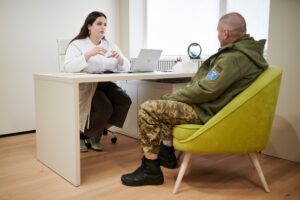
A modern and comfortable mental health center for military personnel, veterans, and their families has opened in Ternopil. This is the second center established as part of the nationwide RETURNING (Ukr. «ПОВЕРНЕННЯ») network, founded by Victor and Olena Pinchuk to support Ukraine’s Security and Defense Forces. More than 4,000 Ukrainian defenders and their family members will be able to receive free comprehensive mental health support here every year.
The RETURNING project demonstrates a successful partnership between the private sector and the state: philanthropists establish mental health centers at public healthcare facilities. At the first stage of the project, 20–25 RETURNING mental health centers are planned to open across Ukraine.
During a meeting with the RETURNING center team, the project’s founder, businessman and philanthropist Victor Pinchuk, said:
“From the very beginning, we understood that psychological recovery was important, but only now are we truly beginning to realize how critical it is. Our soldiers are the first in human history to face a war of this kind, where drones and attacks 24/7 leave a person with no psychological pause. Nothing like this has ever happened anywhere in the world. Modern medicine has not yet fully understood these kinds of pressures, while our people are already experiencing them. That is why paying attention to mental recovery is so important. A strong warrior is not only physically healthy, but also mentally resilient. And our task is to help them recover, recharge their internal batteries, and return stronger. We will continue building this system because the psychological recovery of our soldiers is, when you think about it, a matter of national security for the state.”
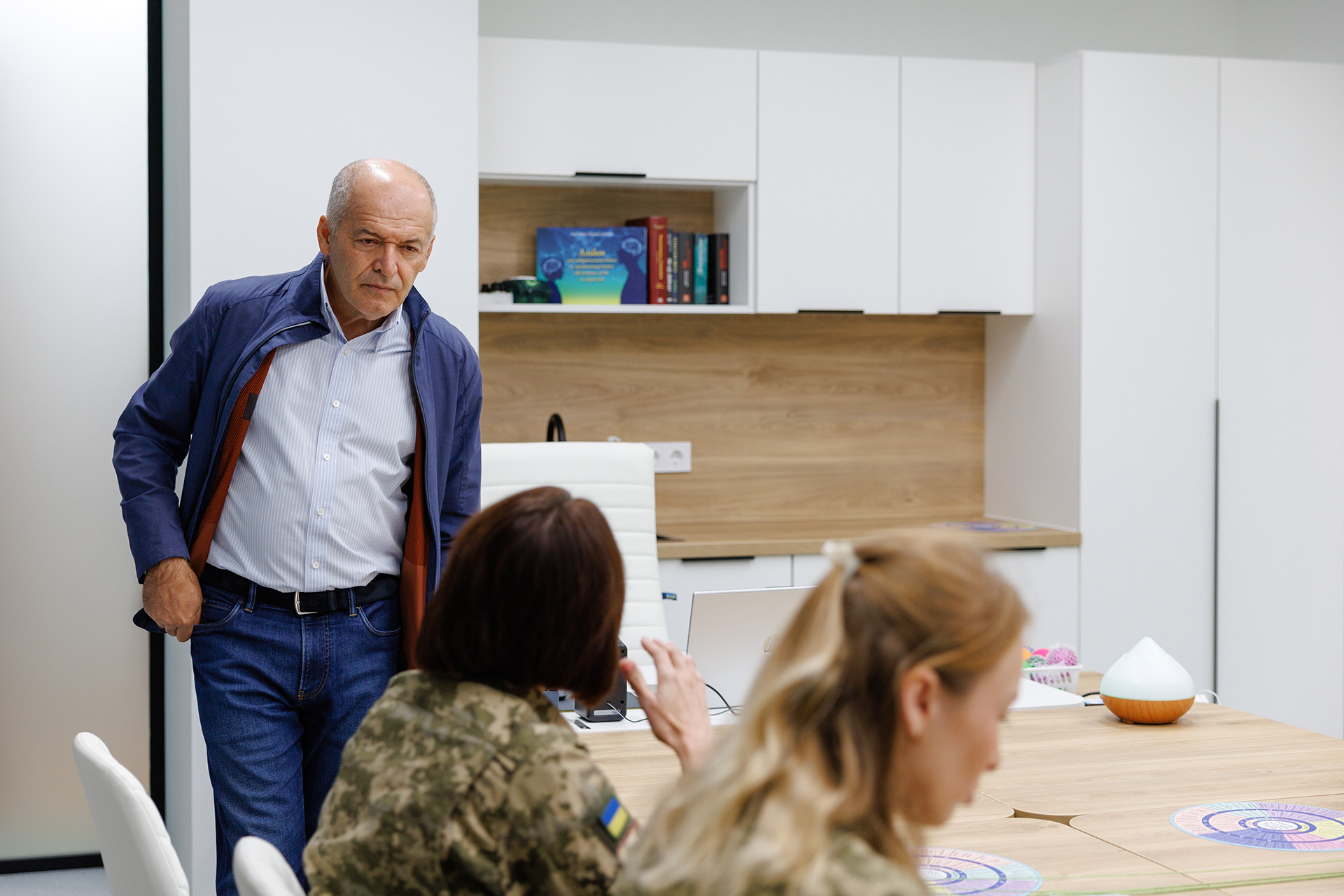
In Ternopil, the RETURNING center has been established at a leading healthcare facility and equipped in accordance with the highest accessibility standards. It is a modern and safe space for mental recovery, where comfort and functionality are combined with innovative solutions. All spaces are designed to create an atmosphere of trust, calm, and support, while innovative equipment enables the delivery of care based on the best international practices.
The space has been designed to ensure that every visitor feels comfortable. It features wide doorways, no thresholds, medical-grade anti-slip linoleum, and accessible restrooms with sufficient space for wheelchair users. Everything necessary for comprehensive support is provided, including a reception area with a waiting zone, four specialist rooms for individual, family, and psychiatric support, a group therapy room, and single-bed day hospital rooms equipped with innovative multifunctional beds. The center also includes a treatment room, a staff room, and accessible restrooms for all visitors, including wheelchair users.
Among the center’s innovative solutions is the Shiftwave System (USA)a psychological relaxation and stress management system based on pulsating waves that helps reduce stress levels and improve well-being. The center is also equipped with an EMDR therapy kit, an evidence-based approach to trauma processing using eye movements, as well as art therapy materials, psychological board games, anti-stress toys, tactile mats, massage balls, and yoga mats.
Particular attention is paid to the professional development of the team. Specialists have access to a library of books and resources on psychology, psychiatry, and psychotherapy, supporting the introduction of up-to-date knowledge and methods into clinical practice. Computer equipment with licensed software is also provided for specialists and visitors, including equipment in the group therapy room and reception area, as well as four laptops for specialists.
The Ternopil center’s multidisciplinary team includes psychiatrists, psychologists, psychotherapists, and nurses. Social workers and case managers are involved when necessary, ensuring comprehensive support for patients.
A key focus of the RETURNING center is supporting people experiencing the consequences of stress, anxiety disorders, depression, post-traumatic stress disorder (PTSD), adjustment difficulties, and psychosomatic conditions. The team will use evidence-based approaches including cognitive behavioral therapy, Gestalt therapy, trauma-focused therapy, EMDR therapy, stabilization and self-regulation techniques, as well as crisis counseling.
Lana Omelchuk, Head of the RETURNING Mental Health Center in Ternopil, emphasized:
“Our team strives to create a mentally barrier-free space for people who have experienced war-related trauma. This means that there is no stigma or prejudice surrounding mental health at the RETURNING center — every visitor feels accepted and supported. We believe that professional knowledge is important, but so is sincerity: truly listening to and accepting every patient. That is why our interactions with clients are based on empathy, respect, and an individual approach.”
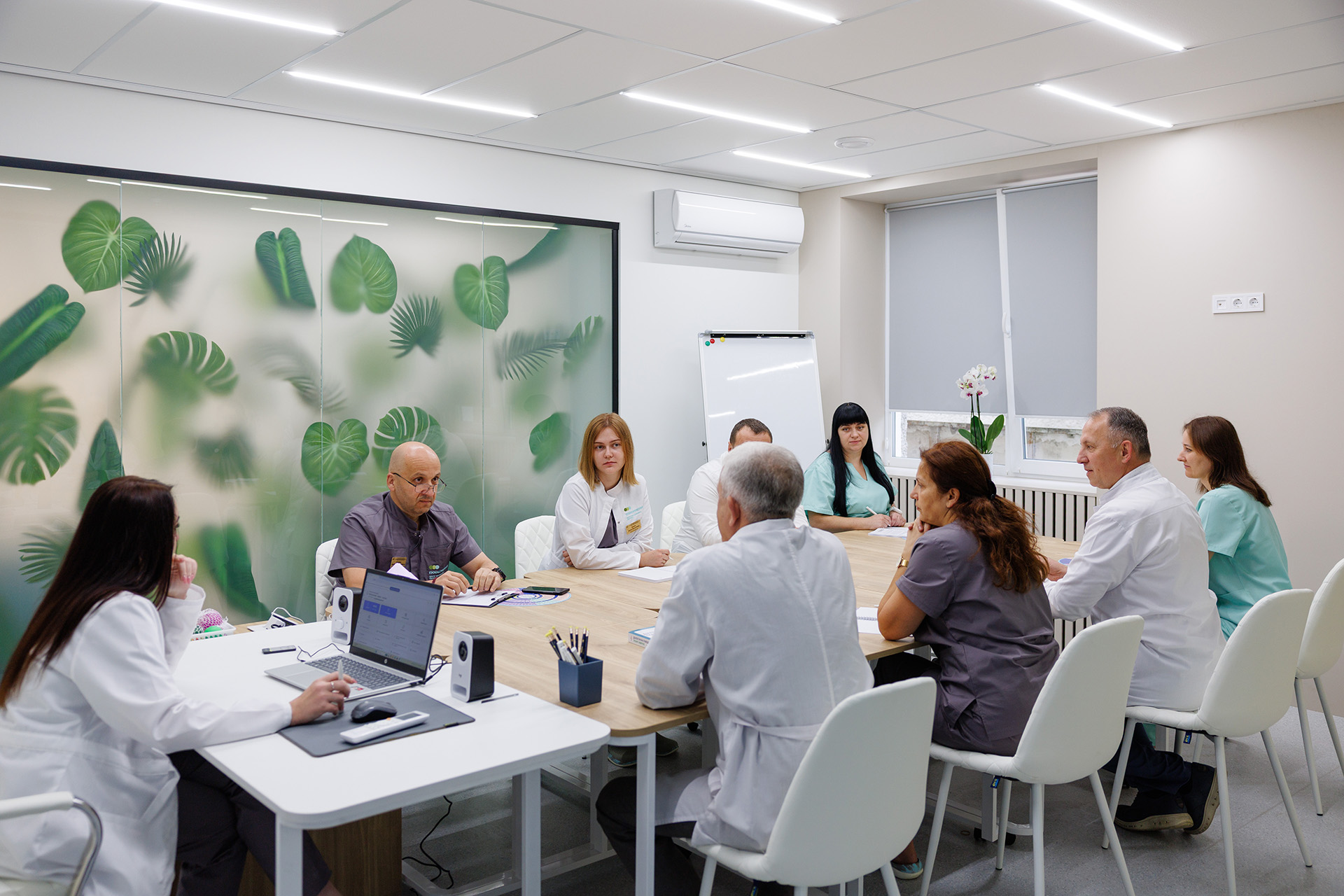
High-quality mental recovery is only possible with the involvement of qualified professionals. That is why, in cooperation with Ukrainian and international experts, the RETURNING project is implementing modern training programs for mental health professionals. The programs include practical training sessions, workshops, and supervision. They provide doctors with effective tools for working with war-related trauma and enable patients to receive the highest standard of support. To date, more than 1,000 mental health professionals have participated in educational events organized as part of the RETURNING project.
At the first stage of the RETURNING project, 20–25 mental health centers are planned to open across Ukraine. Every year, they will be able to provide free professional support to more than 100,000 military personnel, veterans, and their family members.